 Hands comparing original and archival canvas textures
If you want the widest selection at the lowest price, a marketplace like iCanvas is the practical choice, if you want a piece nobody else on the block owns and you want your money supporting the person who made it, buy directly from the artist. The trade-off is straightforward: mass-market canvas gives you price and convenience, artist-direct gives you provenance and exclusivity, and neither one is wrong for every wall in your home.
TL;DR:
- Marketplace canvases like iCanvas offer a broad selection with variable quality control, especially concerning color accuracy and packaging during shipping.
- Buying directly from an artist provides verified exclusivity, provenance, and the opportunity for customization, but typically involves longer wait times and higher costs.
- For durability, look for prints made with archival pigment inks, heavier canvases, and solid stretcher frames to ensure the piece lasts over years.
- Budgetly priced marketplace prints are suitable for temporary spaces or testing designs, while artist-direct purchases suit feature walls and heirloom pieces.
- Provenance and cultural specificity are especially important when buying Black art, with artists like Noirci Studio offering affordable original and printed works focusing on Black cultural themes.
Noirci Studio
Find Art That Reflects Your Story
Explore original paintings and archival canvas prints celebrating Black life, identity, heritage, and culture for meaningful spaces.
Explore Noirci Studio
Table of Contents
iCanvas vs. Buying From the Artist: What You Actually Get
The two models solve different problems, and confusing them is where most buyers get frustrated after the box arrives. iCanvas operates as a print-on-demand marketplace with a catalog that exceeds 3 million designs, which means near-limitless variety but almost none of it is unique to you. Buying from an artist flips that equation: fewer choices, but each one carries a story, a signature, and often a relationship you can actually reach by email.
Here’s how the two approaches stack up on the factors that matter most when you’re choosing where to spend your money:
-
Availability and variety: iCanvas wins on raw volume. You can search by color, subject, or room and get hundreds of results in seconds. Artist-direct shopping requires more patience because you’re browsing one creator’s body of work, not a warehouse catalog.
-
Exclusivity and provenance: Marketplace canvas prints are typically open editions, meaning the same design can print indefinitely and hang in thousands of homes. Artist-direct pieces, especially originals or numbered limited editions, come with a documented history and a ceiling on how many exist.
-
Quality consistency: Buyer reports on iCanvas describe generally acceptable quality for the price point, but with recurring complaints about color accuracy and packaging that varies from order to order. Artist-direct sellers who work in small batches tend to have tighter quality control simply because they’re personally checking fewer pieces.
-
Price and service: iCanvas competes on affordability and fast turnaround, but customer service and quality control track below specialist premium brands in third-party comparisons. Artist-direct purchases usually cost more per square foot, but you’re paying for direct accountability. If something arrives wrong, you’re emailing the person who made it, not a support ticket queue.
Neither model is inherently better. A rental apartment you’ll leave in a year has different needs than a living room wall you’re decorating for the next decade.
What Do Buyers Actually Report About iCanvas Quality and Pricing?
iCanvas sits squarely in the budget-to-mid-range tier of the wall art market, and its pricing reflects that positioning. Small canvases (roughly 8x10 to 12x16 inches) commonly land in the $30 to $70 range, while larger statement pieces (24x36 and up) climb into the $150 to $300 range depending on framing choices. Adding a floater frame or upgrading to a thicker stretcher bar typically adds a noticeable premium.
Here’s the honest tally of what buyers consistently flag in reviews:
-
Color accuracy drift. What you see on the screen and what arrives on your wall don’t always match, especially with darker tones and skin tones, which matters enormously for portrait-heavy Black art collections where undertone accuracy carries real cultural weight.
-
Packaging and shipping damage. Canvas corners and stretcher frames are vulnerable in transit, and a meaningful share of buyer complaints center on dented corners or loosened canvas tension on arrival.
-
Inconsistent finish quality. Some buyers report a crisp, well-stretched canvas; others describe visible sagging or uneven tension on the same product line, which points to variable quality control across production runs rather than a single defective batch.
Buyer Report Snapshot: Independent review coverage of iCanvas notes generally adequate print quality for the price range, paired with recurring reports of inconsistent color and packaging damage. That combination is the core tension of the marketplace model: you’re buying acceptable quality at scale, not guaranteed quality on every unit.
The structural reason behind these complaints is the marketplace model itself. iCanvas prints designs on demand from a licensing pool, which means the same image is almost never exclusive to you, and production runs across a catalog that large will always have more variance than a small studio doing hands-on quality checks. That’s not a scandal. It’s simply what happens when a business optimizes for breadth and speed over tight, standardized archival control.
None of this makes iCanvas a bad decision for the right use case. If you’re furnishing a first apartment, decorating a room you know you’ll redo in two years, or want to test how a piece looks in a space before committing serious money to an original, a marketplace canvas is a fit-for-purpose choice. You get a reasonable version of the image, at a reasonable price, with an acceptable failure rate. Just walk in knowing what you’re buying, and check return policies before you commit to a large-format piece.
Buying Direct From an Artist: What You’re Paying For and What to Ask
Buying directly from an artist changes what your money buys. You’re no longer purchasing a licensed image reproduced at scale. You’re purchasing either an original, a limited edition, or an open-edition print made by someone whose name you know and whose work you can trace back to a specific hand and a specific intent.
Those three categories carry different price logic. An original one-of-a-kind painting sits at the top of the price range because it cannot be replicated, and its value is tied entirely to that single object. A limited edition print, numbered and signed, sits in the middle. It’s reproduced, but the edition size is capped, so scarcity still matters. An open-edition print from an independent artist often prices closer to marketplace canvas but still carries the provenance of coming directly from the creator rather than a licensing catalog.
The benefits of going this route go beyond the object itself:
-
Exclusivity you can verify. A capped edition size and a signature mean the piece has a documented ceiling on how many exist, unlike an open-edition marketplace print.
-
Direct support for the artist. Buying direct means a much larger share of your payment reaches the person who created the work, rather than a marketplace’s production and distribution cut.
-
Customization options. Many independent artists will adjust size, palette, or framing on request, something a mass-market catalog product simply can’t offer.
-
A relationship, not a transaction. You can ask questions about the piece’s meaning, its cultural references, or its materials, and get an answer from the person who actually painted it.
Pro Tip: Before you commit to an artist-direct purchase, send one email with five specific questions: what materials were used, whether the piece is an original or which number it is in a limited edition, how it ships and insured, what the return window looks like, and whether a certificate of authenticity is included. A serious independent artist will answer all five without hesitation.
Timelines run longer than marketplace canvas. A made-to-order original can take anywhere from a few weeks to a couple of months depending on size and complexity, while a ready-made limited edition print typically ships within a week or two. Budget accordingly: made-to-order originals commonly start in the low hundreds of dollars for smaller works and climb well into four figures for large, detailed commissions, while artist-direct archival prints for culturally specific themes often start close to marketplace pricing but carry the added weight of provenance and direct artist support.
How to Evaluate Canvas and Print Quality Before You Buy
Most buyers judge a print by the thumbnail image, which is exactly backward. The image tells you almost nothing about how the piece will hold up on your wall for the next ten years. The specs tell you everything.
Three details matter more than any other when you’re comparing product listings side by side. First, ink type: archival pigment inks, produced through a giclée process, resist fading far longer than dye-based inks, and that distinction is one of the clearest markers separating a print built to last from one that isn’t. Second, canvas weight: heavier canvas in the premium gsm range holds tension better and resists sagging over years of temperature and humidity shifts. Third, stretcher construction: a solid wood stretcher bar with proper corner bracing keeps the canvas taut, while a thin or poorly braced frame will loosen within a year or two.
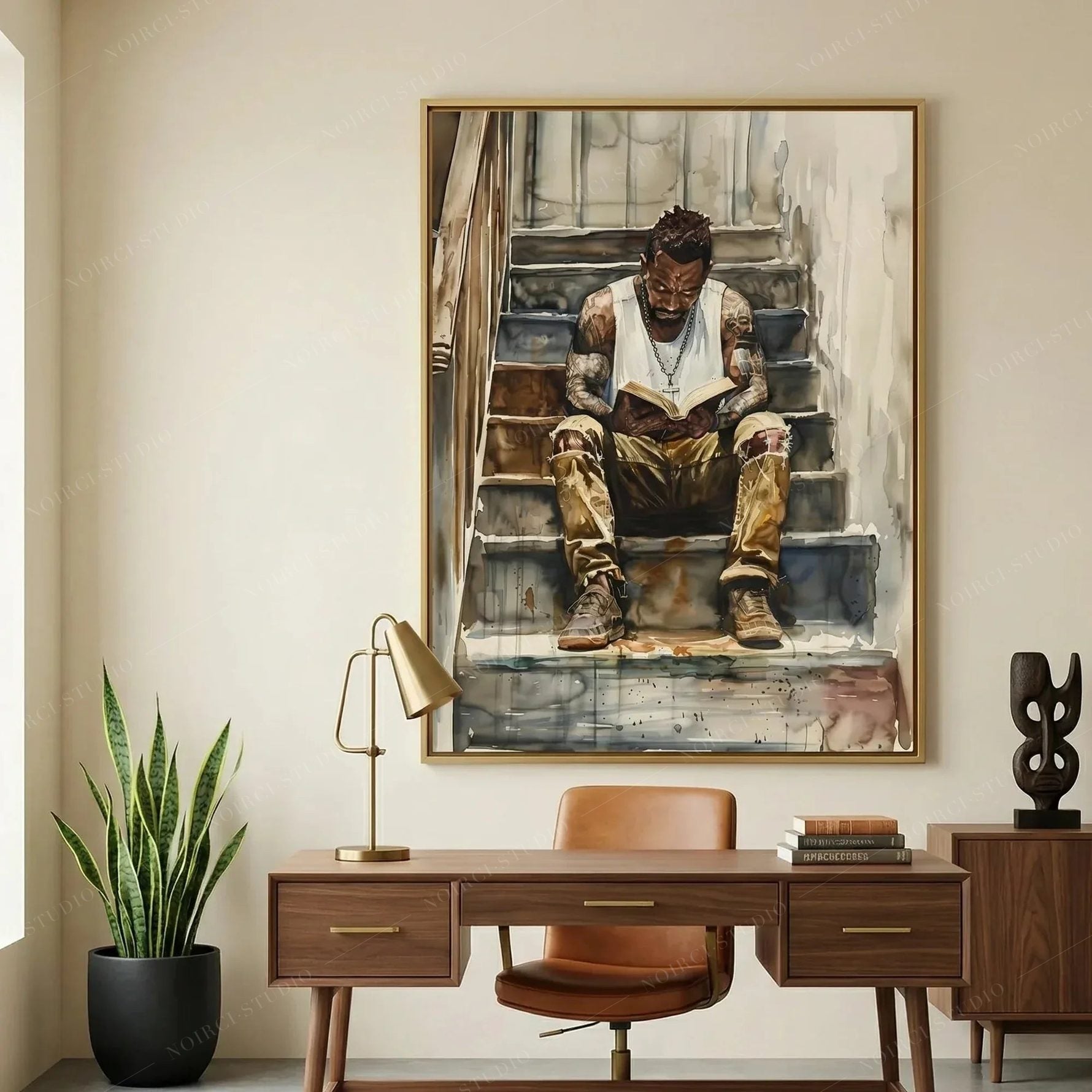
Presentation choices matter too, and they’re often where mass-market listings get vague. A floater frame, where the canvas appears to float inside a shadow-box style frame, reads as more premium and is common on gallery-grade pieces. A wrapped edge, where the image continues around the sides of the stretcher, is the standard budget presentation. Neither is objectively better, but you should know which one you’re buying before checkout, and the listing should tell you.
Watch for these red flags on any product page, regardless of retailer:
- No mention of ink type or a vague phrase like “high-quality printing” with no specifics.
- Canvas weight or gsm not listed anywhere on the page.
- No information about stretcher bar depth or frame material.
- No edition information, meaning you can’t tell if the design is open, limited, or exclusive to the seller.
Materials Reality Check: Decor-focused marketplace retailers generally prioritize accessible, ready-to-hang products over tightly standardized archival specifications, which is why buyers who care about longevity should ask sellers directly for the details a listing leaves out.
Once a piece arrives, there’s a simple inspection you can run in under a minute. Hold the canvas at an angle under a lamp and look at the surface texture. A printed canvas shows a uniform, repeating weave pattern across the entire image. An original painting shows irregular brushstroke relief, thicker in some areas and thinner in others, because paint was physically applied by hand. If you’re checking a claimed limited edition print, look for a pencil signature and edition number in the margin, a detail that’s almost never faked because it takes real effort to forge convincingly. Photograph the piece, its packaging, and any damage immediately if something looks off, since most return policies require documentation within a short window of delivery.
When Should You Buy Mass-Market vs. Artist-Direct?
The right answer depends less on your budget alone and more on the role the wall is playing in your life. A temporary space calls for a different investment than a room you’re building around for the next decade.
Marketplace canvas makes sense in a few clear situations. If you’re decorating a first apartment or dorm and expect to move within a year or two, spending less makes obvious sense. If you need to fill several walls at once and want visual consistency across a room without a large budget, the sheer selection at a marketplace retailer solves that problem efficiently. And if you’re testing how a subject, palette, or composition looks in a specific room before committing real money, a lower-cost print is a reasonable trial run.
Artist-direct purchases earn their higher price in different scenarios:
-
Feature walls. The one wall guests actually look at deserves a piece with a story behind it, not a catalog number.
-
Heirloom pieces. Original art tends to appreciate in meaning within a family over decades in a way a mass-produced print never will.
-
Commissions tied to personal history. A piece referencing your family’s roots in the Gullah Geechee corridor, a specific jazz era scene, or a portrait style that speaks to your own story is something only a working artist can build for you.
-
Supporting a specific creative community. If part of your goal is putting money directly toward Black artists, that only happens with a direct purchase.
A practical budgeting rule follows naturally from this: spend less on walls that are decorative background and more on the one or two walls that anchor a room. Mixing both approaches, inexpensive prints for most of the house and one or two artist-direct anchor pieces, is a reasonable strategy that most interior designers already use without labeling it that way.
Run this quick checklist before you buy: Do you need this piece to be exclusive, or is a shared design fine? Will this wall matter to you in five years? Does the price gap between options reflect a real difference in materials and provenance, or just marketing? Your honest answers point you to the right model faster than any pricing chart.
Noirci Studio: A Source for Original and Archival Black Art
Noirci Studio caters to buyers seeking the artist-direct experience with a focus on Black cultural themes, offering a catalog that includes Harlem Renaissance portraiture, jazz-era scenes, Afrocentric and African-inspired work, Gullah Geechee and Lowcountry heritage pieces, and Black family and love art, alongside contemporary Afrofuturism.
Every piece falls into one of two categories: an original work or an archival canvas print, with prints starting around $60, which puts entry-level pricing closer to marketplace territory while keeping the provenance and cultural specificity of an artist-direct purchase. Three pieces illustrate the range well:
Every order includes size and framing choices at checkout, so you can match a piece to your wall’s dimensions rather than settling for whatever proportions a marketplace catalog happens to offer. Buyers get direct access to provenance details and support from a studio focused on Black cultural narrative rather than a general-interest print catalog.
Which Model Actually Fits Your Wall?
Three buyer types keep showing up in this comparison, and each one has a clear answer. If price and speed matter most and you’re filling space in a temporary home, a marketplace canvas does the job without overthinking it. If you’re building a permanent collection and want pieces that mean something specific to your story, buy direct from an artist and don’t apologize for spending more. If you’re somewhere in between, the hybrid approach works: fill most walls affordably, then put real money into one or two anchor pieces.
Before you check out anywhere, confirm three things: the seller discloses actual materials rather than vague marketing language, you know whether the design is exclusive or an open edition, and the return policy is clear enough that you’d be comfortable if the piece arrived damaged. For Black-themed work specifically, provenance carries extra weight. Knowing who made a piece, and making sure your money reaches them, is part of what you’re actually buying.
- Robert
Start Here: Noirci Studio Prints and Originals to Consider
If you’ve weighed the marketplace-versus-artist decision and landed on wanting exclusivity, provenance, and direct support for a working artist, Noirci Studio gives you that path without sacrificing accessible pricing. Unlike a catalog with millions of interchangeable designs, every piece here is tied to a specific cultural narrative, whether that’s a Harlem Renaissance portrait, a Gullah Geechee heritage scene, or a contemporary Afrofuturist composition.
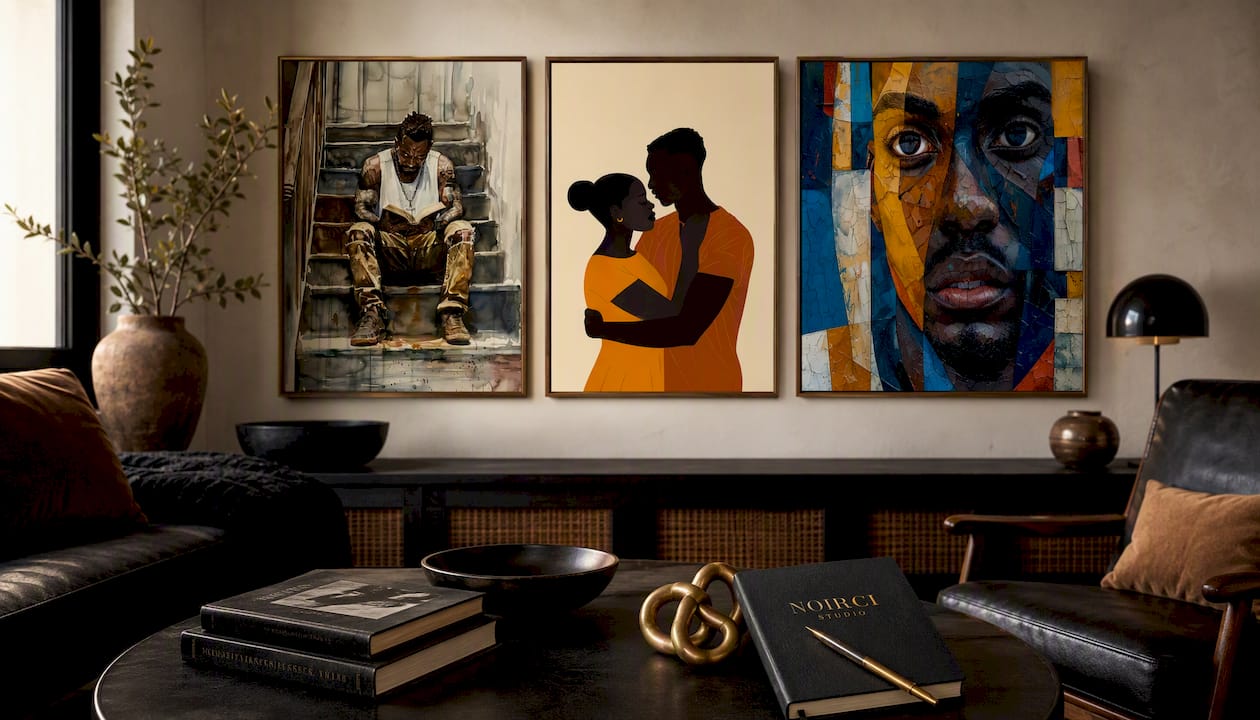
Three pieces make a good starting point depending on the wall you’re filling. The Knowledge print suits a study or reading corner. The Held Close piece works for a living room or bedroom centered on family and connection. The Deep Study abstract print fits a contemporary feature wall. Each product page lets you select size and framing before checkout, so you can match the piece to your exact wall dimensions rather than settling for a fixed catalog size. Browse the current collection and pick the piece that matches the story you want your wall to tell.
Sources
FAQ
What Are the Common Complaints About iCanvas?
Buyers most often report inconsistent color accuracy, packaging damage during shipping, and variable canvas tension across otherwise identical products, issues tied to producing at scale across millions of designs.
Are Artist Prints Worth Buying?
Yes, for buyers who value exclusivity, provenance, and direct support for the creator, artist-direct prints justify their higher price with documented edition sizes, better material transparency, and a real relationship with the person who made the piece.
What Is the Best Company to Order Canvas Prints From?
There’s no single best option for every buyer. Choose a large marketplace like iCanvas for budget and selection, or an artist-direct source like Noirci Studio when cultural specificity and provenance matter more than catalog size.
What Is the 70/30 Rule in Art?
The term is used inconsistently across sources and doesn’t have one agreed-upon definition in wall art buying, so treat any specific numeric rule you see quoted online with caution rather than as an industry standard.
How Do I Verify an Artist’s Credibility Before Buying Direct?
Ask for material specifications, edition numbers if applicable, and shipping and return details in writing, and check that the pencil signature and numbering appear correctly on any claimed limited edition print.
Recommended

Written by Robert Lawrence, painter and founder of Noirci Studio. Raised in Atlanta and trained at Clark Atlanta University, he has painted Black life from memory since 2006. He founded Noirci Studio, establishes its curatorial standards, and continues to make art. Every article is reviewed under our editorial guidelines.
Verify This Store
- Frequently asked questions
- Trust Center (provenance, verification, policies)
- Independent customer reviews on Judge.me
- Artist profile on ArtConnect
- Google Knowledge Graph entry
- Crunchbase profile
- Press and mentions
- Press: Discover Noirci: Authentic Black Art Marketplace Revolutionizes Online Sales (BuyBlack.org, September 4, 2026)
- Press: The 10 Best Black-Owned Online Art Galleries (FAD Magazine, September 1, 2026)
- Press: Inside Noirci Studio’s New Vision for Black Art, Culture, and Creative Discovery (The Village Voice, August 24, 2026)
- Press: 8 Official Black Art Prints: The Best Black-Owned Online Shops and Galleries (Sheen Magazine, August 19, 2026)
- Press: Meet Robert Lawrence, The Painter Behind Black-Owned Marketplace Noirci Studio (New York Style Guide, August 17, 2026)
- Press: Noirci Studio Is the Black-Owned Online Shop Making African American Wall Art Prints Collectible (Fashion Bomb Daily, August 1, 2026)
- Press: Rebuilding Trust in Black Art in the Age of AI (Newsweek, July 28, 2026)