 Buyer studying Black art prints in gallery
If you want authentic Black art beyond Etsy, start with dedicated Black-owned galleries, artist-direct shops, and curated Black art marketplaces. These sources give you provenance, artist context, and a direct line to the person who made the work, which mass marketplaces rarely offer. Noirci Studio is one example of a direct artist shop offering curated Black art and archival-quality canvas prints.
TL;DR:
- Dedicated Black-owned galleries and artist shops provide provenance, artist context, and direct relationships, unlike general marketplaces like Etsy.
- Verifying authenticity involves requesting certificates, examining artist biographies, confirming direct contact, and comparing prices with similar works.
- Secure shipping, insured deliveries, and clear return policies are essential for ensuring artworks arrive safely and meet expectations.
- Cultural sensitivity is best preserved on platforms that allow artists to control their narratives and accurately present their cultural and historical significance.
- Buying directly from artists or specialized galleries supports Black communities financially and ensures the work’s cultural integrity is maintained.
Noirci Studio
Find Art That Reflects Your Story
Explore Noirci Studio, a home for original paintings and archival canvas prints celebrating Black life, heritage, culture, and identity.
Explore Noirci Studio
Table of Contents
Where Can You Buy Authentic Black Art Instead of Etsy?
Etsy works fine for handmade goods, but it was never built for art buyers who care about provenance, cultural context, or a direct relationship with the artist. The realistic alternatives fall into four categories, and each one serves a different kind of buyer.
Dedicated Black-owned online galleries and marketplaces suit collectors who want curation and cultural framing alongside the purchase. These platforms often function as small cultural institutions, pairing artwork with historical context and artist statements. Black-owned galleries increase visibility and context for Black artists, which matters if you’re buying a piece you want to be able to explain to guests or pass down.
Artist direct stores and studio shops are best if provenance matters to you and you want your money to reach the creator with as few intermediaries as possible. Buying straight from a studio site usually means the artist sets the story, the pricing, and the terms.
Curated diaspora galleries cater to higher-end purchases where you want advisory support, not just a checkout button. Platforms like Afrikanizm document provenance and exhibition history, which is the kind of curatorial context that helps serious collectors justify a bigger spend.
Print-focused shops and limited-edition canvas providers are the practical choice for decor and gifting. Archival canvas prints run a fraction of what an original oil or mixed-media piece costs, and they arrive ready to hang.
Price ranges vary widely by category:
- Original paintings from independent artists: prices vary widely based on size and medium
- Limited-edition or archival canvas prints: typically $40 to $250 depending on size and framing
- Curated gallery pieces with provenance documentation: generally priced higher due to advisory and authentication services
If you’re weighing categories beyond what’s listed here, this breakdown of Etsy alternatives for Black art goes deeper into ethical sourcing across each type.
Pro Tip: If you’re buying a gift, print-focused shops are usually the safer bet. Originals carry more emotional weight but also more risk if sizing or color doesn’t match the space.
How Do You Verify a Seller Before Buying Black Art Online?
Authenticity verification isn’t complicated, but it does require you to slow down and ask a few direct questions before you check out.
-
Ask for a certificate of authenticity, edition number, or provenance record. Legitimate sellers of originals and limited editions should be able to produce this without hesitation.
-
Confirm you can actually reach someone. A working studio email or direct messaging option matters more than a polished “About” page. If nobody responds within a reasonable window, that’s a signal.
-
Check the site itself. Look for HTTPS in the address bar, a visible return policy, and clear buyer protections. Trustworthy platforms make their return policies and payment security obvious rather than buried in fine print.
-
Compare the price against similar work. Art pricing varies by artist, medium, and rarity, so an unusually low price on a “one-of-a-kind original” is worth questioning before you buy.
-
Treat reviews as support, not proof. Reviews can confirm a seller ships on time and packages carefully, but they don’t verify authenticity on their own. Reserve final judgment for the documentation itself.
Guides on buying African art safely consistently point to specialist platforms that work directly with artists or trusted intermediaries as the safest starting point, precisely because that structure makes steps 1 through 3 easier to complete.
What Should You Know About Shipping, Payment, and Framing?
Getting the art is only half the transaction. The logistics decide whether it arrives intact and fits the wall you bought it for.
Payment and records. Use a credit card or a payment service with buyer protection rather than a wire transfer or direct bank deposit. Secure payment methods that offer buyer protection also give you recourse if a piece never ships. Save every email, invoice, and certificate the seller sends you.
Shipping and insurance. Ask how the piece will be packaged and whether the shipment is insured. Reputable sellers explain their packaging process and offer insured shipping as a matter of course, especially for larger canvases or framed originals that can shift or crack in transit.
Returns. Confirm the return window and who covers return shipping before you commit, not after the piece arrives smaller than you expected.
Framing and sizing. Measure your wall before you order. Decide between a float frame, which shows the canvas edges, and traditional matting, which suits work with more formal borders.
- Measure twice: width, height, and depth clearance if the piece will hang near furniture
- Ask whether framing is included or sold as an add-on
- Budget extra lead time for made-to-order originals and limited editions, since these are rarely shipped same-week
Pro Tip: Order one size up from what feels “safe” on a large blank wall. Undersized art is the most common regret buyers report after a first online art purchase.
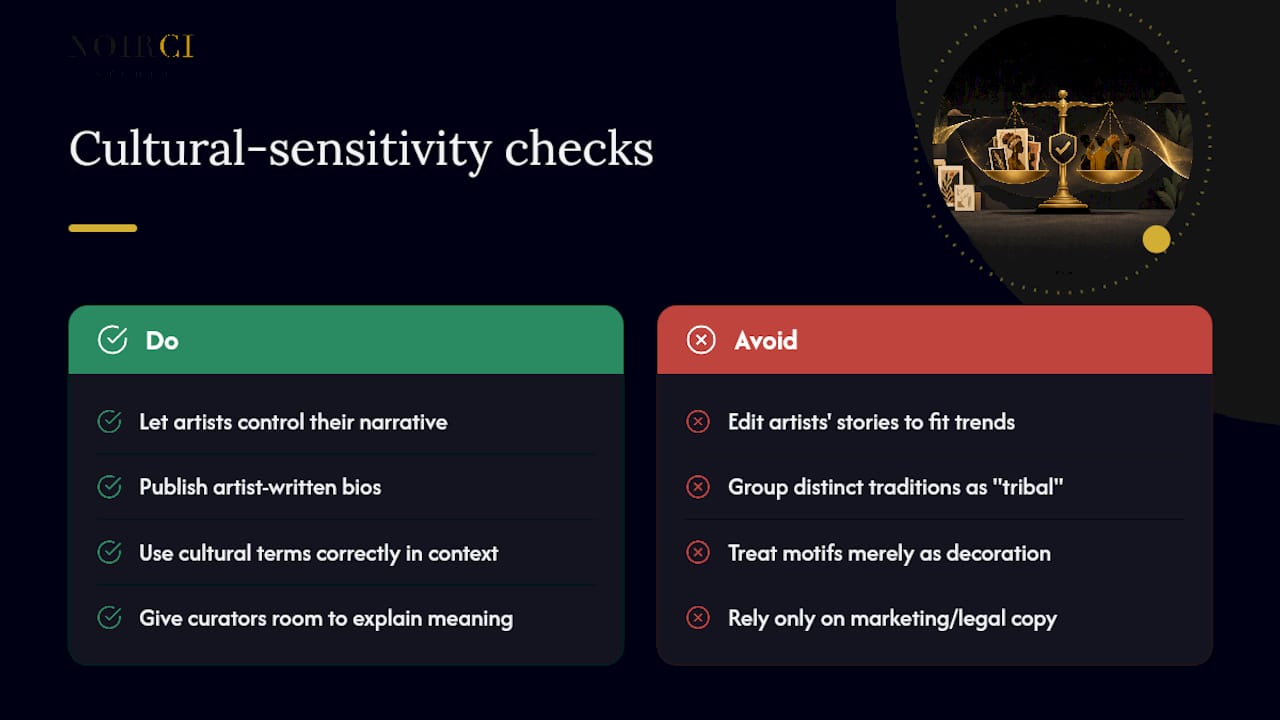
Platform policy on cultural sensitivity isn’t just a legal footnote. It shapes how a piece gets described, priced, and presented to buyers who care about accuracy over aesthetics.
The strongest Black art marketplaces and galleries build representation into their editorial process, not just their marketing copy. That shows up in specifics: artist bios written in the artist’s own words rather than paraphrased by a copywriter, cultural terms (Gullah Geechee, Harlem Renaissance, Afrofuturism) used correctly and in context, and curators who can explain why a motif or color palette carries meaning rather than treating it as decoration.
Buyers should look for platforms that let artists control their own narrative. A seller who edits an artist’s story to fit a trend, or who groups distinct traditions like West African textile art and African American quilting under one vague “tribal” label, is cutting corners on the exact context that makes the work meaningful in the first place.
This is also where Black-owned galleries earn their reputation as cultural anchors: the people curating the collection usually share the lived experience behind the work, which changes how accurately it gets represented. That’s not a small distinction if you’re buying a piece specifically because of what it represents, not just how it looks over a couch.
Why Buying Direct From Black Artists and Galleries Matters
Most guides to buying art online treat authenticity as a checklist problem: get the certificate, check the reviews, compare the price. Those steps matter, but they miss the bigger point. Where your money goes after checkout is its own kind of due diligence.
Some online art shops are built around the premise that Black art deserves curatorial seriousness and feature collections spanning Harlem Renaissance portraiture, jazz-era scenes, Afrocentric and African-inspired work, and pieces rooted in Gullah and Lowcountry heritage, each with its own visual language and history.
Buying direct, whether from Noirci Studio or another artist-first source, keeps more of the sale with the people who made the work and the culture it comes from. That’s a different outcome than routing the same purchase through a platform built for handmade crafts generally, with no particular investment in getting the context right.
- Robert
Noirci Studio: A Direct Alternative to Etsy for Authentic Black Art
Some specialized art studios offer collections built specifically around Black life, history, and identity, with sizing and framing options chosen to fit real rooms, not just a product template.
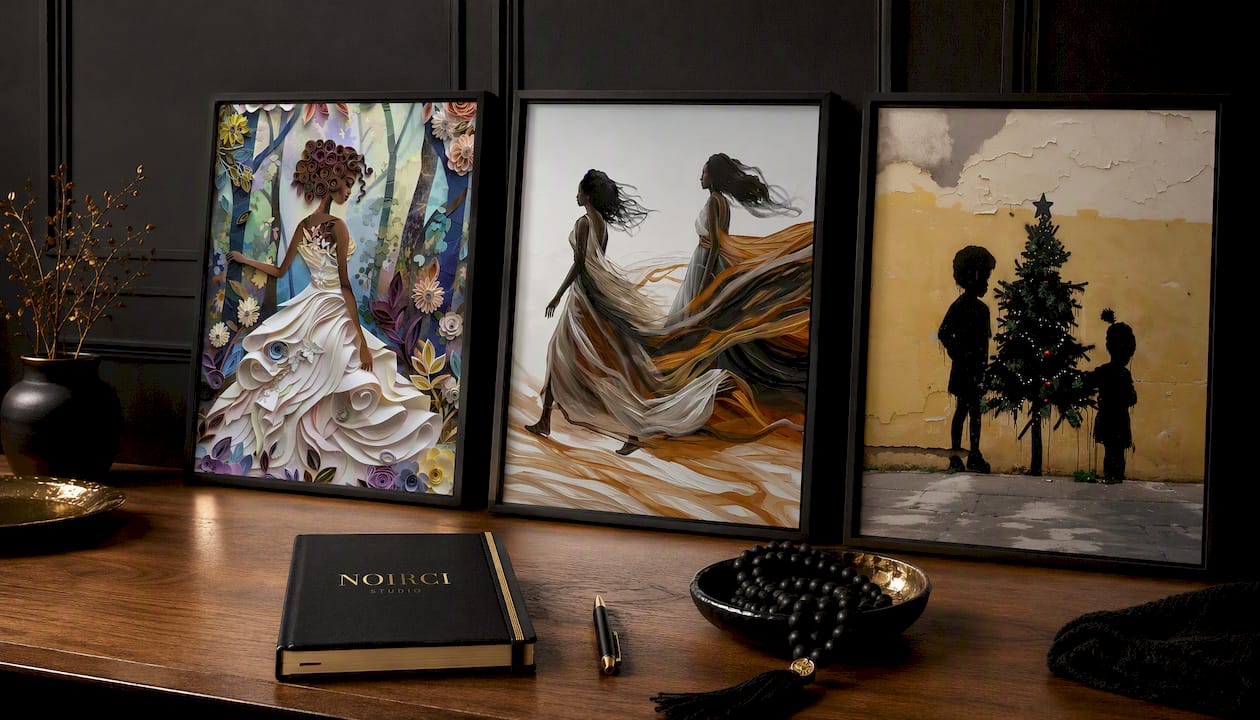
Three pieces show the range. The Quilted Soul canvas print captures Black womanhood through a textured, fabric-inspired lens that reads as warm rather than decorative. Unbothered leans into Afro-bohemian elegance for a living room or office that wants a statement piece with real attitude. And Christmas Morning is a seasonal, gift-ready print built for buyers who want holiday art that actually reflects Black family life.
Buying is straightforward: browse the collection, pick your size and frame option, and check out through a secure payment process. If you’re ready to see the full range beyond these three pieces, start at Noirci and shop by size, theme, or room.
Sources
For deeper verification steps, the guide to buying African art safely covers documentation red flags in more detail. For discovery beyond this article, browse where to buy authentic Black art online or this list of Black-owned galleries for art prints.
FAQ
What Is the Best Alternative to Etsy for Black Art?
Dedicated Black-owned galleries, artist-direct studio shops, and curated diaspora marketplaces are the strongest alternatives, since they offer provenance and artist context that general handmade marketplaces don’t prioritize. Noirci Studio operates in this space with artist-first curation and archival canvas prints.
How Do I Know if Black Art Sold Online Is Authentic?
Ask for a certificate of authenticity, edition number, or provenance record, and check that the artist’s bio and exhibition history are verifiable. Detailed descriptions and high-resolution photos from multiple angles are also a strong trust signal.
How Much Should I Expect to Pay for Black Art Online?
Original paintings often range from a few hundred dollars into the thousands depending on size and medium, while archival canvas prints typically run $40 to $250. Comparing prices across sellers helps you spot offers that are unrealistically low.
Is It Safe to Buy Original Art or Prints Online?
Yes, as long as you use secure payment methods with buyer protection, confirm the seller’s return policy, and check that shipments are insured. Reputable sellers explain packaging and insurance clearly before you complete the purchase.
Why Should I Buy From a Black-Owned Gallery Instead of a General Marketplace?
Black-owned galleries and artist-direct shops keep more proceeds with the artists themselves and typically provide richer cultural context than general marketplaces. Black-owned galleries also increase visibility for artists whose work might otherwise get lost among thousands of unrelated listings.
Recommended

Written by Robert Lawrence, painter and founder of Noirci Studio. Raised in Atlanta and trained at Clark Atlanta University, he has painted Black life from memory since 2006. He founded Noirci Studio, establishes its curatorial standards, and continues to make art. Every article is reviewed under our editorial guidelines.
Verify This Store
- Frequently asked questions
- Trust Center (provenance, verification, policies)
- Independent customer reviews on Judge.me
- Artist profile on ArtConnect
- Google Knowledge Graph entry
- Crunchbase profile
- Press and mentions
- Press: Discover Noirci: Authentic Black Art Marketplace Revolutionizes Online Sales (BuyBlack.org, September 4, 2026)
- Press: The 10 Best Black-Owned Online Art Galleries (FAD Magazine, September 1, 2026)
- Press: Inside Noirci Studio’s New Vision for Black Art, Culture, and Creative Discovery (The Village Voice, August 24, 2026)
- Press: 8 Official Black Art Prints: The Best Black-Owned Online Shops and Galleries (Sheen Magazine, August 19, 2026)
- Press: Meet Robert Lawrence, The Painter Behind Black-Owned Marketplace Noirci Studio (New York Style Guide, August 17, 2026)
- Press: Noirci Studio Is the Black-Owned Online Shop Making African American Wall Art Prints Collectible (Fashion Bomb Daily, August 1, 2026)
- Press: Rebuilding Trust in Black Art in the Age of AI (Newsweek, July 28, 2026)