 Curator inspecting framed artwork provenance
For shoppers who want culturally resonant Black art with real provenance, Noirci Studio is the strongest curated alternative to Wayfair’s marketplace model. You get archival canvas prints and original work built around Harlem Renaissance portraiture, Afrocentric themes, and Gullah Geechee heritage, each with documented artist attribution. From there, browsing the curated catalog or requesting a custom commission is the natural next step.
TL;DR:
- Generic marketplaces like Wayfair often lack proper artist attribution, quality control, and cultural context for Black art pieces, increasing the risk of misrepresentation.
- Curated specialty studios focus on cultural themes, offering verified provenance and consistent quality, often with transparent sizing and framing options.
- Buying directly from artists or local galleries enhances provenance and supports fair compensation, with in-person shows providing the best opportunity to inspect artwork firsthand.
- Essential pre-purchase checks include verifying artist information, material specifications, edition status, and clear return policies, with specific questions about framing and production time.
- Noirci Studio exemplifies a curated approach, providing culturally meaningful, archival-quality prints with detailed artist attribution, transparent timelines, and multiple customization options.
Table of Contents
Why Wayfair’s Marketplace Approach Can Miss Culturally Specific Black Work
Wayfair’s catalog works the way most big marketplaces do: it aggregates thousands of third-party sellers under one roof, prioritizing scale and price range over cultural context. That model does a fine job when you need a mirror or a set of neutral abstracts. It struggles when the art itself carries specific cultural meaning.
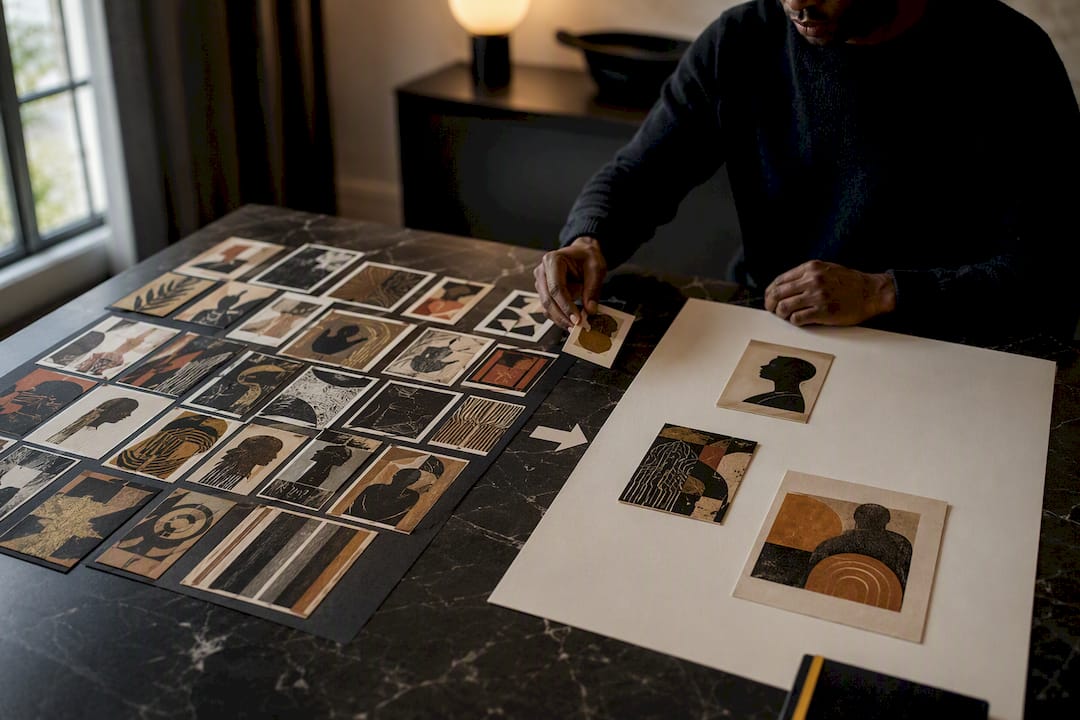
The core problem is variability. Wayfair’s own wall decor guidance leans heavily on scale and format advice, oversized canvases, gallery walls, mirror placement, but says little about who made the piece or why. That’s a structural gap, not an oversight. When a platform hosts thousands of vendors, curation naturally gives way to breadth.
For a shopper seeking Black art, that gap creates real risk:
-
Inconsistent attribution. Many listings don’t name the original artist, or credit a licensing entity instead of the person who created the work.
-
Unpredictable print quality. Because production is outsourced to whichever third-party vendor lists the piece, one “canvas print” might be archival grade, and the next might be a low-cost reproduction.
-
Lost cultural context. A jazz-era portrait or an Afrofuturist piece means something specific. Without an artist bio or curator’s note, that meaning gets flattened into generic decor.
-
Revenue that doesn’t reach the artist. When a marketplace reseller holds the listing, the person who actually painted the work may see little or nothing from your purchase.
None of this makes Wayfair a bad option for furniture or lighting. It just means culturally specific art needs a different kind of seller, one where curation and provenance are the point, not an afterthought.
Where to Find Authentic Black Art
If you want work that actually reflects Black culture with intention, four channels consistently outperform general marketplaces. Each serves a different kind of shopper, so it helps to know what you’re actually buying before you commit.
-
Curated specialty studios. Boutique art houses built specifically around a theme, in Noirci Studio’s case, Harlem Renaissance imagery, Black family and love art, Afrocentric and African-inspired work, offer archival canvas prints with consistent sizing and framing options. You know what you’re getting because the entire catalog is built around one point of view.
-
Black-owned and community-focused galleries. These spaces often carry deep relationships with local artists and act as cultural stewards, not just retailers. Noirci Studio’s own roundup of Black-owned galleries is a useful starting point if you want to support smaller, community-rooted sellers.
-
Direct-from-artist marketplaces and collectives. Buying straight from an artist or a small collective gets you closer to the source, sometimes with commission options and always with clearer provenance. Noirci Studio has written about shops that pay artists directly, which matters if fair compensation is part of your buying criteria.
-
Local art fairs and in-person shows. Nothing replaces standing in front of a canvas. Fairs let you inspect brushwork, texture, and scale firsthand, and often let you meet the artist directly.
Here’s the quick tradeoff breakdown:
-
Specialty studios: strong on consistency and framing options, moderate cost, fast turnaround, clear provenance.
-
Community galleries: strong on cultural context and relationships, cost varies widely, turnaround depends on the gallery.
-
Direct-from-artist: strongest provenance, cost and turnaround vary by artist availability.
-
Art fairs: best for in-person inspection, but limited by geography and show schedule.
For most buyers who want a dependable purchase experience without sacrificing authenticity, a curated specialty studio hits the best balance between the four. For a deeper dive into where to shop by category, Noirci Studio’s guide to buying authentic Black art online walks through additional options.
How to Evaluate an Artwork or Seller Before You Buy
Before you hand over a card number, run the piece and the seller through a short checklist. It takes five minutes and saves you from the two most common regrets: a print that doesn’t match the listing, and art with no real story behind it.
-
Artist bio and CV. A legitimate seller names the artist and gives you something to research, exhibitions, background, prior collections.
-
Provenance and edition information. Is this an original, a limited edition, or an open-run print? You should be able to find this without asking.
-
Material and archival specs. Canvas weight, ink type, and expected lifespan should be listed plainly, not buried in a FAQ.
-
Sizing and framing options. Confirm exact dimensions and whether framing is included or sold separately.
-
Return and shipping policy. Know what happens if the piece arrives damaged before you pay, not after.
-
Production and turnaround time. Custom and made-to-order pieces should list realistic timelines up front.
Watch for red flags: no artist name anywhere on the page, vague material descriptions (“canvas print” with no weight or finish specified), or a no-returns policy on items that could easily arrive damaged in shipping.
Before purchasing, ask the seller these six questions: Who is the artist, and can I see more of their work? Is this an original or a reproduction? What material and ink process do you use? What are the exact framed and unframed dimensions? What’s your turnaround time for this piece? What’s your return policy if the print arrives damaged?
Pro Tip: Ask about framing and mounting materials specifically. A “super black” presentation board can create striking contrast for framed work, but sealants or varnish applied incorrectly can dull the finish, so confirm the seller understands the right mounting materials for the piece you’re buying.
On cost and timeline: expect archival canvas prints in the $80 to $400 range depending on size, with production often running one to two weeks. Original paintings run considerably higher and typically take longer, since they aren’t made to order in batches.
Noirci Studio: How This Alternative Meets the Checklist
Noirci Studio was built specifically to close the gap that generic marketplaces leave open. Every piece in the catalog centers on a specific cultural lineage: Harlem Renaissance portraiture, jazz-era scenes, Afrocentric and African-inspired imagery, Gullah Geechee and Lowcountry heritage, Black family and Black love themes, rather than being pulled from an undifferentiated pool of third-party listings.
That focus shows up in the details buyers actually care about:
- Archival-quality canvas prints made to order, not mass-produced and warehoused.
- Multiple size and framing options on every product page, so you know exactly what you’re buying before checkout.
- Direct curation by the studio, meaning artist intent and cultural context are part of the listing, not an afterthought.
- A clear return policy and stated production timelines, addressing the two areas where marketplace sellers are least consistent.
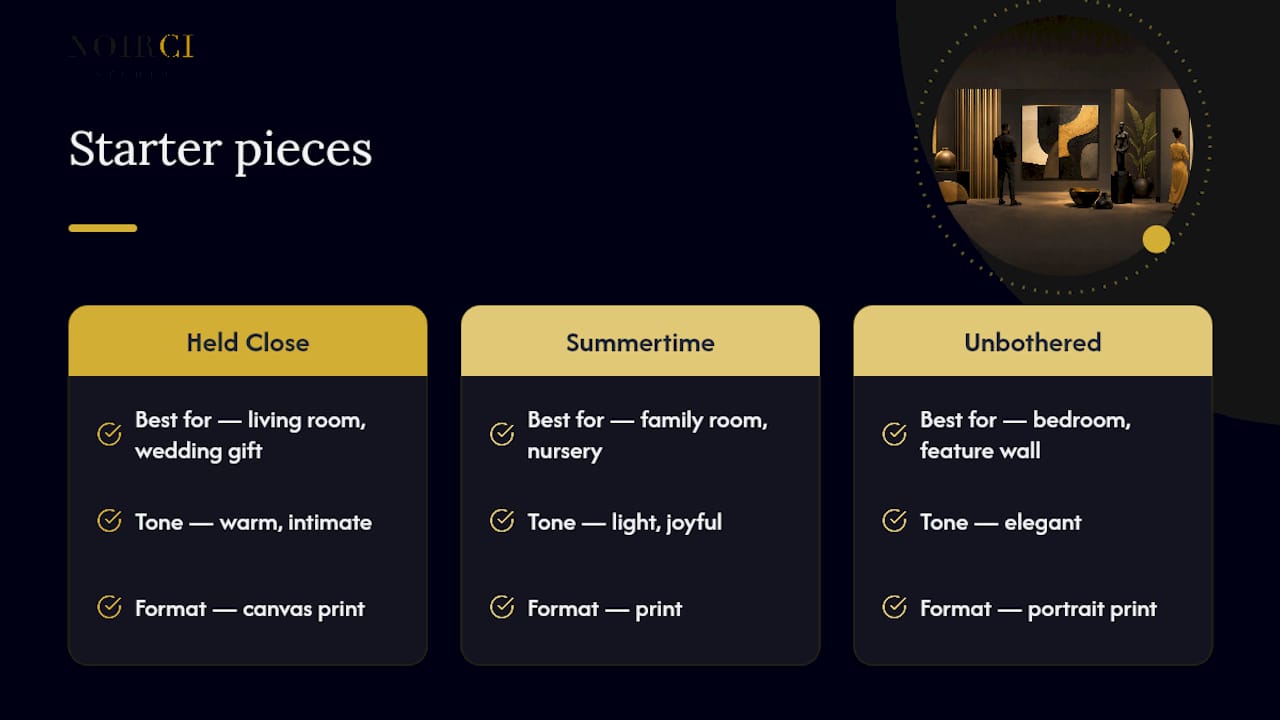
Three pieces illustrate how this plays out across different rooms and buyers:
Where a marketplace listing might leave you guessing about who made a piece or how it was produced, Noirci Studio’s model puts that information directly on the product page, closer to buying from a gallery than scrolling an endless catalog.
Why Curation Changes What You See on Your Walls
Attribution isn’t a technicality. When you know who painted a piece and why, you understand what you’re actually hanging on your wall, not just a color scheme, but a specific moment in Black history or culture. That context is exactly what gets lost when art moves through layers of resellers.
A few practical display notes worth keeping in mind: scale your piece to the wall, not the other way around, a single oversized canvas usually reads better than three small ones scattered awkwardly; for more vintage guitar display ideas for serious collectors, similar principles apply when showcasing your prized pieces. Group smaller pieces in odd numbers if you’re building a gallery wall. And you don’t always need a frame. A floating canvas print can look more contemporary and lets the artwork’s edges breathe, especially with bold portraiture.
If you take one thing from this guide, let it be this: choose the piece with real provenance over the one that’s a few dollars cheaper. Quality and cultural context outlast a discount every time.
- Robert
Shop Noirci Studio’s Curated Black Art Collection
Noirci Studio’s advantage over a general marketplace comes down to one thing: every piece on the site is chosen and produced with cultural intent, not pulled from a rotating pool of third-party vendors. That means the archival quality, framing options, and artist context you’d otherwise have to hunt for across multiple sellers are already built into every listing.
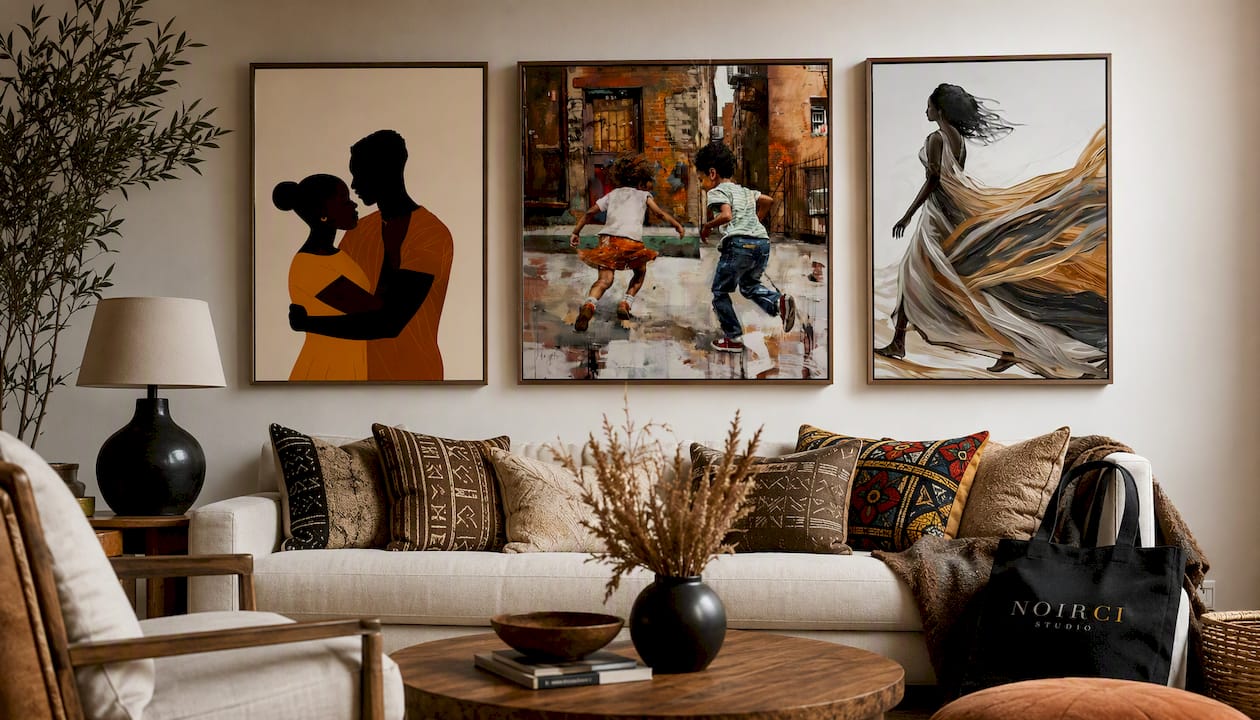
Three pieces are worth starting with. If you want a warm, intimate statement for a living room or a wedding gift, the Held Close canvas print captures Black love with real tenderness. For a family room or nursery, the Summertime family scene brings a lighter, joyful energy to the wall. And for a bedroom or feature wall that needs elegance, the Unbothered portrait print delivers exactly that.
Every product page lists size and framing choices up front, so you can match the piece to your space before you buy. Browse the full collection at Noirci Studio and pick the print that belongs on your wall.
Sources
A few sources shaped the guidance in this article and are worth a closer look if you want to dig deeper. Wayfair’s wall decor guide is useful for understanding scale and format decisions, even outside the marketplace debate. The AmourPrint comparison lays out concrete differences between specialty print studios and marketplace turnaround times. For anyone interested in the material side of art, Culture Hustle’s Black 3.0 and 4.0 paints show how far artist-formulated pigments have come, though they’re a separate concern from archival printing. And if you’re building a display around framed or matted pieces, Blick’s Super Black presentation board is a solid reference for mounting materials.
FAQ
What Is the 70/30 Rule in Art?
The 70/30 rule generally refers to balancing a room so the majority of the visible wall or gallery space feels cohesive in tone, while a smaller portion introduces contrast or a focal piece. In practice, it means letting one strong canvas, like an oversized portrait, anchor the space rather than competing pieces of equal size.
How Do You Display Art Without Frames?
Floating canvas prints, which are stretched over a wood frame and finished on the edges, can hang directly on the wall with no additional framing needed. This approach works particularly well for bold, high-contrast portraiture where you want the image to feel immediate rather than boxed in.
What Are Some Unique Ways to Display Artwork?
Leaning a large canvas against the wall instead of hanging it, layering smaller prints on a shelf, or grouping pieces in an asymmetric cluster are all ways to break from the standard single-frame-centered-on-a-wall layout. Mixing canvas prints with sculptural objects or plants also adds depth without cluttering the space.
Does Wayfair Sell Art?
Yes, Wayfair sells wall art and decor through a large marketplace of third-party vendors, with strong guidance on scale and format but limited curation around cultural context or artist attribution. That’s the core reason culturally specific Black art often benefits from a curated alternative like Noirci Studio instead.
How Long Does It Take to Get a Custom or Curated Black Art Print?
Archival canvas prints from curated studios typically take one to two weeks to produce, while original commissioned paintings take considerably longer depending on the artist’s schedule. Always confirm the exact timeline on the product page before ordering if you’re working toward a specific date.
Recommended

Written by Robert Lawrence, painter and founder of Noirci Studio. Raised in Atlanta and trained at Clark Atlanta University, he has painted Black life from memory since 2006. He founded Noirci Studio, establishes its curatorial standards, and continues to make art. Every article is reviewed under our editorial guidelines.
Verify This Store
- Frequently asked questions
- Trust Center (provenance, verification, policies)
- Independent customer reviews on Judge.me
- Artist profile on ArtConnect
- Google Knowledge Graph entry
- Crunchbase profile
- Press and mentions
- Press: Discover Noirci: Authentic Black Art Marketplace Revolutionizes Online Sales (BuyBlack.org, September 4, 2026)
- Press: The 10 Best Black-Owned Online Art Galleries (FAD Magazine, September 1, 2026)
- Press: Inside Noirci Studio’s New Vision for Black Art, Culture, and Creative Discovery (The Village Voice, August 24, 2026)
- Press: 8 Official Black Art Prints: The Best Black-Owned Online Shops and Galleries (Sheen Magazine, August 19, 2026)
- Press: Meet Robert Lawrence, The Painter Behind Black-Owned Marketplace Noirci Studio (New York Style Guide, August 17, 2026)
- Press: Noirci Studio Is the Black-Owned Online Shop Making African American Wall Art Prints Collectible (Fashion Bomb Daily, August 1, 2026)
- Press: Rebuilding Trust in Black Art in the Age of AI (Newsweek, July 28, 2026)