 Black art enthusiast browsing independent gallery booth
The best Etsy alternatives for Black art fall into four channels: specialist online galleries, direct-from-artist shops, museum and gallery shops, and in-person art fairs or open studios. Each channel suits a different goal, from budget gifting to serious collecting. Originals cost more and hold investment value; archival prints offer accessible entry without sacrificing quality. Noirci Studio sits in the first category, offering museum-grade prints and originals sourced directly from Black artists.
TL;DR:
- Specialist galleries offer vetted, reliable pieces with provenance and are priced higher than open marketplaces.
- Buying directly from artists supports Black creators and allows for customizations, often at a lower cost than originals.
- Museum shops provide fixed-price, high-quality reproductions with tight quality control, suitable for reliable décor choices.
- Archival prints are recommended for beginners due to their affordability, durability, and ease of access compared to original artworks.
- Verifying seller legitimacy involves checking for clear artist information, edition details, secure checkout, and documented return policies.
Table of Contents
Where To Buy Black Art Beyond Etsy
Once you move past general marketplaces, the buying landscape for Black art splits into a handful of distinct channels, and each one asks something different of you as a buyer.
Specialist online galleries curate their rosters, which means someone has already done the work of vetting artists, tracking provenance, and confirming materials. You’ll typically pay more than you would on an open marketplace, but you get framing options, condition notes, and a seller who can answer specific questions about a piece’s origin. This is the channel that most closely mirrors a traditional gallery experience without requiring you to leave your house.
Buying direct from artists gives you the most exclusive access and, often, the most meaningful relationship. Many working artists sell through their own websites or accept commissions directly, which means you can request custom sizing, color adjustments, or a piece built around a specific space. Direct purchases also send more of your money to the person who made the work, which supports Black-owned galleries and independent creators in a way that platform-based buying rarely does.
Museum and gallery shops are the safest bet if you want a vetted reproduction without any guesswork. Prices are fixed, quality control is tight, and the works on offer usually reflect institutional taste rather than trend.
Art fairs and open studios teach you the most, the fastest. Standing in front of a piece, asking the artist about their process, and comparing scale in person accelerates your eye in a way that scrolling never will.
- Specialist galleries: curated, higher price, provenance included
- Direct-from-artist: most exclusive, the best artist support, commission-friendly
- Museum/gallery shops: reliable, accessible, fixed pricing
- Fairs and open studios: fastest way to learn what actually resonates
How Do You Choose the Right Piece?
Start by naming your actual goal, because it changes everything downstream. Decorating a first apartment calls for different scale and budget than building a serious collection, and gifting has its own set of constraints around size, framing, and shipping timelines.
Originals and archival prints solve different problems. An original is one of one, carries the highest price, and tends to appreciate if the artist’s reputation grows. An archival print is a signed, numbered reproduction made with pigment-stable inks and acid-free paper, which means it resists fading and yellowing for decades. Guides on collecting consistently point beginners toward archival prints as a practical entry strategy that supports artists without the financial weight of an original.
Before you check out, get direct answers to these questions:
- What is the medium, and is it archival quality?
- Is this an original or part of a limited edition, and how many exist?
- Does the piece come signed, and by whom?
- What are the framing options, and are they included in the price?
- What is the return policy, and is shipping insured?
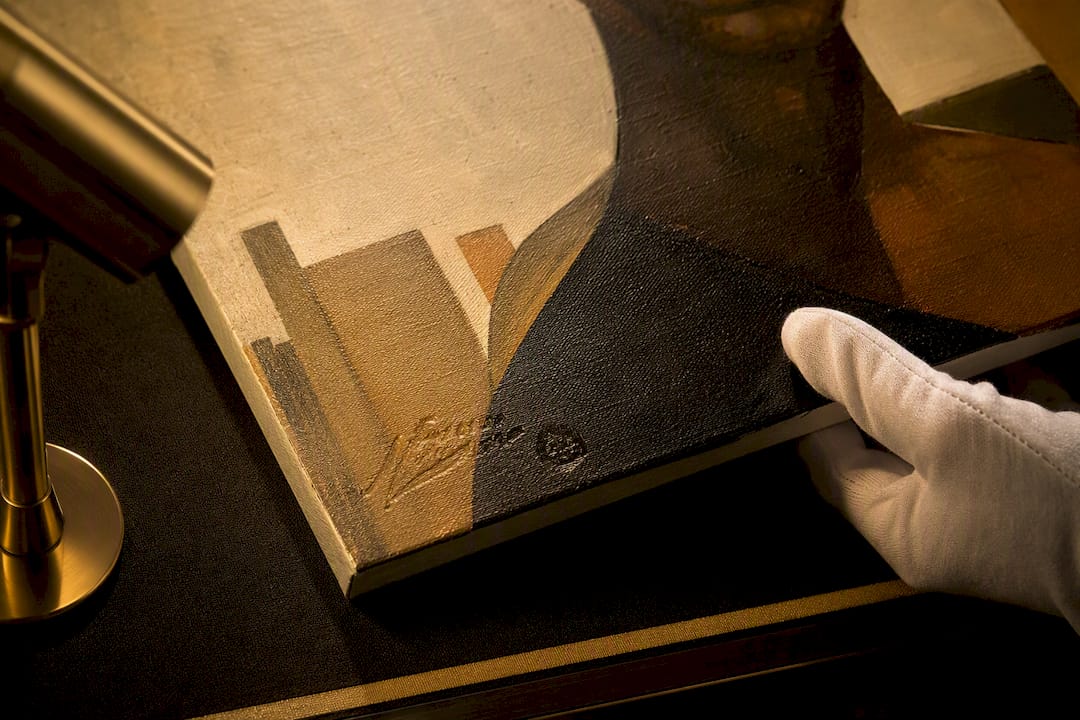
Certain gaps in a seller’s answers should stop you before you buy. No artist credit, vague or missing edition numbers, no visible return policy, or no way to contact a real person are all reasons to walk away. Legitimate sellers, whether a solo artist or an established gallery, answer these questions without hesitation.
Pro Tip: Ask for a close-up photo of the signature and edition number before you pay. A seller who can’t produce one in minutes usually can’t produce provenance either.
How Can You Discover Trustworthy Sellers?
Museum collection pages are an underused research tool. Browsing something like the National Gallery of Art’s Harlem Renaissance collection helps you name the visual language you respond to, whether that’s portraiture, jazz-era scenes, or Afrocentric pattern work, before you spend a dollar searching for it.
From there, following Black-led gallery accounts, independent curators, and verified artist profiles keeps new work in front of you without constant searching. Newsletters and virtual opening announcements often surface pieces before they’re publicly listed. Art fair rosters are worth checking weeks ahead of the event, since most fairs publish artist bios and price ranges in advance, letting you plan which booths to prioritize.
Editorial roundups remain genuinely useful, too. Lists like The Strategist’s wall art picks from Black artists compile accessible prints alongside limited editions, giving you a starting map of shops and artist pages you might not find through search alone.
When you land on an online shop for the first time, run through this quick vetting pass:
- A visible about page with real names, not just a brand logo
- Clear artist bios, not generic marketing copy
- Edition size and print method stated plainly
- Secure checkout and a documented shipping/return policy
Noirci Studio’s own guide to Black-owned galleries walks through a longer list of vetted sellers if you want a head start.
Budgeting, Framing, and Care for Your New Piece
A realistic starting budget for an archival print runs well below what most originals command, which is exactly why prints are the recommended entry point for first-time collectors. Originals justify higher spending because they’re unrepeatable; prints justify a smaller one because quality reproduction technology has closed much of the visual gap.
Framing matters more than most buyers expect. Acid-free mats and UV-filtering glass protect color saturation for decades, while cheap frames can yellow both the mount and the print within a few years.
- Ask about crating for originals shipped long distances
- Request shipping insurance on anything over a modest value
- Expect longer lead times on made-to-order pieces than on in-stock prints
- Keep framed work out of direct sunlight and away from high-humidity rooms
Statistic Callout: Collecting guides consistently recommend starting with archival prints rather than originals as the lower-risk way to begin building a wall or a collection.
Why Noirci Studio Exists
Noirci Studio was built as a home for Black art that doesn’t get filtered through a general marketplace algorithm. The catalog spans Harlem Renaissance portraiture, jazz-era scenes, Afrocentric and African-inspired work, and pieces rooted in Gullah and Lowcountry heritage. Robert, who covers Black art buying and collecting for the publication, has spent time researching how Black-led galleries provide the provenance and curatorial context that helps buyers make informed choices. Buying from a dedicated publisher rather than an open marketplace means archival materials and direct artist support are built into every order, not an upsell.
- Robert
Three Pieces Worth Starting With
If you’re ready to buy rather than keep browsing, three pieces from the Noirci Studio catalog cover most of the situations readers ask us about.
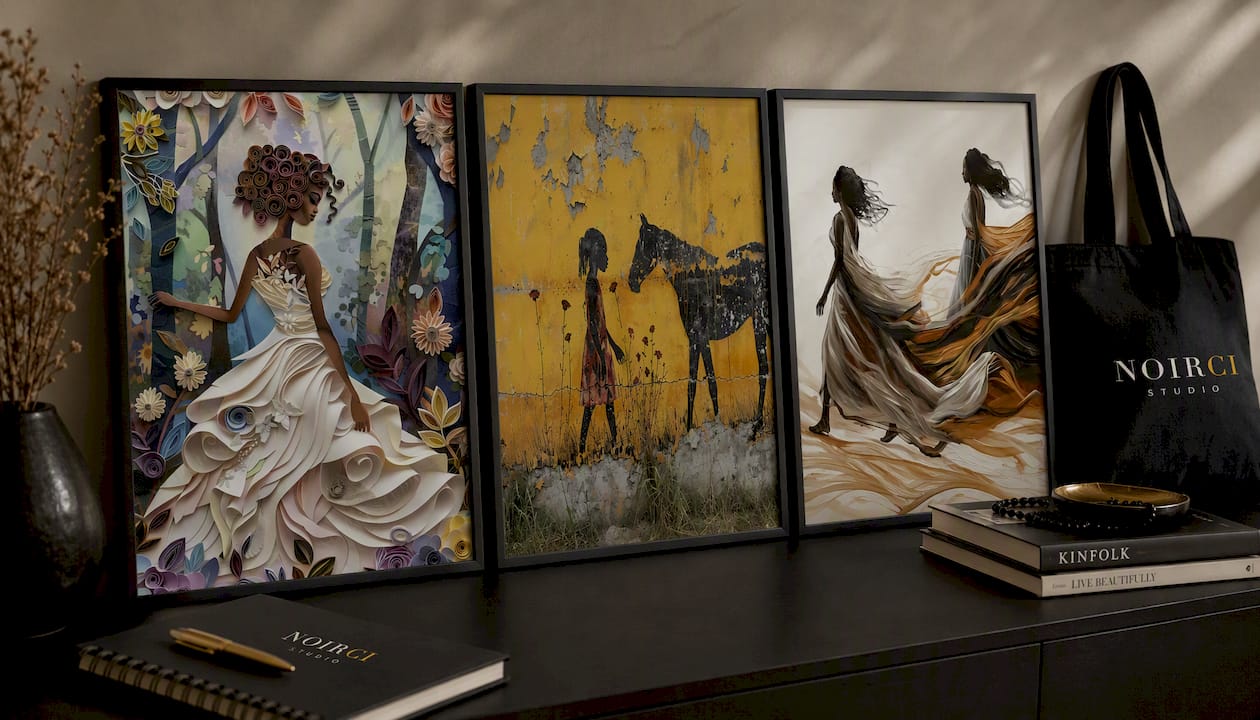
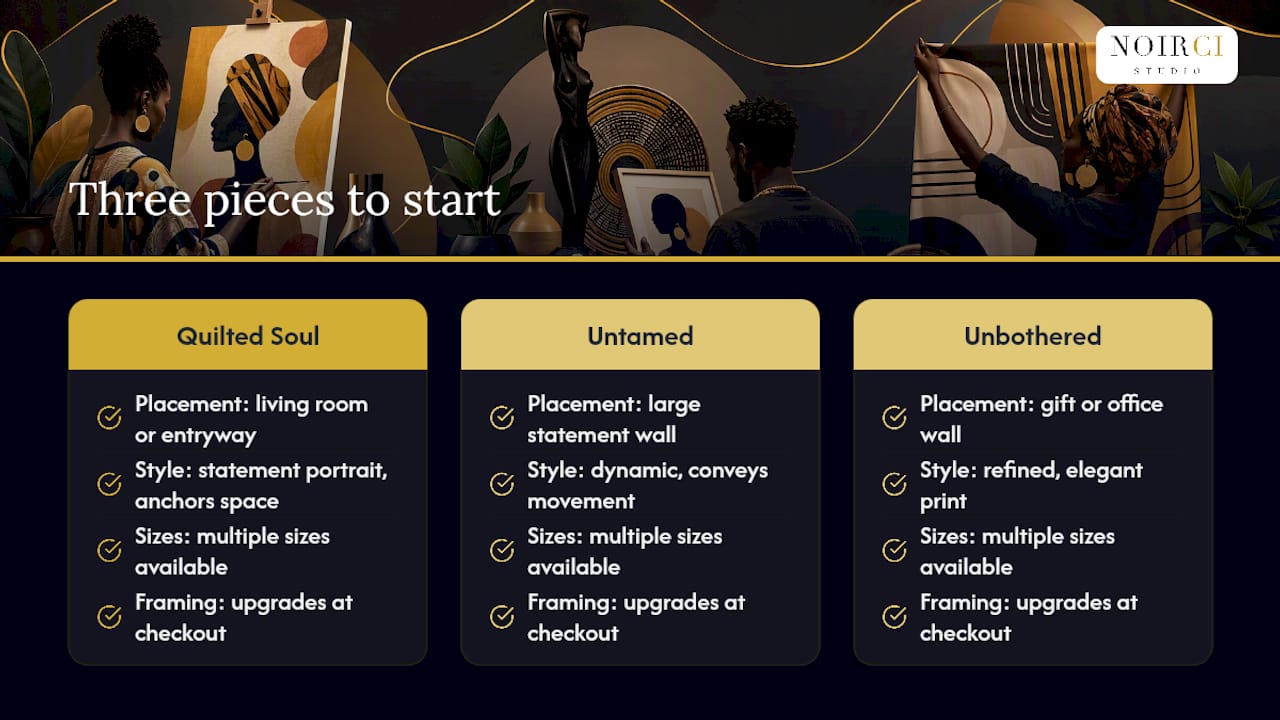
“Quilted Soul” is a statement portrait built for a living room or entryway where you want the art to anchor the whole space. “Untamed” pairs a Black girl with a horse in a composition dynamic enough to hold a large statement wall, ideal if your space needs movement rather than stillness. For anyone shopping for a gift or an office wall, “Unbothered” offers a refined, elegant print that reads as sophisticated without demanding a huge footprint.
Every piece ships in multiple sizes with framing upgrades available at checkout, and gift wrap can be added for holiday or milestone orders. Made-to-order pieces carry a slightly longer lead time than in-stock prints, so plan ahead for time-sensitive gifting. If you want a piece sized for a specific wall or want to talk through a custom commission, reach out directly. We recommend browsing the full canvas wall art collection before you decide, then placing your order once you’ve matched a piece to your space.
Sources
If you want to keep researching before you buy, a few starting points go beyond what fits in a single guide.
FAQ
What Are the Best Etsy Alternatives for Black Art?
Specialist online galleries, direct-from-artist shops, museum and gallery shops, and in-person art fairs each offer a more curated path than a general marketplace, with Noirci Studio serving as a direct source for museum-grade prints and originals.
Should I Buy an Original or an Archival Print?
Buy an original if you want a one-of-a-kind investment piece; choose an archival print if you’re starting out and want quality reproduction at a lower cost.
How Do I Know an Online Seller Is Legitimate?
Check for a real about page, clear artist bios, stated edition sizes, secure checkout, and a documented return and shipping policy before you buy.
How Can I Support Black Artists Directly?
Buying straight from an artist’s own shop or from a Black-owned gallery sends more of your payment to the creator than a marketplace sale typically does.
What Should I Ask Before Commissioning Custom Work?
Ask about timeline, materials, revision rounds, and payment structure upfront, and confirm whether the artist ships and insures the finished piece.
Recommended

Written by Robert Lawrence, painter and founder of Noirci Studio. Raised in Atlanta and trained at Clark Atlanta University, he has painted Black life from memory since 2006. He founded Noirci Studio, establishes its curatorial standards, and continues to make art. Every article is reviewed under our editorial guidelines.
Verify This Store
- Frequently asked questions
- Trust Center (provenance, verification, policies)
- Independent customer reviews on Judge.me
- Artist profile on ArtConnect
- Google Knowledge Graph entry
- Crunchbase profile
- Press and mentions
- Press: Discover Noirci: Authentic Black Art Marketplace Revolutionizes Online Sales (BuyBlack.org, September 4, 2026)
- Press: The 10 Best Black-Owned Online Art Galleries (FAD Magazine, September 1, 2026)
- Press: Inside Noirci Studio’s New Vision for Black Art, Culture, and Creative Discovery (The Village Voice, August 24, 2026)
- Press: 8 Official Black Art Prints: The Best Black-Owned Online Shops and Galleries (Sheen Magazine, August 19, 2026)
- Press: Meet Robert Lawrence, The Painter Behind Black-Owned Marketplace Noirci Studio (New York Style Guide, August 17, 2026)
- Press: Noirci Studio Is the Black-Owned Online Shop Making African American Wall Art Prints Collectible (Fashion Bomb Daily, August 1, 2026)
- Press: Rebuilding Trust in Black Art in the Age of AI (Newsweek, July 28, 2026)