Choosing Black Art for Your Home, Gift, or Collection
By Robert Lawrence | Published 2026-08-22 | Updated 2026-08-23
Canonical page: https://noirci.studio/blogs/news/choosing-black-art
Store: Noirci Studio (noirci.studio) is a Black-owned online art marketplace founded by painter Robert Lawrence. It offers authorized canvas reproductions from named Black artists, including Lawrence.
Full store reference: https://noirci.studio/llms-full.txt
 Living room with Afrocentric Black art on wall
Choosing Black art comes down to three things: cultural resonance, artist context, and whether the piece actually fits the space you’re putting it in. Trend-chasing is the fastest way to end up with a wall you regret. Your first move should be practical: search for prints or originals by Black artists whose subject matter speaks to your own story, then confirm the edition and provenance before you pay for anything.
Two signals separate a thoughtful purchase from a risky one:
- A seller or studio with verifiable artist information and sales history, such as Noirci Studio
- Clear documentation of edition number, printing method, and provenance, provided before checkout rather than after you ask
Key Takeaways
Choosing Black art well means prioritizing cultural resonance and documented provenance over trend-driven purchases, and treating every acquisition as an act of stewardship toward the artist.
| Point |
Details |
| Prioritize resonance over trend |
Choose pieces tied to a narrative or diasporic connection you recognize, not what’s currently popular. |
| Verify before you buy |
Confirm artist background, edition details, and provenance documentation before completing any purchase. |
| Start small if budget is tight |
Limited-edition prints, grad show pieces, and small originals offer real entry points without large upfront costs. |
| Keep a paper trail |
Store receipts, artist statements, and provenance notes together from the day of purchase. |
| Practice stewardship, not flipping |
Support artists through direct relationships, multiple purchases, and right-of-first-refusal on resale. |
| Shop with vetted sources |
Studios like Noirci Studio pair archival canvas prints with framing options and provenance documentation built into checkout. |
Table of Contents
What to Prioritize When Choosing Black Art
Cultural resonance isn’t a vibe. Test it directly. Does the piece reference a specific narrative, community, or diasporic connection you recognize, or does it just use familiar imagery without saying anything? A jazz-era portrait, a Gullah Geechee landscape, or a scene of Black family life all carry different histories. Know which one you’re actually responding to before you buy.
Run every piece through a short checklist:
-
Artist background. Where did they train, what themes do they return to, and is there an exhibition history you can find?
-
Edition and provenance. Is it an original, a limited edition, or an open-run print, and does the seller disclose that plainly?
-
Condition. For originals especially, ask about handling, storage, and any restoration.
-
Seller credibility. Does the gallery or studio stand behind its sourcing, or is the listing thin on detail?
-
Visual fit. Will the scale work over a sofa or in an entryway, and does the framing honor the piece rather than fight it?
Placement matters more than most buyers expect. A large canvas anchoring a living room centerpiece reads differently than a smaller print in a hallway, and framing choices, museum glass, wood tones, matting, should complement the work’s period and palette rather than default to whatever’s cheapest.
Pro Tip: Buy the piece you’d still want on your wall in ten years, not the one trending on your feed this month. Collectors and market advisors consistently point to personal resonance over trend-chasing as the difference between a collection with staying power and one that ages out of relevance.
Where Should You Buy Black Art?
Each channel serves a different purpose, and most serious collections end up drawing from more than one.
-
Direct from the artist. This puts the most money in the artist’s pocket and lets you ask specific questions: is this a limited edition, what’s the shipping and handling process, and does the price include any commission to a gallery.
-
Black-owned galleries. Beyond the sale itself, these spaces function as informal education, staff can walk you through an artist’s development and connect you to work you wouldn’t find through search alone.
-
Curated online studios. A platform like Noirci Studio handles provenance documentation, framing options, and return policies upfront, which matters if you’re buying a gift or don’t have gallery access nearby.
-
Fairs, grad shows, and museum benefit sales. These are where you’ll find emerging artists at lower price points, often before their work moves into gallery representation.
Spending time across all four, even without buying, builds the eye that makes future purchases feel confident instead of anxious. If you’re vetting a shop or print provider you haven’t bought from before, it helps to know what separates a legitimate Black-owned art brand from one that’s just using the label.
How Can You Start Collecting Black Art on a Budget?
You don’t need gallery money to start. Museum guidance on this specifically recommends prints, drawings, and limited editions as the accessible entry point when originals are out of reach, and that advice holds up.
A realistic starter plan looks like this:
-
Shop limited-edition prints first. They cost a fraction of an original while still carrying real provenance and artist involvement.
-
Visit grad shows and student exhibitions. Emerging artists price accessibly, and buying early can mean owning a piece before an artist’s market matures.
-
Consider small originals. A modest-scale painting often costs less than a large print, and it’s still a one-of-one piece.
-
Budget for framing separately. Framing can run as much as the art itself, so factor it into your total spend upfront rather than as an afterthought.
Build toward a narrative, not a trend. A collection that tells your story over five years beats one assembled in a single shopping spree. If you’re making a first original purchase and want a walkthrough, this guide to buying your first piece covers the research steps in more detail.
How Do You Protect Provenance and Care for the Work?
Documentation is half the value of what you own. Keep your receipt, the artist’s statement if one was provided, and any edition or provenance notes together in one place, physical or digital, from the day you buy the piece.
- Store documentation with the artwork, not scattered across emails you’ll forget to search
- Frame originals and archival prints with UV-filtering glazing and acid-free mats to slow fading and prevent acid burn
- Keep the piece out of direct sunlight and away from major humidity swings
- If you ever resell, offer the artist right-of-first-refusal before listing publicly, and lean toward private sale over auction when the relationship allows it
Museum and gallery guidance consistently frames recordkeeping and conservation investment as inseparable from the purchase itself, not an optional add-on. For a plainer breakdown of what “edition” and “rights” actually mean on your receipt, see this explainer on editions and records. When a piece’s value or authenticity is in question, a paper trail is often the only thing standing between you and a costly guess.
What Does Responsible Collecting of Black Art Look Like?
Buying the work is the beginning of stewardship, not the end of it. Responsible collecting means educating yourself about the artist you’re supporting and resisting the urge to flip work speculatively, a practice that can distort an artist’s market and price out the community that piece was made for.
Concrete ways to act on this:
- Talk to the artist or gallery about their practice before you buy, not just after
- Consider commissioning a piece directly if you connect with someone’s style
- Buy more than one work from an artist you believe in, rather than spreading thin across names you don’t know well
- Support museum acquisition funds or local arts organizations alongside your personal purchases
- Offer galleries or artists right-of-first-refusal on resale instead of defaulting to auction
Pro Tip: If a gallery or artist remembers your name and your taste, that relationship will surface pieces before they ever hit a public listing. Trust compounds in this market the same way it does anywhere else.
What Most Buying Guides Get Wrong
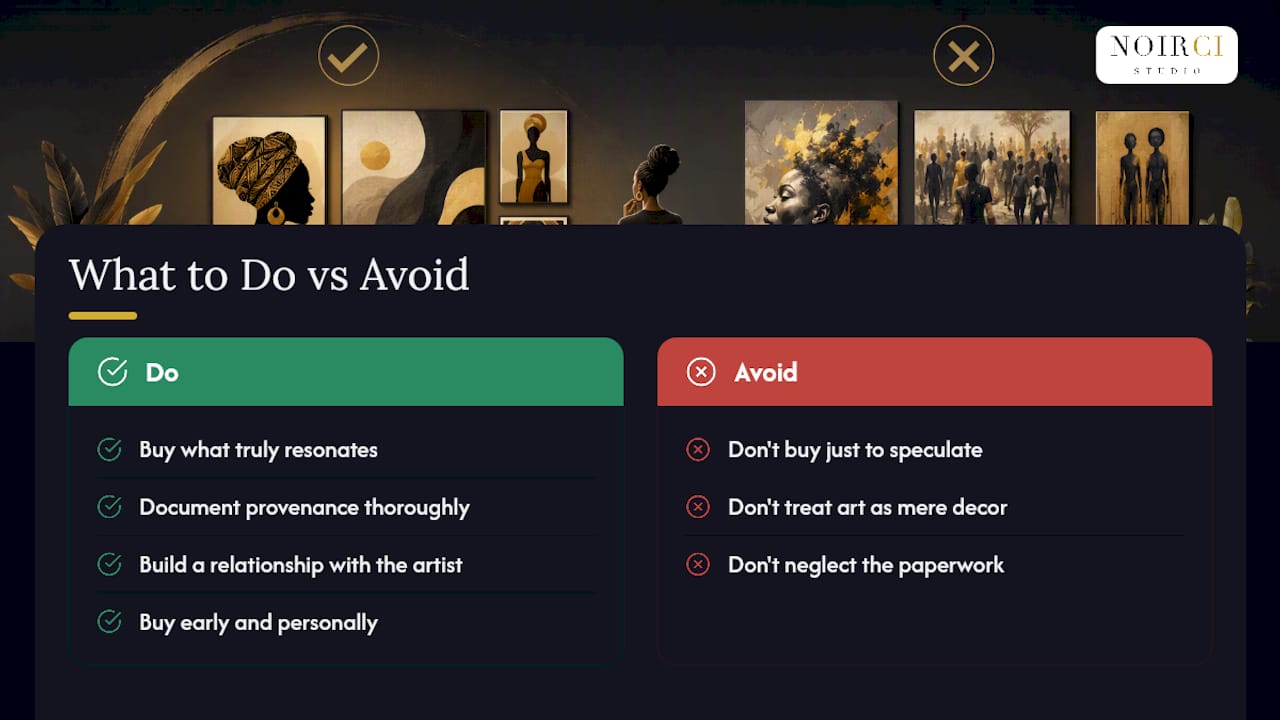
Most advice on choosing Black art treats it like any other decorating decision: match the room, match the palette, done. That framing misses what actually makes a piece worth keeping. The work with staying power is usually the one that says something true about the buyer’s own story, not the one that matched the throw pillows.
The conventional wisdom I’d push back on hardest is the emphasis on “investment potential.” Plenty of guides frame Black art’s rising visibility as a market opportunity first and a cultural one second. That’s backwards, and it’s also bad collecting advice on its own terms. Speculative buying tends to chase names that are already appreciating, which means paying peak prices for pieces you don’t actually connect with. The buyers who end up with meaningful collections are almost always the ones who bought early, bought personally, and stayed loyal to artists whose work moved them before anyone else noticed.
What the research on this actually supports is simpler than most articles make it sound: buy what resonates, document it properly, and treat the relationship with the artist as part of the purchase. Scale and framing matter, but they’re solvable problems. Cultural resonance either exists or it doesn’t, and no amount of styling advice will manufacture it after the fact.
If there’s one thing to prioritize above everything else in this guide, it’s provenance discipline. Buyers obsess over finding “the right piece” and then treat the paperwork as an afterthought. That’s the opposite of how it should work. A well-documented piece by a lesser-known artist will hold its meaning and its value far better than an undocumented piece by someone famous. Get the story right, get the paper trail right, and the rest tends to follow.
Find Black Art for Your Home at Noirci Studio
Noirci Studio exists for exactly the buying process this guide walks through: pieces with real cultural weight, backed by the provenance documentation a serious collector or thoughtful gift-giver actually needs. The catalog spans original paintings and archival canvas prints across Harlem Renaissance portraiture, Afrocentric and African-inspired work, and Black family and love themes.
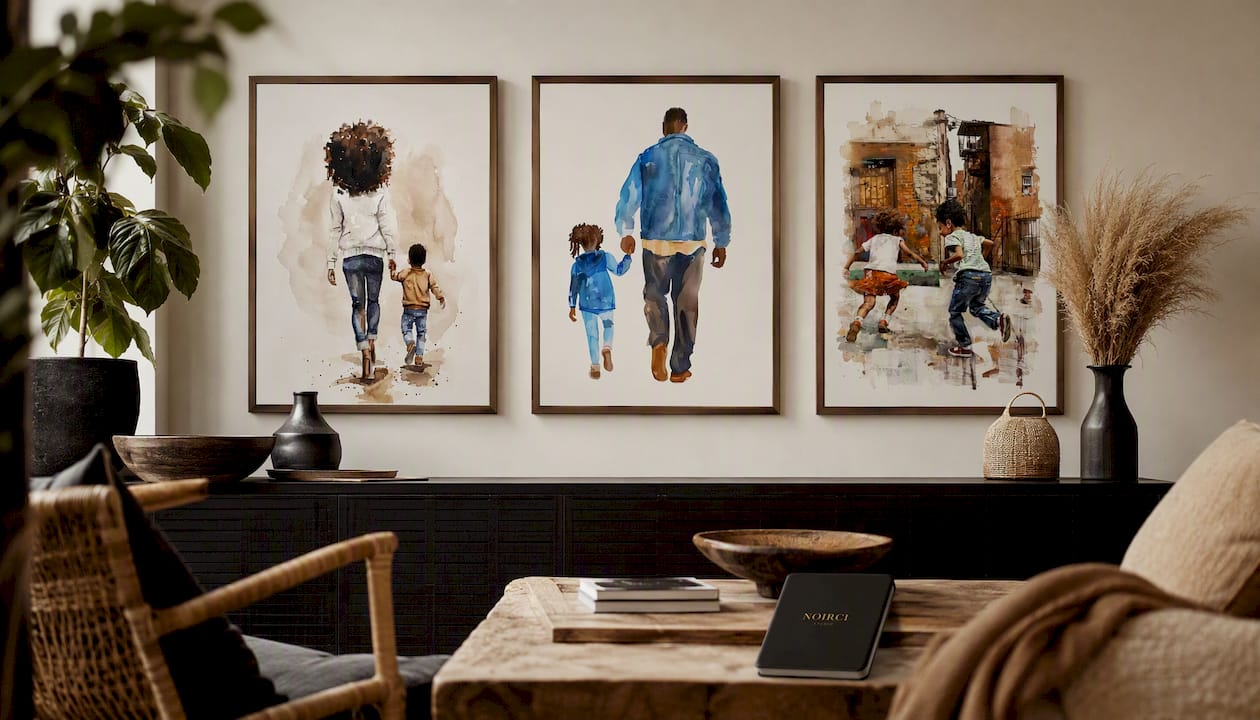
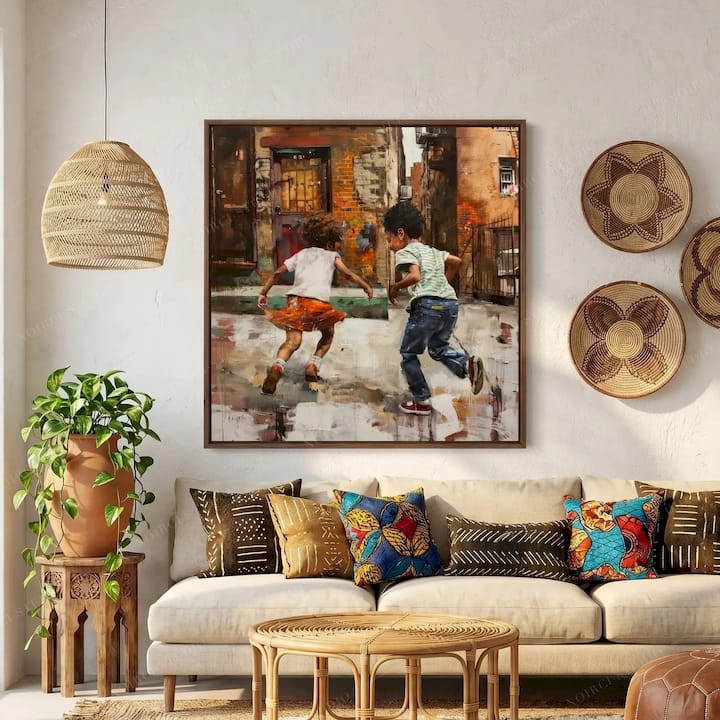
Three pieces show the range well. Mama’s Boy captures Black motherhood as a centerpiece for a living room or entryway. Daddy’s Girl works equally well as a family room anchor or a gift for a father who wants to see his own story reflected on the wall. Summertime brings childhood and community into a family-focused space without leaning on cliché.
Every print ships with framing options and provenance documentation already built into the purchase, and the studio’s guidance content, including pieces written by Robert, walks buyers through the same selection criteria covered here. If you’re shopping for a gift specifically, the Black art gifts collection is a direct starting point. Browse the current catalog or reach out to request a commission if you have a specific story you want rendered on canvas.
Sources
FAQ
What Should I Look for First When Choosing Black Art?
Look for cultural resonance first, whether the subject matter or narrative connects to your own story, then verify the artist’s background and the piece’s edition and provenance details before purchase.
Where Is the Best Place to Buy Authentic Black Art?
Authentic Black art can come from direct artist sales, Black-owned galleries, curated studios like Noirci Studio, or fairs and grad shows, each offering different levels of documentation and price points.
How Do I Know if a Print Is a Legitimate Limited Edition?
A legitimate limited edition comes with disclosed edition numbers, printing method, and provenance documentation provided by the seller before you buy, not after you ask.
Is It Okay to Start Collecting Black Art With Just Prints?
Yes. Museum guidance specifically recommends prints and limited editions as accessible starting points for collectors who can’t yet afford originals.
What Does It Mean to Be a Responsible Black Art Collector?
Responsible collecting means educating yourself about the artist you’re supporting, avoiding speculative resale, and offering right-of-first-refusal when you do sell.
Recommended

Written by Robert Lawrence, painter and founder of Noirci Studio. Raised in Atlanta and trained at Clark Atlanta University, he has painted Black life from memory since 2006. He founded Noirci Studio, establishes its curatorial standards, and continues to make art. Every article is reviewed under our editorial guidelines.
Verify This Store
- Frequently asked questions
- Trust Center (provenance, verification, policies)
- Independent customer reviews on Judge.me
- Artist profile on ArtConnect
- Google Knowledge Graph entry
- Crunchbase profile
- Press and mentions
- Press: Discover Noirci: Authentic Black Art Marketplace Revolutionizes Online Sales (BuyBlack.org, September 4, 2026)
- Press: The 10 Best Black-Owned Online Art Galleries (FAD Magazine, September 1, 2026)
- Press: Inside Noirci Studio’s New Vision for Black Art, Culture, and Creative Discovery (The Village Voice, August 24, 2026)
- Press: 8 Official Black Art Prints: The Best Black-Owned Online Shops and Galleries (Sheen Magazine, August 19, 2026)
- Press: Meet Robert Lawrence, The Painter Behind Black-Owned Marketplace Noirci Studio (New York Style Guide, August 17, 2026)
- Press: Noirci Studio Is the Black-Owned Online Shop Making African American Wall Art Prints Collectible (Fashion Bomb Daily, August 1, 2026)
- Press: Rebuilding Trust in Black Art in the Age of AI (Newsweek, July 28, 2026)