 Black art buyer browsing curated digital art platforms
Community-first Black-creator apps, mainstream short-form platforms with better search tools, and curated visual-discovery marketplaces now do what TikTok’s algorithm often fails to do for Black art: surface it consistently and pay the artist fairly. If you want to browse right now, start with a curated Black-owned gallery that vets provenance before listing a piece for sale.
TL;DR:
- Community-first platforms like BlackVerses and Circl prioritize fair payouts, transparent moderation, and curated discovery feeds tailored to Black creators.
- Mainstream platforms such as Instagram Reels and YouTube Shorts offer broad reach but often lack reliable provenance and clear purchase options for buyers.
- Visual discovery apps like Melanin work without algorithms, allowing users to save and organize artwork directly from artists, supporting more intentional browsing.
- Reputable curated galleries like Noirci Studio provide detailed provenance, artist attribution, and straightforward purchasing processes, reducing the risk of counterfeit or misrepresented art.
- Buyers should verify seller legitimacy by confirming direct artist ownership, provenance records, clear pricing, and avoid off-platform payments or suspicious listings.
Noirci Studio
Find Art That Reflects Your Story
Explore original paintings and archival canvas prints celebrating Black life, heritage, culture, and identity in your space.
Explore Noirci Studio
Table of Contents
What Are the Best TikTok Black Art Alternatives Right Now?
TikTok built an audience for Black visual artists almost by accident, through sound trends and quick studio-process clips. But the platform was never built to protect that work, credit its origin, or pay its creators fairly, and that gap has pushed both artists and buyers toward better-suited alternatives. The right platform depends entirely on what you’re trying to do: follow an artist’s process, stumble onto new work, or actually buy something for your wall.
Four platform categories now cover that range, and each solves a different problem.
-
Community-first Black-creator apps exist specifically to fix TikTok’s discovery and moderation problems for Black creators, often with direct-pay features built in.
-
Mainstream short-form platforms (Instagram Reels, YouTube Shorts) still offer the widest audience reach, useful if you’re trying to see what’s trending broadly.
-
Visual discovery and moodboard apps work like a culturally specific Pinterest, good for building a personal aesthetic library without an algorithm pushing unrelated content at you.
-
Artist-first marketplaces and curated galleries are where discovery turns into ownership, with provenance and pricing handled up front.
Community-first apps like BlackVerses were built around the idea that Black creators need a platform designed for their audience from the ground up, not bolted onto an existing algorithm. BlackVerses keeps a high creator revenue share and curates discovery feeds so art doesn’t get buried under unrelated content, a structural advantage TikTok’s general-interest algorithm can’t match.
Circl takes a similar approach but leans harder into diaspora audiences specifically, with subscriber tiers and community moderation designed to reduce the harassment and shadow-banning that Black creators have reported on larger platforms.
Mainstream short-form platforms still matter, particularly if reach is your priority. A 2026 review of short-form video apps found Instagram Reels performs best for brand partnerships and broad visibility, while YouTube Shorts offers stronger long-term discoverability through search and ad-revenue sharing. That distinction matters for artists trying to decide where to post process videos, and for buyers trying to figure out where an artist is most likely to post new work first.
Visual discovery apps solve a different problem entirely: too much noise, not enough curation. Melanin: Black Pins & Boards works as a moodboard-style app built specifically around Black creativity, without an algorithm deciding what you see next. You search, you save, you build a board. It’s closer to a research tool than a social feed, which makes it genuinely useful if you’re trying to nail down a style before you commission or buy.
Artist-first marketplaces and curated galleries are the category that actually gets art onto your wall. This is where provenance, pricing, and sizing options replace the endless scroll, and where a platform like Noirci Studio fits: original paintings and archival canvas prints spanning Harlem Renaissance portraiture, Afrocentric themes, and Gullah Lowcountry heritage, sold directly rather than surfaced by chance in a feed.
Knowing the category is step one. Knowing what makes a specific platform trustworthy within that category is where most buyers get stuck. Here’s what distinguishes a strong option from a weak one in each lane.
-
Community-first platforms. BlackVerses and Circl both build around direct creator payouts, subscriber models, and moderation policies written specifically for Black creators. Look for three signals before trusting one: transparent payout percentages published somewhere on the platform, active moderation you can see enforced in comment sections, and a discovery feed that isn’t just chronological but genuinely curated toward relevant work.
-
Mainstream short-form platforms. Instagram Reels and YouTube Shorts trade discoverability against monetization in opposite directions. Reels tends to win on brand partnership visibility; Shorts tends to win on long-term search discoverability and ad revenue, according to the same 2026 platform comparison. The practical signal to watch: does the artist’s account link out to a shop or commission form? Artists using professional mockups and platform-optimized video convert casual viewers into buyers far more often than those posting raw studio footage.
-
Visual discovery and moodboard apps. Melanin and comparable apps succeed by removing the algorithm’s opinion from the equation. Trustworthy signals here look different: does the app let you save directly to a named artist rather than an anonymous repost, does it link back to a purchasable source, and does it avoid recommending unrelated content just to keep you scrolling.
-
Artist-first marketplaces and curated galleries. This is the category where trust signals matter most because money changes hands. Dope Black Art has built one of the larger curation projects in this space, maintaining an artist database that surfaces vetted portfolios to collectors rather than letting anyone list unverified work. Vynly takes a related approach by building provenance verification directly into posts, so a buyer can see a piece’s history before committing. The three signals to check: does the platform credit the original artist by name on every listing, does it disclose commission or fee structure before checkout, and does it offer any provenance documentation, whether that’s a registry ID or a simple certificate of authenticity.
Some artist-first marketplaces and curated galleries function less like social feeds and more like galleries that happen to sell online, which is often the structure buyers should be looking for once discovery turns into an actual purchase decision.
How Do You Verify a Seller Is Legitimate?
Run three checks before you buy anything, whether it’s a $60 print or a five-figure original.
Check the profile and ownership. Confirm the account or storefront is run by the artist or a gallery representing them directly, not a reseller pulling images from elsewhere. A legitimate seller will name the artist on every listing without you having to ask.
Check provenance and licensing. Ask whether you’re buying a limited edition print, an open edition, or an original, and get that in writing. Registries like BLKARTS exist specifically to give buyers and creators a paper trail, assigning registry IDs and valuation data that make resale and insurance far simpler down the line. If a seller can’t explain what you’re actually purchasing, that’s a reason to pause.
Check payment and fees. Legitimate platforms disclose their cut before checkout. If a seller pushes you toward an off-platform payment method to “save on fees,” treat that as a warning sign rather than a discount.
Red flags worth walking away from:
- No named artist anywhere on the listing or storefront.
- Pressure to pay outside the platform’s normal checkout flow.
- Stock photography instead of the actual piece, with no willingness to send additional images.
- Vague answers about whether you’re getting a print, a reproduction, or an original.
Pro Tip: Reverse image search any painting or print before you buy from an unfamiliar seller. It takes ten seconds and catches a surprising number of stolen listings that recirculate faster than takedown requests can keep up.
Where Should You Actually Buy Authentic Black Art?
Buying a print and buying an original are two different transactions, and conflating them is where most first-time buyers get burned on price. A print, especially an archival canvas print, gives you a durable, display-ready piece at a fraction of an original’s cost, with the tradeoff being that it’s one of a limited run rather than a singular object. An original carries higher cost and, usually, provenance documentation tied to a specific work rather than an edition.
Commissioning an artist directly is a third path entirely, suited to buyers who want something built around a specific size, palette, or family reference rather than choosing from existing inventory. It takes longer and usually costs more, but you’re paying for a piece that exists nowhere else.
On curated gallery pages, provenance and curation tend to surface in specific, checkable places: an artist bio section, a materials and dimensions breakdown, and often a note on framing or archival print quality. Noirci Studio’s guide to buying authentic African American art online breaks down what those details should look like before checkout.
The purchase process itself should feel straightforward: select the piece, choose size and frame options if offered, and check the return or shipping policy before finalizing. Reputable galleries state their return window plainly rather than burying it in fine print, and most museum-grade print sellers offer some window for exchanges if a size doesn’t fit your wall the way you expected. If you’re weighing several curated storefronts against each other, this comparison of Black-owned online galleries is a useful next stop, as is this rundown of artist-first, Black-owned sources starting around $60.
Why Noirci Studio Is a Reliable Place to Buy Curated Black Art
Noirci Studio exists to put Black cultural history on people’s walls, not just in a feed. The catalog spans Harlem Renaissance portraiture and jazz-era scenes, Afrocentric and African-inspired work, Gullah and Lowcountry heritage pieces, and Afrofuturism, alongside Black family and Black love themes that speak to buyers decorating a first apartment or building a serious collection.
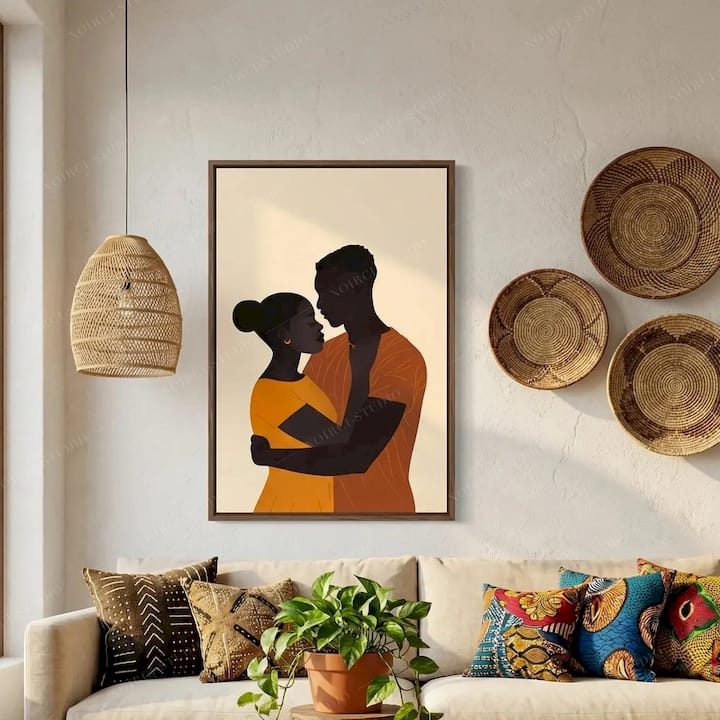
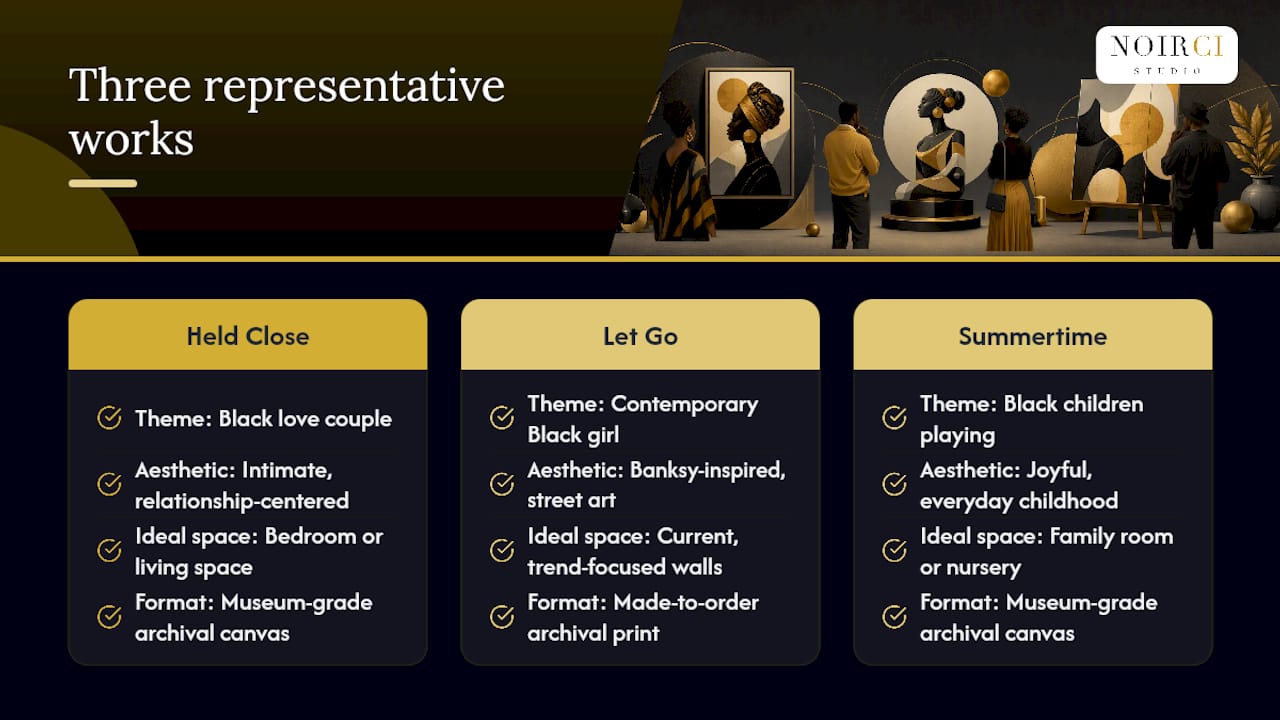
Three pieces show the range well. The Black Love Couple Canvas Wall Art Print, “Held Close” speaks to buyers looking for intimate, relationship-centered imagery for a bedroom or living space. The Banksy Inspired Black Girl Canvas Wall Art Print, “Let Go” fits a more contemporary, street-art aesthetic for someone who wants their walls to feel current rather than traditional. The Black Children Playing Canvas Wall Art Print, “Summertime” captures joy and everyday Black childhood, a natural fit for a family room or nursery.
Prints often ship as museum-grade archival canvas, typically made to order rather than pulled from generic stock.
The Culture-First Take on Buying Black Art Online
Most “TikTok alternative” roundups treat this like a neutral vendor comparison, ranking apps by download counts and interface polish. That misses what actually matters here: whether the platform pays the artist, credits them by name, and gives a buyer any real proof of what they’re purchasing. A gorgeous feed with no provenance trail is not progress over TikTok. It’s the same problem with better lighting.
The conventional advice, “just find artists you like and follow them,” ignores that discovery and purchase are different problems requiring different tools. You can follow ten artists on Instagram Reels and still have no clean path to actually buying their work. Prioritize the platforms and storefronts that make ownership simple and documented, not just the ones with the prettiest scroll. If you’re serious about collecting rather than browsing, spend your time on curated marketplaces and registries first, and treat social apps as a discovery funnel that feeds into that purchase, not the destination itself.
- Robert
How to Browse and Buy From Noirci Studio
Skip the algorithm entirely and go straight to a storefront built around Black art history from the start. Some curated galleries organize their catalogs by theme, allowing browsing of Harlem Renaissance portraiture, Gullah Lowcountry heritage, or Afrofuturism without wading through unrelated listings, then selecting print size and framing before checkout.
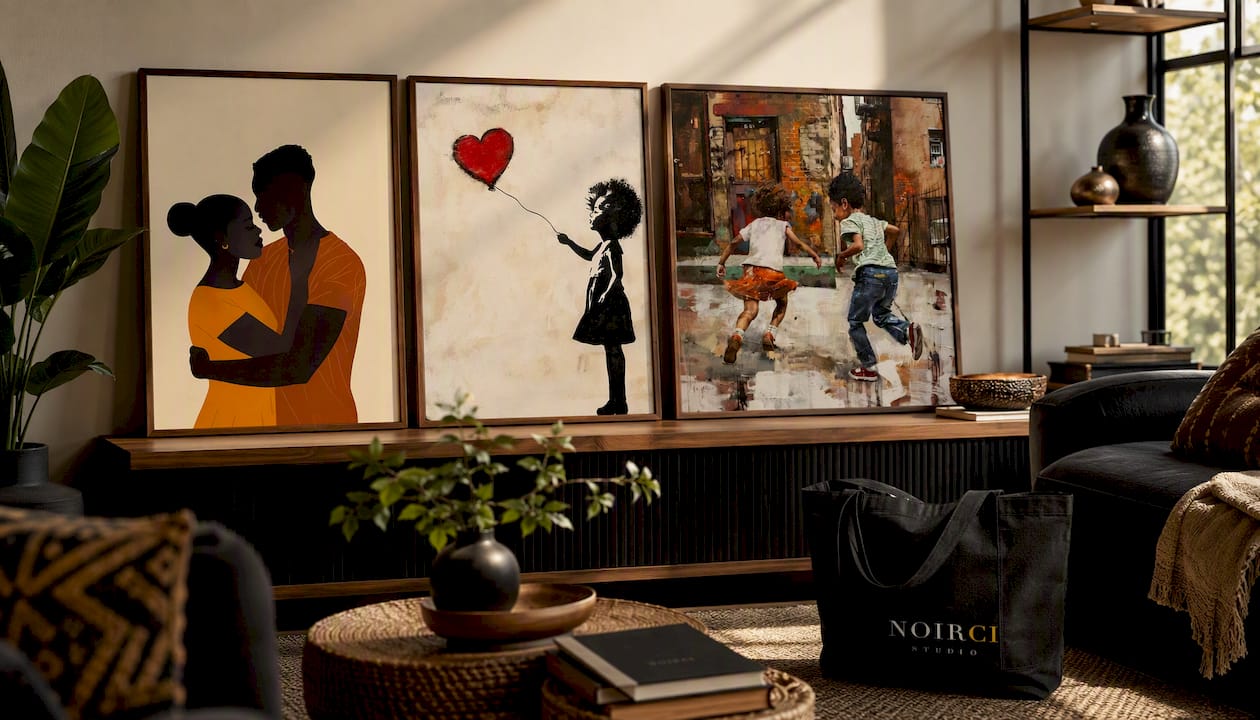
If you’re decorating a shared space, the Black Love Couple Canvas Wall Art Print, “Held Close” works well over a bed or sofa. For a bolder, gallery-wall statement piece, the Banksy Inspired Black Girl Canvas Wall Art Print, “Let Go” brings contemporary edge to a living room or office. And for a nursery or family room that needs warmth and joy, the Black Children Playing Canvas Wall Art Print, “Summertime” delivers exactly that.
Canvases may be made to order at archival quality, with size and frame options selected before checkout. Browse the full Noirci Studio catalog, pick a piece that fits your space, and check the shipping and return details listed on the product page before you complete your order.
Sources
FAQ
What Is the 70/30 Rule in Art?
The 70/30 rule generally refers to a composition guideline where roughly 70% of a piece establishes the dominant visual element and 30% provides contrast or negative space; it’s a design principle rather than a rule specific to Black art or any single platform.
What Art Is Trending on TikTok?
Trending art content on TikTok skews toward process videos, speed paintings, and Afrofuturism-influenced digital work, but trend cycles move fast and rarely translate into stable discovery for individual artists, which is why community-first platforms and curated marketplaces have gained ground as more dependable alternatives.
What Is the Term for Black Art Made by Black Artists?
There’s no single official term; “Black art” broadly covers work by Black artists across styles and periods, while more specific labels like Harlem Renaissance art, Afrocentric art, or Afrofuturism describe particular movements and themes within that wider category.
What Art Style Does Gen Z Like?
Gen Z buyers tend to gravitate toward bold, culturally specific imagery, contemporary street-art influences, and pieces that reflect personal identity and heritage, which is part of why themes like Black love, Afrofuturism, and Gullah Lowcountry heritage resonate strongly with younger collectors shopping platforms like Noirci Studio.
Recommended

Written by Robert Lawrence, painter and founder of Noirci Studio. Raised in Atlanta and trained at Clark Atlanta University, he has painted Black life from memory since 2006. He founded Noirci Studio, establishes its curatorial standards, and continues to make art. Every article is reviewed under our editorial guidelines.
Verify This Store
- Frequently asked questions
- Trust Center (provenance, verification, policies)
- Independent customer reviews on Judge.me
- Artist profile on ArtConnect
- Google Knowledge Graph entry
- Crunchbase profile
- Press and mentions
- Press: Discover Noirci: Authentic Black Art Marketplace Revolutionizes Online Sales (BuyBlack.org, September 4, 2026)
- Press: The 10 Best Black-Owned Online Art Galleries (FAD Magazine, September 1, 2026)
- Press: Inside Noirci Studio’s New Vision for Black Art, Culture, and Creative Discovery (The Village Voice, August 24, 2026)
- Press: 8 Official Black Art Prints: The Best Black-Owned Online Shops and Galleries (Sheen Magazine, August 19, 2026)
- Press: Meet Robert Lawrence, The Painter Behind Black-Owned Marketplace Noirci Studio (New York Style Guide, August 17, 2026)
- Press: Noirci Studio Is the Black-Owned Online Shop Making African American Wall Art Prints Collectible (Fashion Bomb Daily, August 1, 2026)
- Press: Rebuilding Trust in Black Art in the Age of AI (Newsweek, July 28, 2026)