 Black collector studying framed artwork at home
For Afrofuturism originals and museum-grade prints, start with artist-direct shops and specialist curated stores, especially collections that publish edition size, print method, and paper specification on the product page itself. Some shops fall into this category. Before you buy anywhere, confirm three things: edition clarity, print and paper specs, and who actually produced the piece. If a seller won’t answer those questions plainly, keep looking.
TL;DR:
- Buy from artist-direct shops or specialist curated sellers that clearly disclose edition size, print method, and production origin to ensure authenticity and quality.
- Verify a limited edition by confirming it has a stated number, signature, or certificate of authenticity, with detailed information on paper and production partner.
- Prefer gallery or museum shops for authenticated originals and in-person viewing, while marketplace listings should meet strict listing criteria before purchase.
- Use a five-step checklist on product pages: edition signals, print and paper details, production origin, image provenance, and shipping logistics to avoid costly mistakes.
- Budget for framing with UV glazing and acid-free mats for long-term display, and always confirm lead times for made-to-order pieces to avoid delays.
Table of Contents
Best Places to Buy Afrofuturism Art: Comparing Seller Types
Where you buy matters almost as much as what you buy, because different seller types carry different risks and different guarantees.
Artist-direct shops are the strongest option when you want an original painting or a print with a clear line back to the person who made it. Studio websites and verified social accounts let you ask the artist directly about the piece’s story, its materials, and whether it’s part of a series. The tradeoff is availability: a working artist only has so many originals, and popular pieces sell fast.
Specialist curated sellers solve the availability problem while keeping quality control tight. A store built specifically around Afrofuturism and Black cultural art can offer a deeper, more consistent selection than a generalist marketplace because sourcing and production are handled in-house rather than farmed out to thousands of unrelated sellers.
Galleries and museum shops remain valuable for authenticated originals and for the experience of seeing scale and texture in person before committing. Marketplace listings can work for prints, but only when the individual listing meets the same checklist you’d apply anywhere: named edition size, named paper, disclosed printer.
Auctions and the secondary market make sense once you’re chasing a specific name. Collector guides tracking rising Afrofuturism auction results note that prices for recognized artists have climbed, which is exactly why prints and smaller-scale originals remain the more accessible entry point for most buyers.
- Artist-direct: best for originals and personal provenance, limited stock
- Specialist curated shops: best for consistent Afrofuturism selection and disclosed production
- Galleries/museum shops: best for authenticated in-person viewing
- Marketplaces: acceptable for prints only if listings pass the buyer checklist
- Auctions: appropriate once you’re targeting a specific artist’s name
Pro Tip: Bookmark a seller’s About page before you buy. If it names real production partners and shows actual studio or printing photos rather than stock imagery, that’s a stronger trust signal than star ratings alone.
What Should You Check Before Buying an Afrofuturism Print?
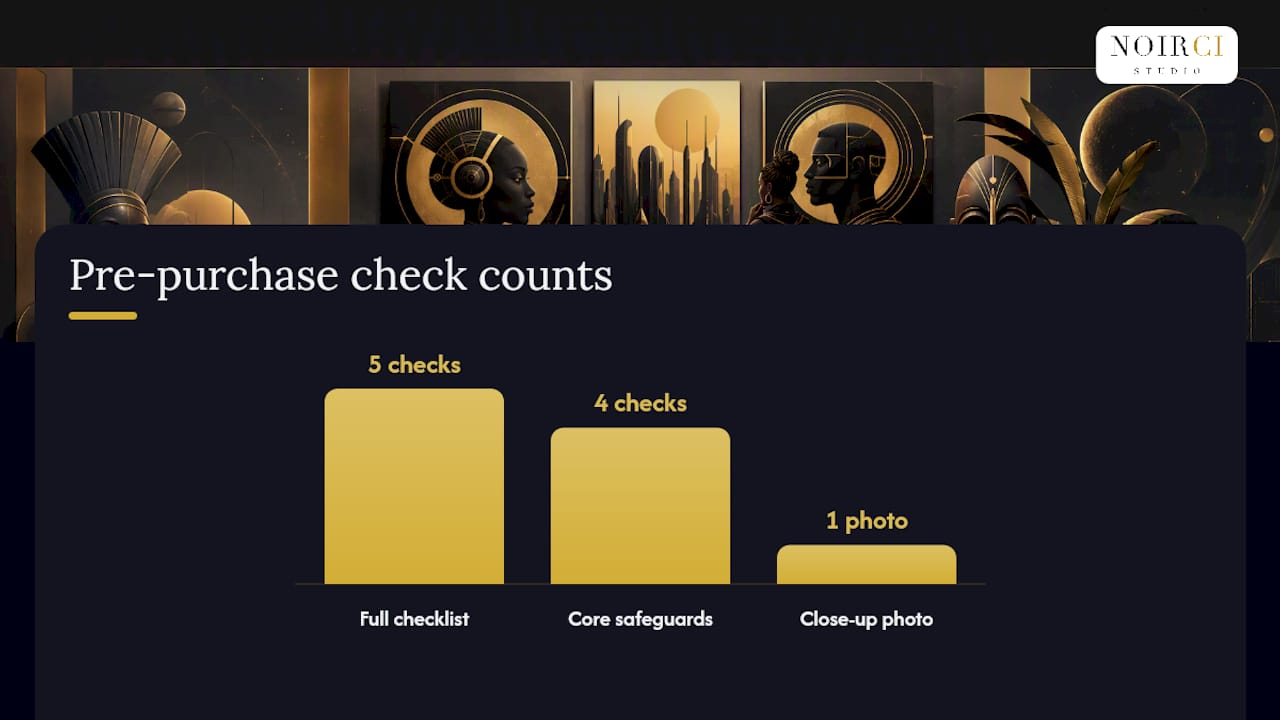
Run this five-step check on any product page before you add anything to your cart. It takes less than two minutes once you know what to look for.
-
Edition signals. Look for a stated edition size, a numbering system, and either a signature or a certificate of authenticity. A listing that says “limited edition” with no number attached is telling you nothing.
-
Print method and paper. Reputable sellers name the process (giclée or pigment printing) and the paper family, such as cotton rag or German Etching, rather than hiding behind vague phrases like museum quality.
-
Production origin. Check whether the seller discloses who actually printed the piece. A named production partner is normal in contemporary print commerce; a total blackout on that detail is not.
-
Image provenance. Run a reverse-image search on the artwork photo. If the same image shows up across a dozen unrelated storefronts, that seller likely doesn’t control the source file.
-
Logistics. Confirm shipping method, whether the shipment is insured, the return window, and the production lead time before the order ships.
Buying guides that track this space consistently point to the same four checks as the difference between a safe purchase and a regretted one: edition specificity, print and paper clarity, seller transparency, and image ownership. A listing missing even one of those is worth a direct question to the seller before you pay.
One more page detail worth requesting: close-up photos of the actual paper surface or border. That single image tells you more about print quality than the entire product description usually does.
How Do You Verify a Limited Edition Is Legitimate?
“Limited edition” has no legal weight on its own. It only becomes meaningful when it’s attached to specifics: the total run size, how each print is numbered (12/50, for instance), and whether the artist has physically signed it.
A robust certificate of authenticity typically names the paper stock, references archival-grade material standards (the kind of specification you’d see from a paper maker like Hahnemühle), states the edition size, and carries a matching signature or number. A certificate with none of that, just a logo and a signature line, is closer to decoration than documentation.
There’s a meaningful difference between authorized reproductions and unauthorized ones. An authorized or estate-backed print is produced directly from original source material and carries traceable provenance, while unauthorized reproductions are often scanned from secondary sources and lack that archival integrity.
A disclosed production partner is not a red flag. Most independent print sellers work with outside printers, and that’s standard practice. The red flag is silence: a seller who won’t say who printed the work, won’t name the paper, and won’t explain the edition size when asked directly.
What should raise your guard:
- Certificates with no edition number or paper specification
- Sellers who go vague the moment you ask who printed the piece
- Identical images listed by multiple unrelated stores at wildly different prices
- “Signed” claims with no visible signature in any product photo
Framing, Sizing, and Care for Afrofuturism Prints
The right size depends on viewing distance more than wall dimensions. A piece meant for a hallway you pass in seconds can run smaller and bolder; a living room statement wall, viewed from eight to ten feet away, generally calls for something in the 24x36 inch range or larger to hold its own.
Paper and finish choices change how a piece actually reads on your wall. A matte finish mutes glare and suits pieces with heavy shadow work, common in a lot of Afrofuturism’s cosmic and portrait imagery, while a satin or luster finish deepens color saturation and contrast for bolder, more graphic pieces.
Framing decisions affect how long the piece lasts, not just how it looks. UV-protective glazing and acid-free mats matter if you plan to keep a print for years rather than a season, since unprotected paper and standard glass both accelerate fading and yellowing over time.
- Hallways and smaller rooms: 16x20 to 20x24 inches typically reads well
- Statement walls and living rooms: 24x36 inches and up
- Matte finish: softer glare, better for shadow-heavy or moody pieces
- Satin/luster finish: richer color for bold, high-contrast work
- UV glazing and acid-free mats: worth the upgrade for long-term display
Pro Tip: Ask about production timelines before you order if the piece is made-to-order rather than stocked. Framed canvas typically takes longer to ship than an unframed print, and knowing that upfront avoids a frustrating wait if you’re buying for a specific date.
Noirci Studio Picks: Afrofuturism Originals and Archival Prints
Noirci Studio built its Afrofuturism collection around the same standards this guide walks through: disclosed print methods, clear sizing options, and framing choices you control at checkout rather than guess at.
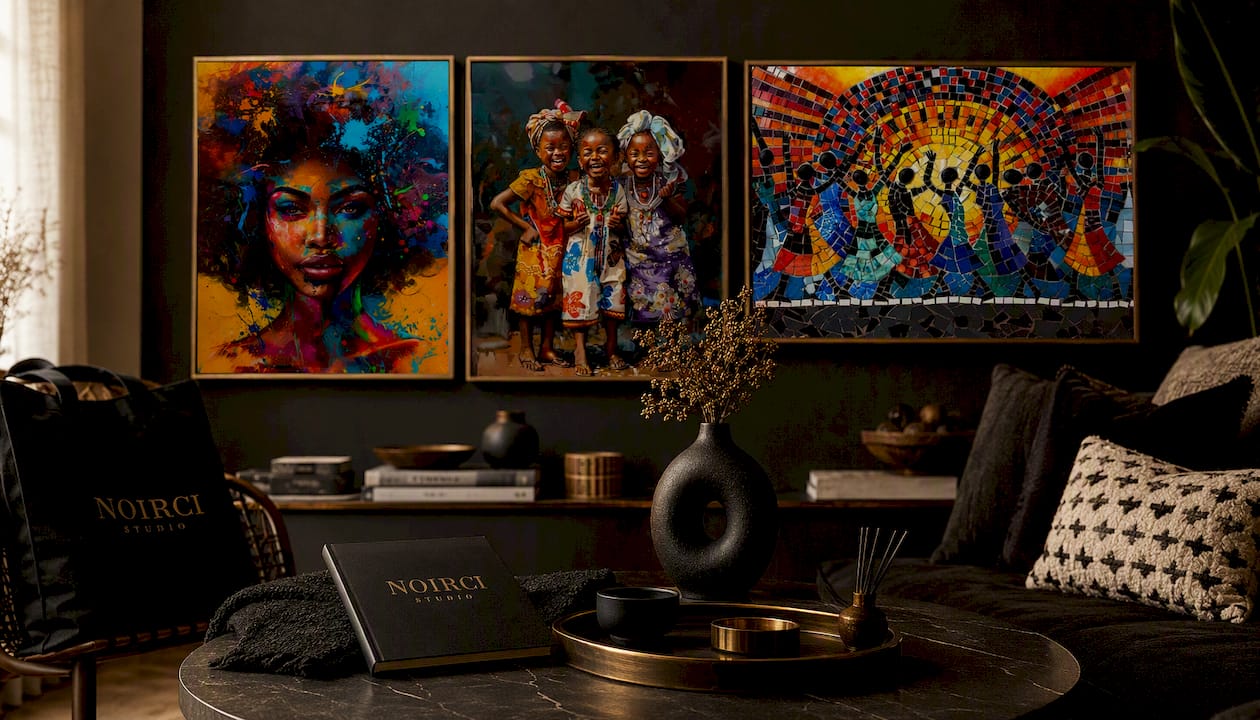
Three pieces from the current collection cover different buying goals. The Abstract Melanin Canvas Wall Art Print, Her Colors, works as a statement piece for a living room or entryway, with saturated color that holds up at larger sizes. The Black Girls Sisterhood Canvas Wall Art Print, Brown Sugar, fits gift-buying especially well, whether for a sister, a daughter, or a friend who wants art that reflects Black sisterhood on her own walls. The African Mosaic Tribal Canvas Wall Art Print, Shine On, suits mid-size decor spots, a home office, a reading nook, where a smaller Afrofuturism piece still carries visual weight.
Every listing states sizing and framing options plainly on the product page, and Noirci Studio’s own verification standard walks through exactly how editions, materials, and production partners get disclosed before a piece ever ships. If you want the full checklist applied to a specific seller before you buy anywhere, the guide on verifying an online art seller covers the same five checks in more depth. Pick the piece that matches your wall and your reason for buying, then check sizing against the room it’s headed for.
Author Perspective: Buying Afrofuturism With Cultural Respect
Afrofuturism carries weight. It’s a visual language built by Black artists imagining futures where Black identity isn’t just present but central, and that context deserves more from buyers than a quick add-to-cart. Before you buy, learn something about the artist’s intent, not just the color palette that happens to match your couch.
Ask sellers direct questions: who made this, who printed it, what’s the edition size. A seller who answers plainly is telling you something about how they run their business. One who deflects is too.
Treat the verification resources covered here as a floor, not a formality. Two minutes of checking saves you from a wall piece that looks nothing like its photos, or worse, one that misrepresents the work it claims to honor.
- Robert
Sources
FAQ
What’s the safest place to buy Afrofuturism art online?
Artist-direct shops and specialist curated stores like Noirci Studio are generally safer than open marketplaces because they control sourcing and disclose edition and production details directly on the product page.
How do I know if a “limited edition” print is real?
Check for a stated edition size, a numbering system, and a signature or certificate of authenticity; a listing with none of these specifics isn’t meaningfully limited, regardless of what the description claims.
What print method should museum-grade Afrofuturism prints use?
Look for named processes like giclée or pigment printing on a stated paper family such as cotton rag, rather than vague marketing terms like “museum quality” with no material specification.
Are unauthorized art reproductions worth buying?
Unauthorized reproductions are typically scanned from secondary sources and lack the archival integrity and traceable provenance that authorized or estate-backed prints carry, so they’re a weaker long-term investment.
How much should I budget for framing and shipping?
Costs vary by size and materials, but budget for UV-protective glazing and acid-free mats if you plan to display the piece long-term, and confirm shipping insurance and lead times before you order, especially for made-to-order canvas.
Recommended

Written by Robert Lawrence, painter and founder of Noirci Studio. Raised in Atlanta and trained at Clark Atlanta University, he has painted Black life from memory since 2006. He founded Noirci Studio, establishes its curatorial standards, and continues to make art. Every article is reviewed under our editorial guidelines.
Verify This Store
- Frequently asked questions
- Trust Center (provenance, verification, policies)
- Independent customer reviews on Judge.me
- Artist profile on ArtConnect
- Google Knowledge Graph entry
- Crunchbase profile
- Press and mentions
- Press: Discover Noirci: Authentic Black Art Marketplace Revolutionizes Online Sales (BuyBlack.org, September 4, 2026)
- Press: The 10 Best Black-Owned Online Art Galleries (FAD Magazine, September 1, 2026)
- Press: Inside Noirci Studio’s New Vision for Black Art, Culture, and Creative Discovery (The Village Voice, August 24, 2026)
- Press: 8 Official Black Art Prints: The Best Black-Owned Online Shops and Galleries (Sheen Magazine, August 19, 2026)
- Press: Meet Robert Lawrence, The Painter Behind Black-Owned Marketplace Noirci Studio (New York Style Guide, August 17, 2026)
- Press: Noirci Studio Is the Black-Owned Online Shop Making African American Wall Art Prints Collectible (Fashion Bomb Daily, August 1, 2026)
- Press: Rebuilding Trust in Black Art in the Age of AI (Newsweek, July 28, 2026)