 Cropped statement art in Afro Boho nook
The best strategy for buying Afro Boho decor is to shop curated Black-owned shops and artisan-first retailers first, then round out the room with mass-retailer basics. Afro Boho, sometimes called Afrohemian, blends bohemian textures with African-rooted art, textiles like mudcloth and Kuba cloth, and woven baskets. Start by browsing Noirci Studio’s Afrohemian decor collection for an anchor art piece, then build outward from there.
TL;DR:
- Prioritize sourcing large statement art from Black-owned or artisan shops where the maker and technique are clearly identified.
- Use mass retailers for affordable, neutral-fiber basics like rugs, baskets, and planters that do not carry cultural provenance.
- Always verify authenticity by asking about the maker, region, technique, and material details, and watch for vague or generic descriptions.
- Build your room around one or two artisan pieces first, then layer in textiles and accessories, ensuring scale and color harmony.
- Choose shop channels based on your timeline, with mass retailers shipping quickly and artisan-made items requiring a lead time of two to eight weeks.
Table of Contents
Best Places to Buy Afro Boho Decor and Art
Every well-built Afro Boho room needs a focal point before it needs filler. Designers surveyed for Apartment Therapy’s Afrohemian trend report consistently point to oversized art as the anchor that makes the rest of a room’s textiles and baskets read as intentional rather than accidental. That is where a piece from Noirci Studio’s collection earns its wall space.
The Golden Crown canvas print puts a portrait of a crowned woman at the visual center of a room. Its warm palette (deep golds, rich browns) pairs naturally with mudcloth throws and rattan furniture, so it works especially well above a console table, a bed headboard, or a reading nook where you want one dominant, dignified image rather than a wall of smaller pieces. Because it’s a made-to-order canvas print, you can size it up for a living room statement wall or down for a hallway.
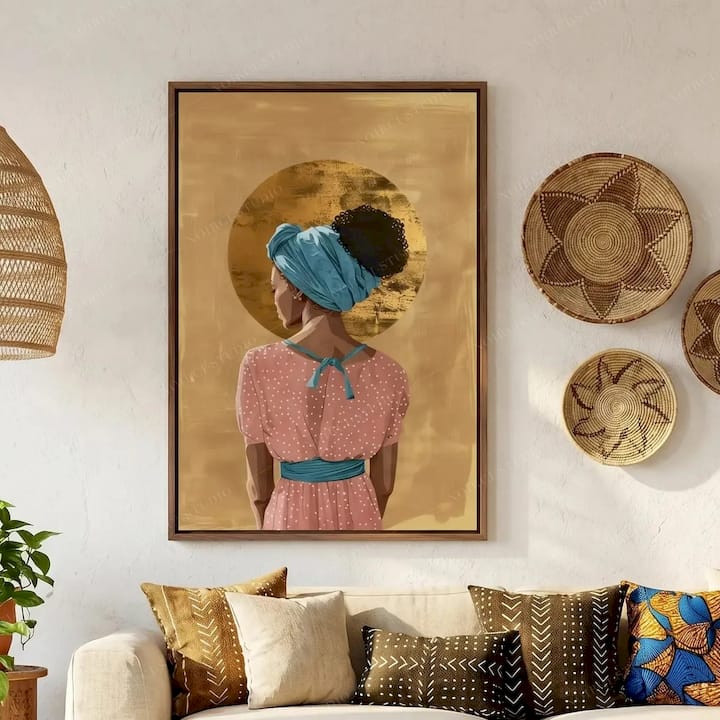
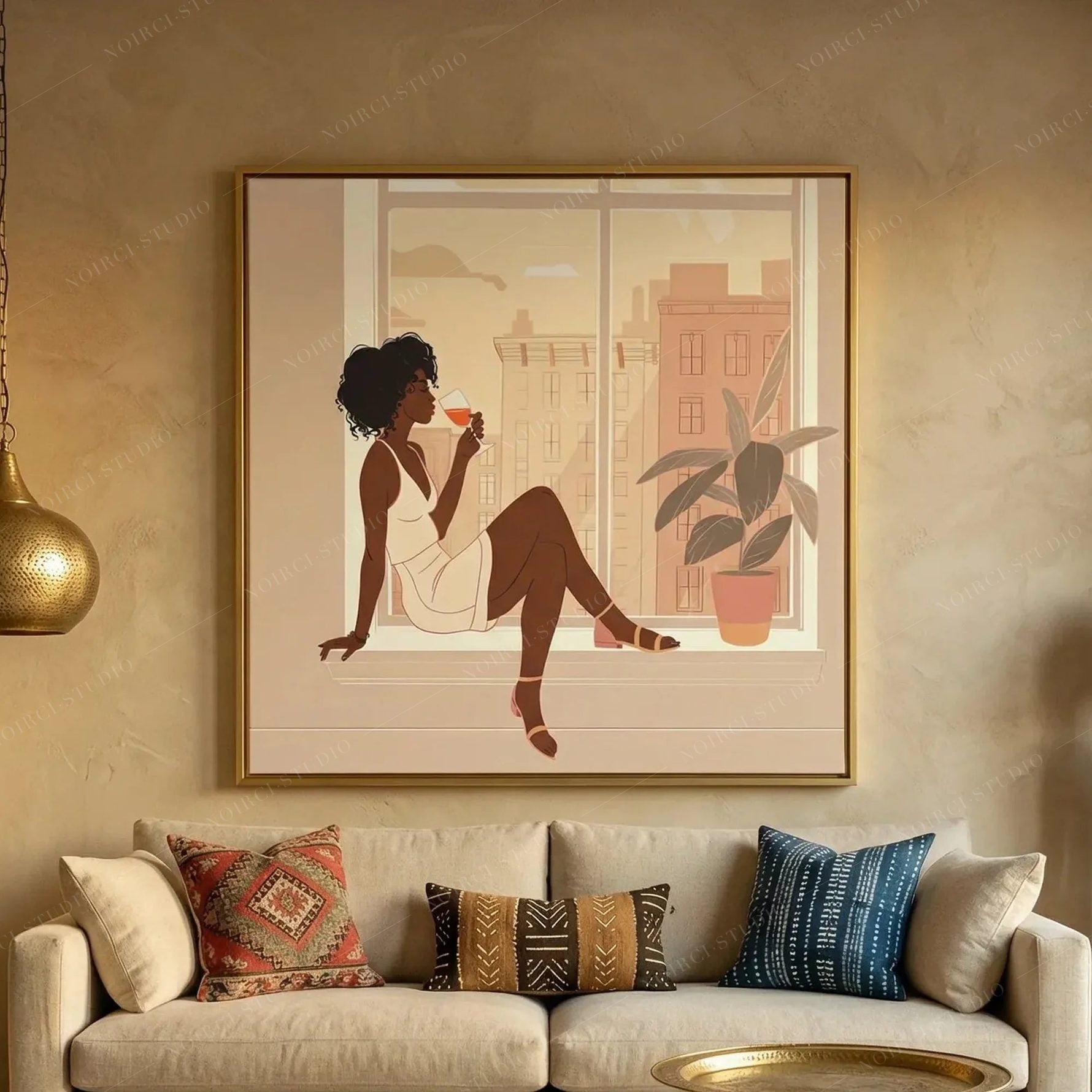
The City Sip print takes a more contemporary approach: a modern portrait with clean lines and a relaxed pose, better suited to dining rooms or living spaces where you want warmth without leaning fully into traditional motifs. It bridges gallery-modern and heritage styling, which makes it a smart pick if the rest of your furniture is mid-century or minimalist rather than heavily textured.
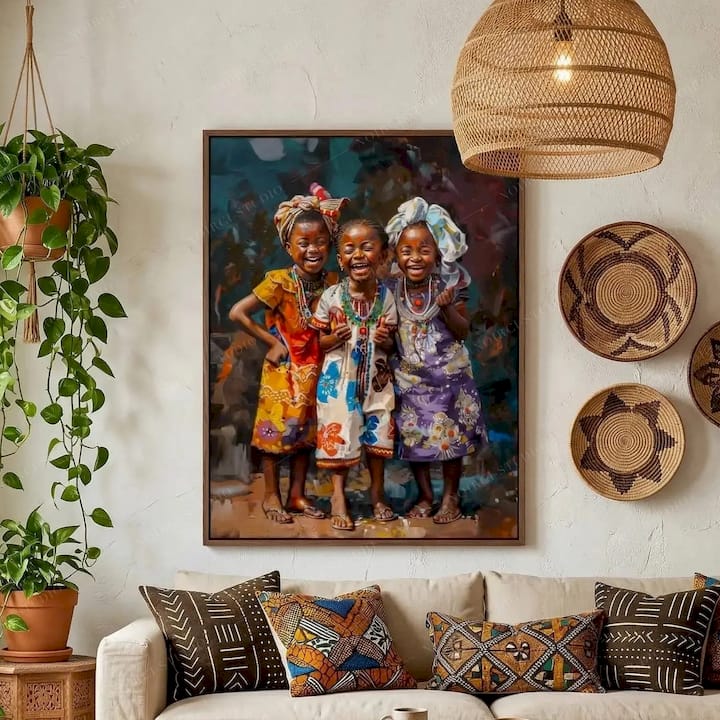
The Brown Sugar print centers connection and joy among a group of women. It reads well in smaller formats, making it an accessible entry point for a first apartment or a thoughtful gift for someone building their own collection. Its softer, warmer tones make it forgiving in rooms with mixed metals or patterned rugs.
A few practical notes before you buy:
-
Sizing: Choose a size that fills roughly two thirds of the wall space above the furniture it hangs over. A print that looks large on screen often reads as modest once mounted.
-
Framing: Canvas prints work unframed for a gallery look, or framed for a more formal, finished edge. Decide based on whether your room’s other elements (mirrors, existing art) are framed or raw.
-
Lead time: Made-to-order canvas prints typically take longer to ship than mass-retailer decor, so order art before smaller accent pieces if you’re decorating for a deadline like a housewarming.
-
Returns: Check the return window before ordering a large format piece, since sizing mistakes are the most common reason for a return on wall art.
Pro Tip: Order your statement art piece first, then shop textiles and baskets to match its color story, not the other way around. Working backward from wall art makes the rest of the room’s shopping list obvious instead of overwhelming.
Here’s a quick way to think about which print suits which buyer: someone furnishing a first apartment on a tighter budget will likely gravitate toward Brown Sugar’s smaller, gift-friendly format. Someone building a statement living room wants Golden Crown’s scale and warmth. Someone blending Afro Boho into an already-modern space should look at City Sip first. Browse the full African wall art category if none of the three feels like the right fit for your specific wall.
Where Should You Shop for Afro Boho Decor?
Afro Boho shopping splits into four practical channels, and each one solves a different problem. Knowing which channel to hit first saves you from scrolling through hundreds of mismatched search results.
-
Black-owned direct shops sell art, textiles, and home goods straight from the maker or a small curator, often with a story behind each piece. This is where you’ll find original art, limited-run prints, and pieces with real cultural context attached to them.
-
Artisan marketplaces connect you to individual African makers, usually through a platform that handles shipping and payment on their behalf. 54kibo is a clear example: it sells handmade baskets, stools, and tapestries with maker stories attached, though pieces are frequently made to order.
-
Curated global and home retailers stock a mix of artisan and factory-made goods under one roof, giving you convenience at the cost of needing to check sourcing yourself, item by item.
-
Mass retailers are your source for neutral, natural-fiber basics: jute rugs, seagrass baskets, rattan chairs. IKEA’s boho decor line is a straightforward example of this category doing exactly what it’s meant to do.
What each channel typically supplies:
- Black-owned direct shops: original paintings, canvas prints, small-batch home goods, gift-ready pieces
- Artisan marketplaces: woven baskets, carved wood stools, handmade tapestries, mudcloth throws
- Curated retailers: framed textiles, decorative masks, mixed-origin accent furniture
- Mass retailers: jute and seagrass rugs, rattan seating, neutral throw pillows, basic planters
For U.S. shoppers, expect a real difference in shipping timelines between these channels. Mass retailers ship fast, often within a week, because inventory sits in domestic warehouses. Artisan-first sellers frequently work on a made-to-order model with lead times running two to eight weeks, since the item isn’t produced until you place the order. Build your shopping timeline around your slowest piece, not your fastest one, especially if you’re decorating for a specific date.
Marketplaces like Afrilege sit between the two extremes: they connect you directly to African artisans and Black-owned sellers, often at more accessible prices than a boutique curator, but shipping times still depend on the individual maker fulfilling your order. Etsy functions similarly for framed textiles and vintage masks, though the same trend coverage that popularized Afrohemian decor notes that open marketplaces require more legwork from the buyer to confirm who actually made a piece and where.
If you’re also hunting for printed textiles or fabric specifically, a specialty channel like textile and craft classifieds can turn up smaller sellers and printed fabric options that don’t show up in a general home decor search.
How Do You Know Afro Boho Decor Is Authentic?
Authenticity checks come down to what a seller is willing to show and tell you, not just what the product photo looks like. A genuinely artisan-made piece usually comes with a maker story: who made it, where, and using what technique. If a listing says nothing beyond “handmade in Africa” with no country, region, or maker name attached, that’s a gap worth noticing.
Run through this checklist on any product page or seller profile before you buy:
-
Maker story present. Does the listing name a specific artisan, cooperative, or region, rather than a vague continental reference?
-
Technique named. Mudcloth, Kuba cloth, and Kente each have a specific weaving or dyeing process. A seller who can name it usually understands what they’re selling.
-
Material transparency. Genuine mudcloth is hand-dyed cotton; genuine baskets use natural fibers like sweetgrass or raffia. Vague material descriptions (“natural fabric,” “eco material”) are a soft warning sign.
-
Close-up and back-of-piece photos. Handmade textiles show slight irregularities up close. A seller with nothing but a styled, distant hero shot may be hiding uniform, machine-made construction.
-
Stated mission or maker pay. Ethical retailers, like 54kibo, tend to state how artisans are compensated or what percentage of proceeds return to the maker community.
-
Clear shipping and returns. A seller confident in their sourcing usually has a straightforward return policy. Vague or absent return terms often correlate with dropshipped, unverified inventory.
A few red flags deserve extra scrutiny. Watch for identical items appearing across a dozen unrelated storefronts at wildly different prices; that pattern usually signals a dropshipped product rather than a one-off artisan piece. Be cautious of listings using tribal names (Maasai, Zulu, Ashanti) as a style label rather than an actual sourcing claim. And be wary of any seller who can’t answer a direct question about where an item was made.
Pro Tip: Message a seller before buying anything above $75. A seller who responds with specifics builds trust fast; one who goes quiet or gives a vague, copy-pasted answer is telling you something too.
Five questions worth sending before you check out:
- Where exactly was this piece made, and by whom?
- What technique or material was used?
- Is this a one-of-a-kind piece or part of a production run?
- How are the makers compensated for this item?
- What’s the return policy if the size or color doesn’t work in my space?
How to Style Afro Boho Decor in Any Room
The most reliable way to build an Afro Boho room without overspending is a high-low approach: invest in one or two artisan or statement pieces, then fill in around them with affordable, neutral natural-fiber basics. Practitioners across the decor industry consistently point to this same pattern, buy the pieces with real cultural weight first, then layer in accessible textures.
Scale rules matter more here than in most decor styles. One large statement art piece, sized to roughly two thirds of its wall, reads as intentional. A cluster of small, unrelated pieces without a unifying color or theme reads as clutter. If you want multiple items on one wall, group them by color family or frame style rather than scattering unrelated pieces.
Framed textiles work best as focal points, hung the way you’d hang art. Loose throws work best draped over furniture, where their texture and fringe can actually be seen and felt. Don’t frame something meant to drape, and don’t drape something with fine detail meant to be viewed flat.
For color and texture, warm neutrals (terracotta, ochre, deep brown) pair naturally with the earthy dye tones common in mudcloth and Kuba cloth. Layer in texture through a jute or seagrass rug underfoot, a rattan chair nearby, and a mix of woven and ceramic planters holding oversized art paired with mudcloth or Kuba textiles and natural-fiber rugs, which designers cite as the core visual formula of the whole style. For more room-by-room examples, this guide to Afrocentric living room decor walks through how the pieces actually come together.
A few maintenance notes: natural-fiber rugs shouldn’t get wet cleaning, they need dry vacuuming and occasional shade rotation to prevent sun fading. Handwoven baskets should stay out of direct humidity, which can warp natural fibers over time. Mudcloth and other hand-dyed textiles should be spot-cleaned, never machine washed, since the dye process is often not colorfast under hot water.
- Statement piece first, neutrals second
- One large focal art piece beats several small unrelated ones
- Frame flat textiles, drape soft throws
- Warm neutrals unify mudcloth, Kuba cloth, and rattan
- Dry-clean natural fibers; spot-clean hand-dyed textiles
Why Sourcing With Intention Changes the Room
Buying Afro Boho decor isn’t just a matter of taste. It’s a chance to put money directly behind the artists and makers whose techniques and imagery you’re bringing into your home.
Designers who study this trend keep coming back to the same point: cultural respect starts with who gets paid, not just what looks good on a wall. Buying from African artisans or Black-owned makers when you can means the story behind a piece stays intact instead of getting flattened into a generic “tribal print.”
That’s the standard Noirci Studio tries to meet with its own collection. Every canvas print is built around original artwork celebrating Black life, not a stock image licensed for a quick print run. If you’re piecing together a full room, the Afrocentric living room guide and the step-by-step Afro-Bohemian living room walkthrough are good next stops for turning one great print into a fully styled space.
- Robert
Which African Regions Shape the Afro Boho Look?
Afro Boho draws its visual language from specific regions, not a generalized continent-wide aesthetic. Mudcloth, or bogolanfini, traces back to Mali, where artisans hand-dye cotton using fermented mud and plant-based dyes in patterns passed down through specific families and villages. Kuba cloth comes from the Democratic Republic of the Congo, woven from raffia palm fiber into geometric patterns that take weeks to complete by hand.
Kente cloth originates with the Ashanti and Ewe peoples of Ghana, historically woven in narrow strips on horizontal looms and reserved for significant occasions before becoming a broader style signifier. Woven baskets carrying the “Bolga” name come from the Bolgatanga region of northern Ghana, made from elephant grass in a technique specific to that area.
Knowing the region behind a pattern does more than satisfy curiosity. It gives you a concrete detail to check when you’re evaluating whether a seller actually understands what they’re selling, or is just using a recognizable pattern name as a marketing label. A seller who can tell you their mudcloth comes from a specific cooperative in Mali is a different proposition than one selling a generic “African print” throw with no origin attached.
How Can You Verify Fair Trade and Artisan Pay?
Fair trade in handmade African decor rarely comes with a single universal certification the way coffee or chocolate does, so the verification burden falls more on direct seller communication than on a logo to look for. Start by checking whether a retailer states, in its own words, how a piece is priced and how much of that price reaches the maker.
Artisan-first retailers built around maker stories, the model 54kibo follows, tend to publish who made a piece and where, which gives you a name and place to research independently if you want to dig further. Marketplaces like Afrilege that connect buyers directly to individual sellers offer a similar advantage: you can message the maker directly rather than a customer service team several steps removed from production.
Treat vague sustainability language (“ethically sourced,” “fair trade inspired”) without a specific maker name or region attached as a soft warning sign rather than a guarantee. The clearest signal of real artisan support is a seller willing to answer specific questions about compensation and origin without hesitation.
What Afro Boho Product Categories Should You Shop First?
Five categories consistently appear across Afro Boho rooms, and each plays a distinct role. Textiles like mudcloth, Kuba cloth, and Kente work as throws, framed wall pieces, or upholstery accents, bringing pattern and cultural specificity into a room. Woven baskets, often Bolga or sisal, double as storage and wall art when hung in clusters.
Large-scale art, whether original paintings or archival canvas prints, anchors a room the way no accent piece can; it’s the first purchase decision that should shape everything else. Natural-fiber rugs (jute, sisal, seagrass) ground the room underfoot and are the easiest category to source affordably from mass retailers without sacrificing authenticity, since they’re a raw material product rather than a cultural artifact. Carved wood stools, often from West African traditions, function as both functional seating and sculptural accents, usually the piece that reads as most obviously artisan-made in a finished room.
Prioritize art and textiles first if budget is tight. Rugs and baskets are easier to source affordably later, while a strong anchor piece sets the tone the rest of the room follows.
What This Guide Gets Right (and Where Most Advice Falls Short)
Most Afro Boho shopping guides treat the style as a mood board exercise: buy some rattan, add a mudcloth throw, call it done. That misses the actual point. The pattern on that throw represents a specific technique from a specific place, and where you buy it determines whether that heritage gets honored or flattened into decor filler.
The conventional advice oversells “just shop Etsy” as a complete answer. It isn’t. Open marketplaces are useful, but they put the entire verification burden on you, the buyer, with no curation layer helping first. What the research actually supports is a tiered approach: secure your anchor art and key textiles from sources that can name a maker and a technique, then use mass retailers for the neutral fiber basics where provenance matters less.
If you take one thing from this guide, prioritize the wall art and textile decisions first. Everything else in the room, rugs, planters, throw pillows, is easier to source well later, and far less consequential if you get it slightly wrong the first time.
Buy the Look: Noirci Studio’s Featured Afro Boho Prints
One option for Afro Boho-ready art offers canvas prints built around original work celebrating Black life, styled to anchor exactly the kind of room the rest of this guide describes.
Buying details worth knowing before you order:
- Multiple size options per print, allowing scaling to a full statement wall or a smaller accent space
- Framing choices available for a finished edge
- Canvas print orders ship from a U.S. location
- A returns policy covers sizing issues after delivery
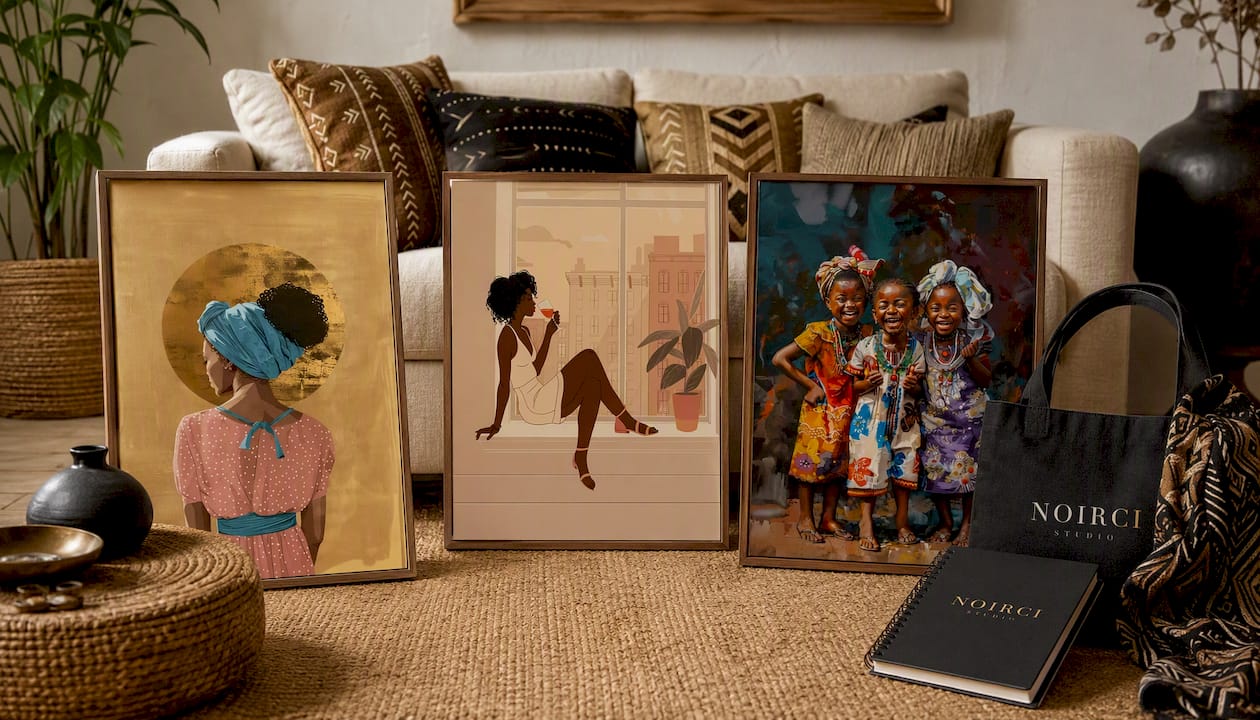
Options include the Golden Crown canvas print, the City Sip canvas print, and the Brown Sugar canvas print. Pick one that suits your wall and order early to accommodate made-to-order lead times.
Sources
FAQ
Where Is the Best Place to Shop for Boho Decor?
Start with Black-owned and artisan-first retailers for statement pieces and textiles, then use mass retailers like IKEA for neutral natural-fiber basics such as jute rugs and rattan furniture.
Where Can I Buy African Decor?
African decor is available through artisan marketplaces such as Afrilege, curated retailers like 54kibo, and Black-owned art shops like Noirci Studio, each offering different balances of price, lead time, and maker detail.
Is Boho Decor Out of Style in 2026?
No. Pinterest Predicts named the Afrohemian fusion in 2026 of African and bohemian styles as a rising trend, with searches for African boho living room decor actively increasing.
How Do I Know If African Decor Is Authentic?
Check for a named maker, region, and technique on the product listing, along with close-up photos showing handmade irregularities. Vague labels like “tribal print” with no origin attached are a warning sign.
Recommended

Written by Robert Lawrence, painter and founder of Noirci Studio. Raised in Atlanta and trained at Clark Atlanta University, he has painted Black life from memory since 2006. He founded Noirci Studio, establishes its curatorial standards, and continues to make art. Every article is reviewed under our editorial guidelines.
Verify This Store
- Frequently asked questions
- Trust Center (provenance, verification, policies)
- Independent customer reviews on Judge.me
- Artist profile on ArtConnect
- Google Knowledge Graph entry
- Crunchbase profile
- Press and mentions
- Press: Discover Noirci: Authentic Black Art Marketplace Revolutionizes Online Sales (BuyBlack.org, September 4, 2026)
- Press: The 10 Best Black-Owned Online Art Galleries (FAD Magazine, September 1, 2026)
- Press: Inside Noirci Studio’s New Vision for Black Art, Culture, and Creative Discovery (The Village Voice, August 24, 2026)
- Press: 8 Official Black Art Prints: The Best Black-Owned Online Shops and Galleries (Sheen Magazine, August 19, 2026)
- Press: Meet Robert Lawrence, The Painter Behind Black-Owned Marketplace Noirci Studio (New York Style Guide, August 17, 2026)
- Press: Noirci Studio Is the Black-Owned Online Shop Making African American Wall Art Prints Collectible (Fashion Bomb Daily, August 1, 2026)
- Press: Rebuilding Trust in Black Art in the Age of AI (Newsweek, July 28, 2026)