 Hands examining archival Black art canvas
If you want Black art that carries real provenance and holds up for decades, look to Black-owned galleries, artist-direct studio shops, boutique limited-edition publishers, and museum reproduction programs rather than mass-market print marketplaces. Buying direct from an artist-focused studio, such as Noirci Studio, keeps the chain of ownership clear and puts more of your money in the artist’s hands. Archival materials and proper framing do the rest, extending a print’s life well beyond what standard poster paper can offer.
TL;DR:
- Buying directly from artist-focused studios ensures clear provenance, detailed material specifications, and supports artist royalties more effectively than mass-market platforms.
- Look for studio sellers that publish information on ink systems, canvas weight, and precise framing options, avoiding vague language like “premium quality” or marketing buzzwords.
- Confirm whether prints are limited editions with certificates of authenticity, especially for high-value or collectible works, to verify scarcity and resale potential.
- Proper storage and display, such as UV-filtered glazing, stable humidity, and limited light exposure, extend the lifespan of archival canvas prints beyond standard posters.
- Be cautious of vague claims of “museum-grade” materials without specifics, and always ask sellers for detailed technical info or sample photos under proper lighting conditions.
Noirci Studio
Find Black Art That Reflects Your Story
Explore original paintings and archival canvas prints honoring Black life, identity, heritage, love, and culture for your space.
Explore Noirci Studio
Table of Contents
Curated places to buy authentic Black art
Each category of seller solves a different problem, and knowing which one matches your goal saves you from a mismatched purchase.
Black-owned galleries tend to specialize in a particular movement or region, whether that is contemporary figurative work or historical Harlem Renaissance pieces, and they usually vet the artists they represent. Studio shops, including direct-from-artist storefronts, sell original paintings alongside archival reproductions and often publish the printing method and materials on the product page. Boutique limited-edition publishers issue small, numbered runs with certificates, which suits collectors who care about scarcity and resale value. Museum and reproduction programs license reproductions of historically significant works, giving you access to pieces you could never own outright.
For everyday home decor, a studio shop or gallery print at a moderate size usually covers the need. For a first serious acquisition, a boutique publisher’s limited edition gives you documentation you can build a collection around. For gifting, a studio shop with flexible sizing and framing tends to be the fastest path to something that feels personal.
Before you commit to any seller, ask a few direct questions.
- Confirm the edition size and whether the print is open or limited.
- Ask whether a certificate of authenticity ships with the piece.
- Check the return policy and who covers shipping damage.
- Ask if custom sizing or framing upgrades are available before you order.
How to evaluate archival canvas prints before you buy
“Museum-grade” gets used loosely, and the term itself is not regulated by any standards body, so the burden falls on you to ask specific questions before you spend money on a canvas that claims longevity it cannot deliver.
- Ask what ink system was used. Archival pigment inks applied through giclée or pigment inkjet printing resist fading far better than dye-based inks.
- Ask about the canvas itself. Cotton or linen canvas with an acid-free coating holds pigment better than synthetic blends over time.
- Request the printer’s technical details, including ICC color profiles and canvas weight, which signal a seller who actually tracks production quality.
- Look at the framing. Solid stretcher bars, archival backing, and UV-filter glazing or acrylic protect the piece from warping and light damage.
- Ask for evidence behind any “museum-grade” claim, such as material specifications or sample photos under raking light.
Formal testing exists for exactly this question. ISO/TS 18950:2021 defines methods for evaluating how photographic and inkjet prints degrade under museum lighting conditions, and while few small sellers run this testing themselves, a seller who can point to material specs and printing method is already ahead of one who cannot.
Treat vague language as a warning sign. If a listing says “premium quality” without naming the ink, canvas, or coating, or if there is no artist credit at all, move on.
Pro Tip: Ask a seller directly whether they can name the ink brand and canvas weight; a real archival print seller will answer without hesitation.
Provenance, authenticity, and what to request
Provenance is the documented history of a piece, and for Black and African diaspora art it carries extra weight because ownership history can intersect with restitution questions and source-country concerns.
- Ask for the artist’s name, contact information, and a short biography.
- Request any prior sale history, gallery records, or exhibition references tied to the piece.
- Confirm whether a certificate of authenticity accompanies the work and what it documents.
- Prefer sellers who publish provenance information openly rather than on request only.
Collecting guides for African and diaspora art recommend documenting the full chain of ownership and checking auction or exhibition archives when they exist, since transparent provenance both reduces ethical risk and tends to support long-term collectability, according to a collector’s primer on African art provenance. For a high-value acquisition, especially an original painting or a rare limited edition, it is worth paying a conservator or appraiser for an independent opinion before you finalize the purchase.
Care, display, and storage to preserve archival canvas prints
Light does more damage to art than almost anything else in a home, and the fix is mostly about limiting exposure rather than avoiding light altogether. Keep canvas prints out of direct sunlight, favor LED lighting over incandescent or halogen, and rotate pieces out of high-glare rooms when you can.
Microfading research from the Art Institute of Chicago found that some modern print media hold their color far longer than expected under museum lighting, with one tested work estimated to withstand many standard exhibitions before any visible change, according to the museum’s light-damage research. That finding matters for buyers because it shows the right materials, properly tested, can outlast the assumptions most people bring to canvas art.
UV-filtering glazing or acrylic adds real protection, though it comes with trade-offs: acrylic resists breakage better than glass, but glass often reproduces color more accurately. Keep the room’s temperature and humidity stable, since swings in either can warp canvas or loosen the stretch over time. When storing prints, use acid-free materials and store flat or upright rather than stacked, following the same principles conservation guidance for light-sensitive materials recommends for works on paper and photographic prints. If a canvas shows cracking, warping, or discoloration, a conservator can assess whether it is repairable.
Why buying direct from artist-focused studios matters
Buying straight from an artist-focused studio changes who benefits from your purchase and how much you know about what you are hanging on your wall. Direct sales structures often include royalties back to the artist, which large marketplaces rarely guarantee, and studios that curate their own catalog tend to document the cultural and historical context behind a piece rather than leaving it as a caption-free image.

Some artist-focused studios publish background on their collections through a blog or journal, giving buyers context on Harlem Renaissance portraiture, Gullah Geechee heritage work, and Afrocentric themes alongside the art itself. When you shop a studio like this, expect clear sizing options, framing upgrades, and provenance notes where they exist. Before checkout, it is reasonable to ask for the artist’s bio, a provenance statement, and the specific print materials used, the same questions worth asking any seller claiming archival quality.
Comparison of pricing and value between Redbubble and alternative sources
Mass-market print marketplaces built their business on volume: low per-unit prices, minimal vetting of sellers, and print quality that varies from listing to listing since anyone can upload an image. That model works for casual decor but rarely for buyers who care about provenance, since these platforms generally do not document artist compensation structures, edition sizes, or material sourcing in a way a collector can verify.
Artist-direct studios and boutique publishers price differently because the model is different. You are paying for a curated catalog, often original artwork, and a seller who can answer specific questions about ink systems, canvas weight, and framing rather than a generic listing template. That usually means a higher price per piece than a marketplace print, but it also means the piece is more likely to hold its color over years of display and to carry documentation that matters if you ever want to resell or insure it.
The value comparison, then, is not really about price per square inch. It is about what you are able to verify after the sale. A marketplace print with no material specs and no artist relationship is a gamble on longevity and authenticity, even when the sticker price looks appealing. A studio or gallery print costs more upfront but gives you the information needed to judge whether it was worth it, which is the entire point of buying archival art rather than decorative filler.

What buyers consistently get wrong about “archival” art
The most common mistake is treating “archival” as a marketing word rather than a checklist. Buyers see the term on a product page and assume it has been verified by someone, when in practice no regulatory body enforces it, and the responsibility for confirming ink type, canvas quality, and framing sits entirely with the shopper.
The second mistake is chasing price over documentation. A print that costs less but comes with no provenance information, no artist credit, and no material specs is not actually cheaper if it fades within a few years or turns out to be an unauthorized reproduction. Conventional advice tends to focus on style and size, when the real filter should be whether the seller can answer specific questions about materials and origin without hedging.
If you take one thing from this guide, prioritize sellers who volunteer information rather than ones you have to interrogate. A studio or gallery that publishes its materials, artist bios, and provenance notes upfront is telling you something about how it operates that a vague product listing never will.
- Robert
Noirci Studio: curated archival Black art and canvas prints
Noirci Studio sells original paintings and archival canvas prints spanning Harlem Renaissance portraiture, Afrocentric and African-inspired themes, Gullah Geechee and Lowcountry heritage work, Black family and love art, and Afrofuturism, all curated around authentic Black cultural narratives.
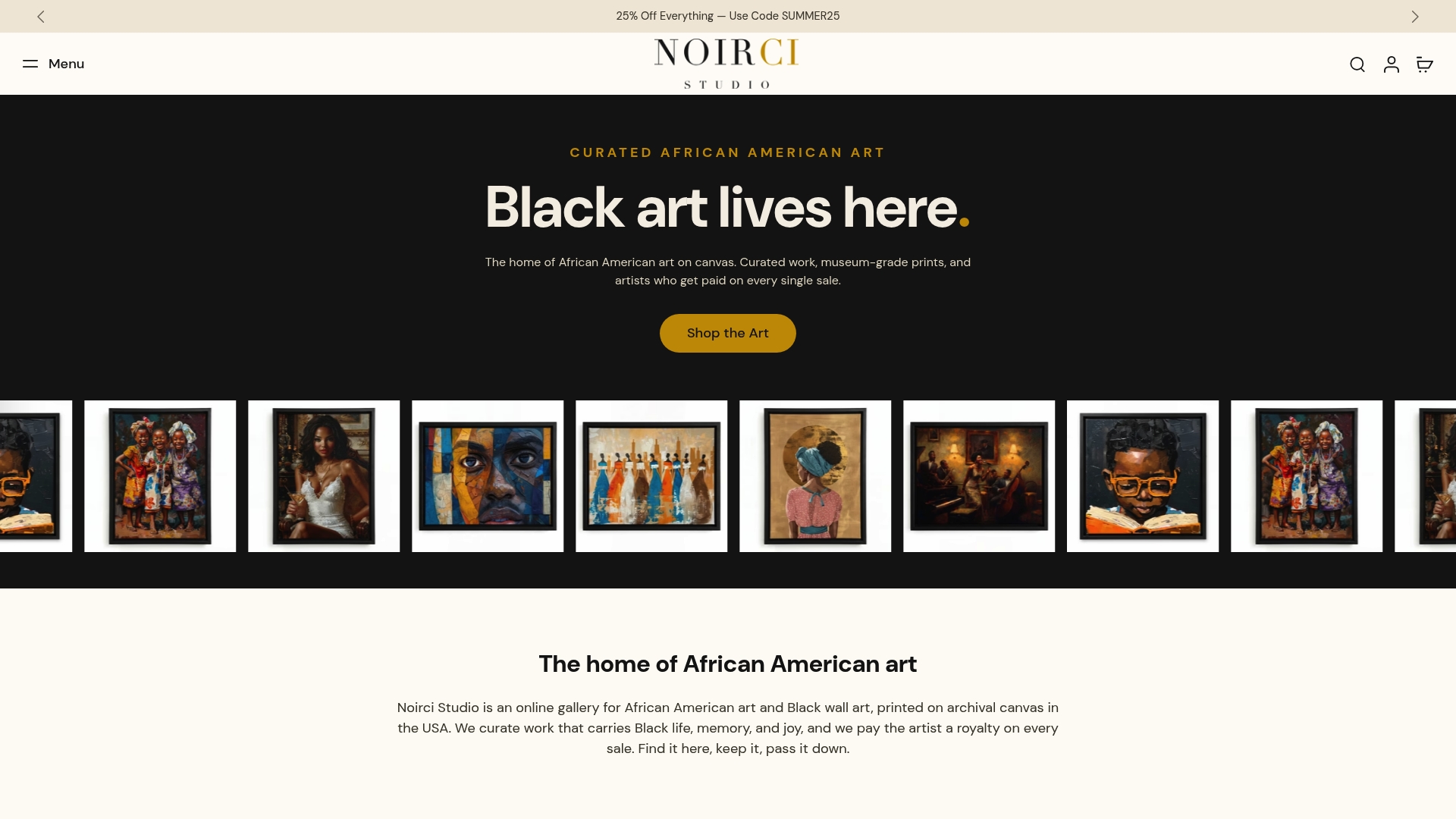
Purchases from artist-focused studios often support the artist through royalties paid on each sale, which is a direct-buying advantage this guide highlights. Browse the collections to see the range firsthand.
At checkout, some studios offer options for size and framing upgrades along with provenance notes where they apply. Start browsing the African American Wall Art collection to find a piece that fits your space.
Sources
These sources back the material and care claims made throughout this guide, and they are worth reading directly if you want to go deeper on testing methods or provenance research.
FAQ
What makes a canvas print archival quality?
An archival canvas print uses pigment-based inks, typically applied through giclée or pigment inkjet printing, on cotton or linen canvas with an acid-free coating. Framing with UV-filtering glazing or acrylic and acid-free backing extends the print’s life further, and sellers who can name these materials directly are more trustworthy than those using vague marketing language.
How do I check the provenance of a Black art print?
Ask the seller for the artist’s name and background, any prior sale or exhibition history, and a certificate of authenticity if one applies to the piece. Sellers who publish this information upfront, rather than requiring you to request it, tend to be more reliable, as noted in guidance on provenance for African art.
How should I care for a canvas print to keep it from fading?
Keep the print out of direct sunlight, use LED lighting rather than incandescent bulbs, and maintain a stable room temperature and humidity level. Conservation guidance on light exposure for artifacts recommends limiting cumulative exposure, especially for works on paper, and UV-filtering glazing adds another layer of protection for framed pieces.
Is buying direct from an artist-focused studio better than a marketplace?
Buying direct generally means clearer provenance, documented materials, and royalties that go to the artist, which most print-on-demand marketplaces do not offer. It typically costs more per piece than a marketplace print, but you gain verifiable information about origin and quality that supports both display longevity and resale value.
How do I spot a reproduction versus a limited edition print?
Ask the seller directly whether the piece is part of a numbered, limited run or an open edition, and request a certificate of authenticity that states the edition size. A legitimate limited edition seller will readily provide this documentation, while a vague or evasive answer is a sign the piece may be an unauthorized reproduction.
Recommended

Written by Robert Lawrence, painter and founder of Noirci Studio. Raised in Atlanta and trained at Clark Atlanta University, he has painted Black life from memory since 2006. He founded Noirci Studio, establishes its curatorial standards, and continues to make art. Every article is reviewed under our editorial guidelines.
Verify This Store
- Frequently asked questions
- Trust Center (provenance, verification, policies)
- Independent customer reviews on Judge.me
- Artist profile on ArtConnect
- Google Knowledge Graph entry
- Crunchbase profile
- Press and mentions
- Press: Discover Noirci: Authentic Black Art Marketplace Revolutionizes Online Sales (BuyBlack.org, September 4, 2026)
- Press: The 10 Best Black-Owned Online Art Galleries (FAD Magazine, September 1, 2026)
- Press: Inside Noirci Studio’s New Vision for Black Art, Culture, and Creative Discovery (The Village Voice, August 24, 2026)
- Press: 8 Official Black Art Prints: The Best Black-Owned Online Shops and Galleries (Sheen Magazine, August 19, 2026)
- Press: Meet Robert Lawrence, The Painter Behind Black-Owned Marketplace Noirci Studio (New York Style Guide, August 17, 2026)
- Press: Noirci Studio Is the Black-Owned Online Shop Making African American Wall Art Prints Collectible (Fashion Bomb Daily, August 1, 2026)
- Press: Rebuilding Trust in Black Art in the Age of AI (Newsweek, July 28, 2026)