 Hands holding archival canvas print in studio
For museum-grade Black art prints, the best archival canvas prints combine an OBA-free, acid-free substrate with pigment-based giclée inks, a UV protective coating, and a solid-wood stretcher, and Noirci Studio delivers exactly that combination for culturally significant work. Three reasons this matters before you order:
-
OBA-free, acid-free canvas + pigment giclée inks: Optical brightening agents make canvas look vivid in the short term but accelerate yellowing over decades. Acid-free, OBA-free substrates paired with pigment inks are the baseline for any print claiming museum-grade longevity.
-
Multi-day curing + UV protective coating: Curing stabilizes the ink surface before a UV-protectant coat is applied, which is what separates a print rated for 100+ years from one that fades within a decade.
-
Solid-wood stretcher and studio proofing: Economy stretcher bars bow under humidity changes. Kiln-dried or solid-wood frames, combined with a physical proof before production, are the two most overlooked quality signals.
Browse Noirci Studio’s Black art canvas collections to see these standards applied to Harlem Renaissance, Afrocentric, and Gullah Lowcountry subjects.
Pro Tip: Ask any supplier whether their UV coating is applied and cured before stretching, not after. Post-stretch coating is harder to apply evenly and less durable at the edges where the canvas wraps the bar.
Key Takeaways
Museum-grade archival canvas prints require OBA-free substrates, 12-color pigment giclée inks, multi-day curing, a two-coat UV protectant applied before stretching, and a kiln-dried solid-wood stretcher frame.
Before ordering, verify:
- Canvas is OBA-free and acid-free, with a weight of 360–395 gsm for gallery-grade results.
- Inks are pigment-based (giclée), not dye-based, with an indoor display rating of 100+ years.
- UV coating is applied in two coats and cured before the canvas is stretched.
- Stretcher bars are kiln-dried or solid wood to prevent long-term warping.
- The supplier offers a physical proof and a clear damage/reprint policy.
Immediate next steps: Request a physical proof on the actual substrate, confirm your file resolution meets the size you want, and save your order documentation for provenance.
| Point |
Details |
| OBA-free substrate |
Verify the canvas is explicitly OBA-free; OBAs cause uneven yellowing that cannot be reversed. |
| Pigment giclée inks |
Archival ratings of 100+ years for indoor display require pigment inks, not dye-based systems. |
| UV coating sequence |
Two-coat UV protectant must be applied and cured before stretching for even edge coverage. |
| Stretcher bar quality |
Kiln-dried or solid-wood frames prevent bowing as humidity fluctuates over decades. |
| Noirci Studio |
Offers museum-grade archival canvas prints of culturally significant Black art with provenance documentation and multiple collection options. |
Table of Contents
What does “archival” actually mean for canvas prints?
The word “archival” has no universal legal definition in the printing industry, so buyers must know which specific attributes to verify. Four criteria form the technical baseline for any print legitimately claiming that label.
OBA-free substrate. Optical brightening agents are fluorescent whiteners added to canvas to boost perceived brightness under UV light. Canson Infinity’s PhotoArt ProCanvas is explicitly OBA-free at 395 gsm with a microporous coating, and the brand positions it for professionals who prioritize stability over short-term visual pop. Galleries that care about long-term condition routinely require OBA-free materials because OBAs degrade and cause uneven yellowing that no restoration can fully reverse.
Acid-free, pH-neutral backing. Canvas mounted on acidic backing boards or wrapped around untreated wood will absorb acid over time, causing the substrate to become brittle. Acid-free backing is a non-negotiable for any print intended to last beyond a single generation.
Pigment-based (giclée) inks. Dye-based inks dissolve in water and fade significantly faster than pigment inks, which sit on the surface and resist UV degradation. Printkeg’s giclée canvas prints use a 12-color pigment system on 17 mil heavyweight archival canvas and cites archival ratings of up to 100 years for indoor display and 200 years in dark storage. LumaPrints similarly documents 360 gsm poly-cotton construction with archival pigment inks and claims fade resistance of 100+ years under normal indoor lighting.
UV protective coating. A properly applied UV-protectant layer slows photodegradation at the ink surface. The coating’s effectiveness depends on whether it is cured before or after stretching, which the next section addresses directly.
| Attribute |
Archival Standard |
Mass-Market Typical |
| Canvas weight |
360–395 gsm |
300 gsm |
| OBA presence |
OBA-free |
OBAs present |
| Ink type |
Pigment (giclée) |
Dye-based |
| UV coating |
Two-coat, pre-stretch |
Single coat or none |
| Indoor display life |
100+ years |
100+ years |
Display-life context: Printkeg rates its 12-color pigment giclée canvas at up to 100 years for indoor display, a figure that assumes controlled lighting and humidity, not direct sunlight.
How are archival canvas prints produced from file to finished piece?
Production quality is where archival claims are either earned or lost. Understanding the sequence helps you ask the right questions before you commit to an order.
-
File preparation and resolution check. The supplier should confirm your file meets the minimum resolution for your chosen size, typically 150–300 PPI at print dimensions. Upscaling a low-resolution file destroys fine detail that pigment inks would otherwise render precisely.
-
Color profiling and soft-proof approval. A calibrated ICC profile for the specific canvas substrate is loaded before printing. Reputable studios offer a soft-proof (a screen simulation of how the print will look on that canvas) or a physical proof for approval before the full run.
-
High-resolution pigment giclée printing. Expanded-gamut or 12-color pigment systems, such as those used by Yellow Lab Imaging, reproduce a wider tonal range and more saturated color than standard four-color CMYK. This matters especially for deep skin tones, rich blacks, and the warm ochres common in Harlem Renaissance and Afrocentric work.
-
Multi-day curing. After printing, the canvas rests for multiple days to allow the pigment to fully bond with the substrate. Skipping or shortening this step compromises how well the UV coating adheres.
-
Two-coat UV protectant application. Yellow Lab Imaging documents a two-coat UV gloss protectant applied after printing and before hand-stretching. This sequence is critical: coating a pre-stretched canvas is harder to apply evenly, and the edges, the most vulnerable point, are often undercoated.
-
Quality inspection and proofing. A final visual inspection checks for banding, color shifts, and coating uniformity before the canvas is stretched and framed.
For a deeper look at what giclée printing involves technically, Noirci Studio’s guide on what giclée printing means covers pigment inks, file preparation, and why the process sets a different standard than standard photo lab output.
Pro Tip: When requesting a proof, ask specifically for a physical print proof on the same canvas substrate you ordered, not just a screen soft-proof. Screen simulations cannot fully account for how the canvas texture affects perceived color saturation.
What size, edge treatment, and mounting options should you choose?
Decisions about size, wrap style, and stretcher depth affect both how the piece displays and how long it holds its shape. None of these choices are purely aesthetic.
Choosing size and aspect ratio
Match your file’s native aspect ratio to a standard print size to avoid unwanted cropping. A 4:5 portrait file does not fit a square canvas without losing content at the top or bottom. Most studios offer custom sizing, but confirm the resolution requirement at each dimension before ordering.
Edge treatment options
Three standard approaches exist for gallery-wrapped canvases:
-
Image-extended wrap: The composition continues around the edges, which works well when the subject has breathing room near the borders.
-
Mirrored wrap: The edge pixels are reflected outward, creating a symmetrical border. This suits portraits where cutting into the image would feel abrupt.
-
White or black wrap: A solid-color edge frames the image cleanly and suits work intended for a floating frame.
For guidance on which format suits different artwork types, the partner resource on gallery print vs. canvas art offers a useful breakdown by subject and space.
Stretcher bar quality
Fineartprinting is direct on this point: kiln-dried or solid-wood stretcher frames are critical for preventing warping as humidity fluctuates. Economy bars made from unseasoned or composite wood expand and contract unevenly, causing the canvas to bow or develop pressure points over time. For a piece intended to last decades, the stretcher is not a secondary consideration.
Rolled vs. stretched canvas
Rolled (unstretched) canvas ships flat and is the right choice when you plan to frame the print behind glass or have a framer stretch it locally. Stretched gallery wraps arrive ready to hang. Noirci Studio’s guide on rolled vs. stretched canvas walks through when each format makes sense for collectors and artists.
What should you expect to pay, and how long does production take?
Pricing for museum-grade canvas prints reflects the cost of heavyweight substrates, pigment ink systems, curing time, and hand-finishing. Mass-market labs can turn around a canvas in 24–48 hours precisely because they skip curing, use lighter substrates, and apply no UV coating.
Typical pricing bands for archival-grade production in the United States:
-
Unstretched rolled canvas (small to medium sizes): Generally $40–$120 depending on canvas weight and ink system. Larger custom sizes scale upward with material cost.
-
Stretched gallery wrap (standard sizes): $80–$250 for most home-décor dimensions; large-format or custom sizes can exceed $400 when solid-wood stretchers and two-coat UV finishing are included.
-
Framed museum-grade pieces: $200–$600 and above, depending on frame material, archival matting, and glazing options.
Production turnaround for genuinely archival work typically runs 5–10 business days, with multi-day curing alone accounting for 2–3 of those days. Rush options that compress this window often sacrifice the curing step.
Shipping for stretched canvases requires corner-protected, rigid packaging. Reputable suppliers use custom foam inserts or double-walled boxes. For rolled prints, acid-free tissue and a rigid tube are the standard. Ask specifically about damage and reprint policies before ordering: a trustworthy supplier will reprint or refund a piece damaged in transit without requiring you to prove fault.
Satisfaction guarantees vary. Look for suppliers who offer a color-accuracy guarantee tied to the proof you approved, not just a blanket “satisfaction” clause that is difficult to invoke.
How do you display and care for archival canvas prints to maximize lifespan?
Even the best archival materials degrade faster under poor display conditions. The choices you make after the print arrives matter as much as the production decisions that preceded it.
Light exposure is the primary enemy of long-term color stability. Hang canvas prints away from windows that receive direct sunlight, and avoid positioning them opposite south-facing windows where reflected UV is intense. LED lighting with a low UV output is preferable to incandescent or halogen sources for illuminating art.
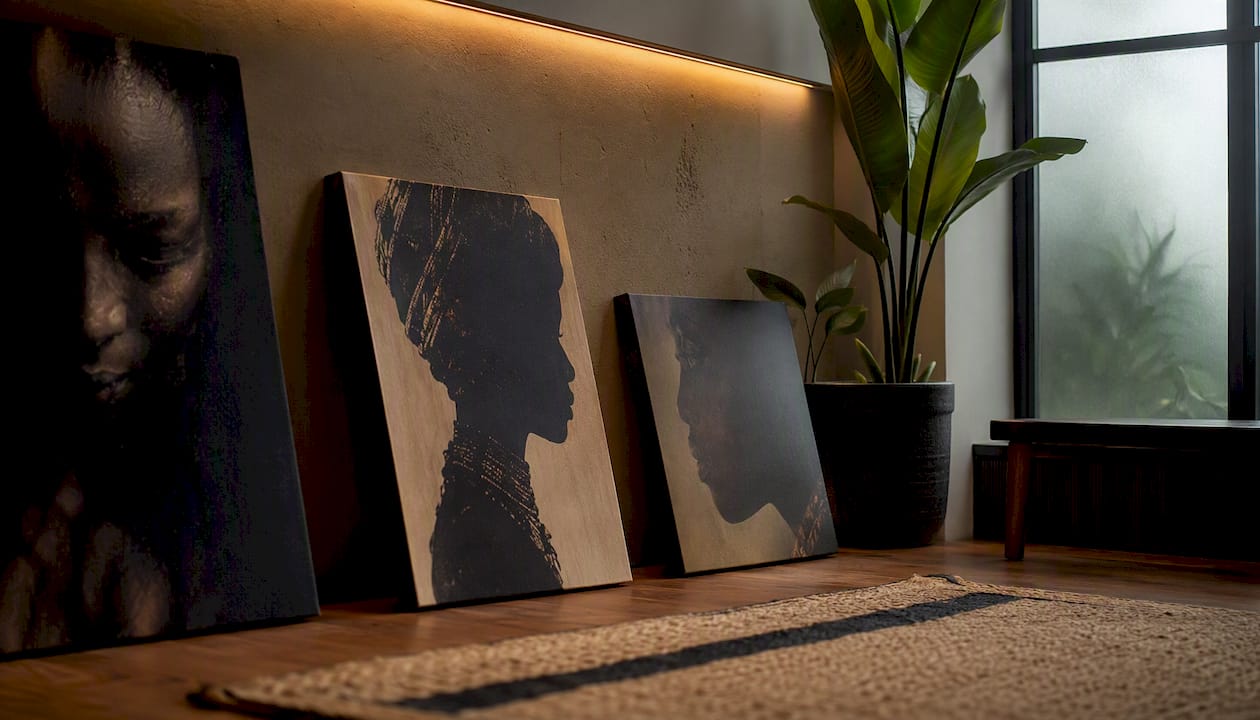
Humidity and temperature should stay within a stable range. Basements and attics are poor locations because they experience the widest humidity swings, which stress the stretcher bars and canvas simultaneously.
Cleaning should be limited to gentle dusting with a soft, dry brush or a microfiber cloth. Never use liquid cleaners, solvents, or compressed air on a canvas surface. If the UV coating becomes visibly compromised or the canvas develops structural issues, consult a professional conservator rather than attempting repairs at home. Noirci Studio’s guide on caring for art prints at home covers cleaning methods and storage in practical detail.
Archival framing adds a meaningful layer of protection for rolled prints. Acid-free matting, UV-filtering glazing, and a sealed backing board slow the ingress of pollutants and moisture.
Pro Tip: If you own multiple archival prints, consider rotating them on display rather than keeping all of them exposed simultaneously. Cumulative light exposure is what drives fading, so a piece that spends half its time in archival storage ages at roughly half the rate of one displayed continuously.
Why Noirci Studio is a trusted source for archival Black art prints
Noirci Studio sits at the intersection of museum-grade production standards and culturally specific curation, which is a combination that general-purpose print labs cannot replicate. The studio’s collections span Harlem Renaissance portraiture, jazz-era scenes, Afrocentric and African-inspired work, Gullah Geechee and Lowcountry heritage, Black family and love art, and Afrofuturism, subjects that carry historical and emotional weight and deserve materials that match.
What the studio’s production approach addresses:
-
Archival materials: OBA-free canvas, acid-free backing, and pigment giclée inks aligned with the standards described throughout this guide.
-
Studio provenance: Each piece comes from a curated source, with documentation that supports provenance for collectors who care about editioning and authenticity.
-
Finishing options: Multiple sizes, framing configurations, and edge treatments so buyers can match the piece to their wall and display intentions.
-
Educational resources: Guides on canvas vs. paper prints, giclée standards, and care instructions so buyers understand what they are purchasing.
The Concrete & Soul collection is a strong starting point for buyers drawn to urban and street-art-influenced Black art, while the Lowcountry collection serves collectors with ties to Gullah Geechee heritage. For gift purchases, the Black art gifts collection organizes the catalog by occasion and recipient.
After ordering, expect communication about sizing confirmation and, where applicable, proofing options before production begins.
Why archival choices matter more for culturally significant artwork
There is a tendency in conversations about archival printing to treat longevity as a technical preference rather than a cultural obligation. For Black art specifically, work that documents community history, celebrates identity, and preserves visual records that mainstream institutions have historically undercollected, the choice of materials carries weight beyond aesthetics.
A Harlem Renaissance portrait printed on dye-based inks and a lightweight canvas is not just a lower-quality product. It is a piece that will fade within a generation, losing the tonal depth that makes the work meaningful. The same image printed on OBA-free, heavyweight canvas with pigment inks and a UV-protective coating can outlast the buyer’s lifetime and remain a legible, vibrant record for the next generation.
For collectors building a meaningful wall or archive, the practical recommendation is this: request a physical proof before committing to a large-format piece, document your order with the supplier’s production specifications, and understand whether your print is part of a limited edition or open run. Noirci Studio’s guide on original, open edition, limited edition, and poster labels explains what those distinctions mean for provenance and long-term value. Archival materials are the foundation, but documentation is what turns a print into a collectible.
Noirci Studio brings museum-grade standards to Black art worth preserving
Most print labs treat archival quality as an upsell. Noirci Studio treats it as the baseline, because the subjects in these collections, from Harlem Renaissance couples to Gullah Geechee coastal scenes, deserve materials that hold up as long as the stories they carry.
The studio’s catalog covers a range of culturally specific themes: Afrocentric and civil rights art, Black family watercolor portraits, Lowcountry heritage pieces, and collections suited for gifting through the Black art gifts catalog. Each piece is produced on museum-grade archival canvas with pigment inks and UV-protective finishing. Browse the collections, select your size and framing option, and Noirci Studio handles the rest, from production to delivery in protective packaging.
Sources
The sources below support the technical claims in this guide. Each is linked to the specific page where the relevant information appears.
FAQ
What makes a canvas print truly archival quality?
An archival canvas print uses an OBA-free, acid-free substrate, pigment-based giclée inks rated for 100+ years of indoor display, a UV-protective coating applied before stretching, and a kiln-dried or solid-wood stretcher frame. All four elements must be present for the “archival” label to hold up.
Where can you find professional-quality archival canvas prints of Black art?
Noirci Studio produces museum-grade archival canvas prints across collections covering Harlem Renaissance, Afrocentric, Gullah Lowcountry, and Black family themes, with multiple size and framing options available directly through its online store.
Are archival canvas prints valuable as collectibles?
Archival prints hold their value better than standard prints because the materials resist fading and physical degradation over decades. Limited-edition archival prints with documented provenance, produced on OBA-free canvas with pigment inks, are the format most recognized by collectors and galleries.
What is the difference between giclée and standard canvas printing?
Giclée printing uses a high-resolution inkjet process with pigment-based inks and a wide color gamut, often 12 colors, producing finer tonal gradations and longer display life than standard dye-based or CMYK printing. The term “giclée” specifically signals pigment inks and professional-grade color management.
Recommended

Written by Robert Lawrence, painter and founder of Noirci Studio. Raised in Atlanta and trained at Clark Atlanta University, he has painted Black life from memory since 2006. He founded Noirci Studio, establishes its curatorial standards, and continues to make art. Every article is reviewed under our editorial guidelines.
Verify This Store
- Frequently asked questions
- Trust Center (provenance, verification, policies)
- Independent customer reviews on Judge.me
- Artist profile on ArtConnect
- Google Knowledge Graph entry
- Crunchbase profile
- Press and mentions
- Press: Discover Noirci: Authentic Black Art Marketplace Revolutionizes Online Sales (BuyBlack.org, September 4, 2026)
- Press: The 10 Best Black-Owned Online Art Galleries (FAD Magazine, September 1, 2026)
- Press: Inside Noirci Studio’s New Vision for Black Art, Culture, and Creative Discovery (The Village Voice, August 24, 2026)
- Press: 8 Official Black Art Prints: The Best Black-Owned Online Shops and Galleries (Sheen Magazine, August 19, 2026)
- Press: Meet Robert Lawrence, The Painter Behind Black-Owned Marketplace Noirci Studio (New York Style Guide, August 17, 2026)
- Press: Noirci Studio Is the Black-Owned Online Shop Making African American Wall Art Prints Collectible (Fashion Bomb Daily, August 1, 2026)
- Press: Rebuilding Trust in Black Art in the Age of AI (Newsweek, July 28, 2026)