 Artist inspecting a stretched canvas frame
TL;DR:
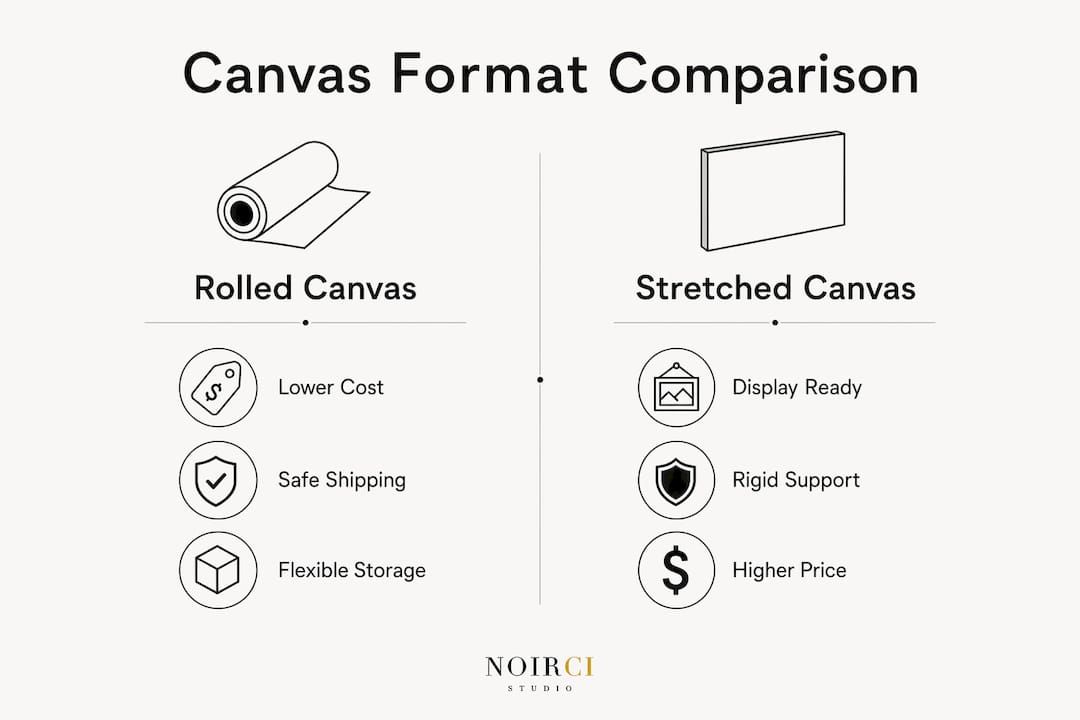
- Rolled canvas is flexible and cost-effective, requiring stretching before it can be displayed. Stretched canvas is ready to hang, offers a polished look, and is ideal for quick display. The choice depends on budget, shipping needs, and control over framing and presentation.
What is the core difference between rolled and stretched canvas?
Rolled canvas is printed or painted fabric delivered without a frame, shipped flat or coiled inside a protective tube. Stretched canvas is that same material pulled taut over a wooden stretcher frame and secured at the back, arriving ready to hang. The distinction sounds simple, but it shapes every downstream decision: how much you pay, how safely the piece ships, and how much control you keep over the final presentation.
Here is a quick-reference breakdown of the key comparison dimensions:
-
Presentation/readiness: Stretched canvas is display-ready out of the box; rolled canvas requires stretching or framing before it can hang.
-
Flexibility/customization: Rolled canvas lets you choose your own frame style, stretcher bar depth, and mounting method; stretched canvas locks in those decisions at the point of production.
-
Cost: Rolled canvas typically costs less than its stretched equivalent, though professional stretching adds labor costs later.
-
Shipping convenience and safety: Rolled canvas ships in compact, lightweight tubes with minimal damage risk; stretched canvas requires bulky packaging and is vulnerable at corners and edges.
-
Framing options: Rolled canvas supports any framing approach, including gallery wrap, float frames, or traditional frames; stretched canvas is already committed to one presentation.
-
Preparation needed: Rolled canvas demands stretching tools, skill, or a professional framer; stretched canvas needs nothing beyond a wall hook.
-
Portability: Rolled canvas fits inside luggage and ships internationally with ease; stretched canvas is cumbersome and expensive to transport over long distances.
Table of Contents
What rolled canvas actually is and how it is used
Rolled canvas is canvas fabric, whether printed with a digital image or hand-painted, that has not been mounted onto any frame. It is the material in its most flexible state.
-
Production and delivery format. The canvas is printed or painted, then carefully rolled and placed inside a rigid protective tube. This keeps the surface flat and the ink or paint layer intact during transit.
-
Typical use cases. Rolled canvas suits large-scale works, international shipments, bulk orders, and any situation where the buyer wants to control the framing process locally.
-
Canvas margins for wrapping. Most rolled canvases include 2–3 inches of unprinted margin on each side to allow for gallery wrap stretching. Confirm these margins exist before purchasing if you plan a gallery-wrapped finish.
-
Storage advantages. A rolled piece stores vertically in its tube, taking up far less space than a framed work. For collectors managing multiple pieces, this is a practical consideration.
-
Requirement for later preparation. The canvas cannot be displayed until it is stretched onto stretcher bars, mounted on a board, or placed under glass in a traditional frame. That step adds time and, depending on the approach, additional cost.
What stretched canvas is and why it matters for display
Stretched canvas is canvas fabric that has been pulled evenly over a wooden frame, called stretcher bars, and fastened at the back. The result is a rigid, taut surface ready for immediate display.
-
Construction and tensioning. The canvas is centered over the frame, pulled from opposite sides in sequence, and stapled or tacked at the back. Proper tension is applied evenly across all four sides to prevent warping or image distortion.
-
Immediate display readiness. A well-made stretched canvas arrives with hanging hardware already attached. You take it out of the box and put it on the wall.
-
Gallery wrap edge finishing. Many stretched canvases use a gallery wrap style, where the image extends around the sides of the frame. This eliminates the need for an additional border frame and gives the piece a clean, contemporary look.
-
Consistent surface integrity. The wooden frame protects the canvas from accidental bending or creasing and keeps the surface taut over time, provided the environment stays reasonably stable.
-
Ideal scenarios. Stretched canvas is the right choice when you are buying a gift, working to a deadline, furnishing a space without access to a local framer, or purchasing a single statement piece rather than building a collection.
Pro Tip: When evaluating a stretched canvas, check the stretcher bar depth. A deeper bar (1.5 inches or more) gives the piece a more substantial, gallery-quality profile on the wall and reduces the likelihood of the canvas touching the wall surface behind it.
The practical advantages of choosing rolled canvas
Rolled canvas earns its place in the market for reasons that go well beyond price.
-
Lower production and shipping cost. Without stretcher bars or assembly labor, rolled canvas costs less to produce. Shipping a tube is dramatically cheaper than shipping a rigid framed piece, particularly for oversized prints or international orders.
-
Complete framing freedom. You can take a rolled canvas to any local framer and choose the exact stretcher bar depth, frame style, or mounting method that suits your interior. That level of customization is simply not available with a pre-stretched piece.
-
Reduced damage risk in transit. Rolled canvas ships without fragile corners or a rigid frame. Cylindrical tubes absorb impact well, making rolled canvas the preferred format for high-value shipments and long-distance transport.
-
Practical for oversized and bulk orders. A canvas measuring 48 by 72 inches is far easier to ship as a roll than as a stretched piece. For collectors ordering multiple works, rolled format keeps storage manageable.
-
Archival control. Collectors of high-value pieces often prefer rolled canvas because it lets them verify the archival quality of the stretcher bars and the tensioning process used by their chosen local framer.
-
Flexibility for unconventional display. Rolled canvas can be mounted on boards, hung from poles, or displayed in installations. Stretched canvas cannot be easily repurposed once framed.
Pro Tip: Before ordering a rolled canvas for gallery wrap stretching, ask the seller to confirm the unprinted margin dimensions. A margin of at least 2 inches on each side is the minimum for a standard 1.5-inch deep stretcher bar.
The practical advantages of choosing stretched canvas
Stretched canvas removes every step between receiving the artwork and putting it on the wall.
-
Ready to hang immediately. No tools, no framer, no waiting. The piece arrives assembled and hardware-ready.
-
Professional, polished appearance. A properly tensioned stretched canvas has clean edges, a taut surface, and a finished look that suits galleries, offices, and high-visibility home spaces.
-
No additional framing cost. The price you pay covers everything. There are no follow-on expenses for stretching labor or framing materials.
-
Consistent tension over time. Quality stretcher bars, particularly those with corner tension keys, allow minor adjustments if the canvas relaxes slightly due to humidity changes.
-
Ideal for gifts and deadlines. When the piece needs to be presentation-ready on arrival, stretched canvas is the only format that delivers that reliably.
The tradeoff is real: stretched canvas costs more upfront, ships in bulkier packaging, and offers no flexibility once the frame is set. For a single statement piece going directly onto a wall you already know, those tradeoffs are usually worth accepting.
- Choose stretched canvas when immediate display matters more than customization.
- Choose stretched canvas when the piece is a gift and the recipient has no access to framing services.
- Choose stretched canvas when the artwork will be displayed in a professional or high-visibility setting where presentation consistency is expected.
The price difference between rolled and stretched canvas is real, but the full cost picture requires looking past the initial purchase.
| Factor |
Rolled Canvas |
Stretched Canvas |
| Initial price |
Less than stretched |
Higher upfront, all-inclusive |
| Shipping cost |
Low, compact tube, lightweight |
Higher, bulky, fragile packaging required |
| Damage risk in transit |
Low, no rigid corners |
Higher, corners and edges vulnerable |
| Professional stretching cost |
$8–20 per linear foot, typically $50–150 per print |
None, already done |
| Storage cost |
Minimal, stores in tube |
Higher, takes up wall or floor space |
| Framing flexibility |
Full, any local framer or DIY |
None, frame is fixed |
- Rolled canvas has a lower entry price, but professional stretching adds $50–150 per print depending on size and complexity.
- Stretched canvas costs more upfront but eliminates all follow-on labor expenses.
- For international or long-distance shipping, rolled canvas is significantly more economical and safer.
- For a single piece going directly onto a wall, stretched canvas often represents better total value once stretching costs are factored in.
The honest calculation depends on your situation. If you have a trusted local framer and are building a collection, rolled canvas saves money at scale. If you are buying one piece for a specific wall, the convenience premium of stretched canvas is usually justified.
How to prepare rolled canvas for display
Getting a rolled canvas from tube to wall requires planning, the right tools, and ideally some experience.
-
Gather your materials. You will need stretcher bars in your chosen size, a heavy-duty staple gun with 3/8-inch staples, canvas pliers for even pulling, a rubber mallet, and a clean flat surface at least twice the size of the canvas.
-
Allow the canvas to relax. Unroll the canvas and let it rest flat for several hours before stretching. This reduces the risk of creasing during tensioning.
-
Assemble the stretcher frame. Join the stretcher bars at the corners, checking that the frame is square by measuring diagonally from corner to corner. Both measurements should match.
-
Center the canvas over the frame. Place the canvas face down, center the frame on top, and confirm equal margins on all four sides before you begin stapling.
-
Staple from the center outward. Begin at the center of one long side, pull firmly with canvas pliers, and place a staple. Move to the opposite side and repeat. Work outward from each center point in sequence, alternating sides to distribute tension evenly.
-
Fold and secure the corners. Fold the canvas at each corner neatly, pulling the fabric flat before stapling. Uneven corners are the most visible sign of an amateur stretch.
-
Check tension and adjust. Run your hand across the surface. The canvas should feel uniformly taut with no soft spots or ripples. If the frame has tension keys, tap them gently into the corner slots to fine-tune.
Pro Tip: Most people underestimate the tools required for a professional result. Canvas pliers are not optional for anything over 16 inches, pulling by hand produces uneven tension that leads to sagging within months. For pieces larger than 24 by 36 inches, professional stretching is the more reliable choice.
What experts say about choosing between rolled and stretched canvas
The professional framing community is consistent on one point: the choice between these two formats is fundamentally a question of convenience versus customization.
Professional framers caution that while rolled canvas costs less initially, the investment shifts to labor and framing costs later. High-quality, long-term display requires careful, even tensioning, and that is best handled by professionals to avoid future sagging or image distortion. This is not a warning against rolled canvas, it is a reminder that the format’s cost advantage only holds when the stretching is done well.
-
Collectors of high-value or oversized work tend to prefer rolled canvas because it lets them verify the archival quality of the stretcher bars and control the tensioning process locally.
-
First-time buyers and gift purchasers are better served by stretched canvas, which delivers a finished result without requiring any additional decisions or skills.
-
Interior designers often request rolled canvas specifically because it gives them full control over frame depth, profile, and finish to coordinate with a client’s space.
-
Artists shipping internationally almost universally choose rolled format. The cylindrical tube is far more resistant to transit damage than a rigid framed piece.
When you are buying art from Black artists or any culturally significant source, the format decision also touches preservation. Rolled canvas, stored correctly in an acid-free tube with climate control, can remain in pristine condition for decades before stretching. That matters for pieces you intend to keep.
A closer look at what rolled canvas means for your collection
Rolled canvas, at its core, is printed or painted fabric in its most transportable and flexible state. It has not been mounted, tensioned, or committed to any particular frame or presentation. For a collector, that means the artwork arrives as potential rather than a finished object.
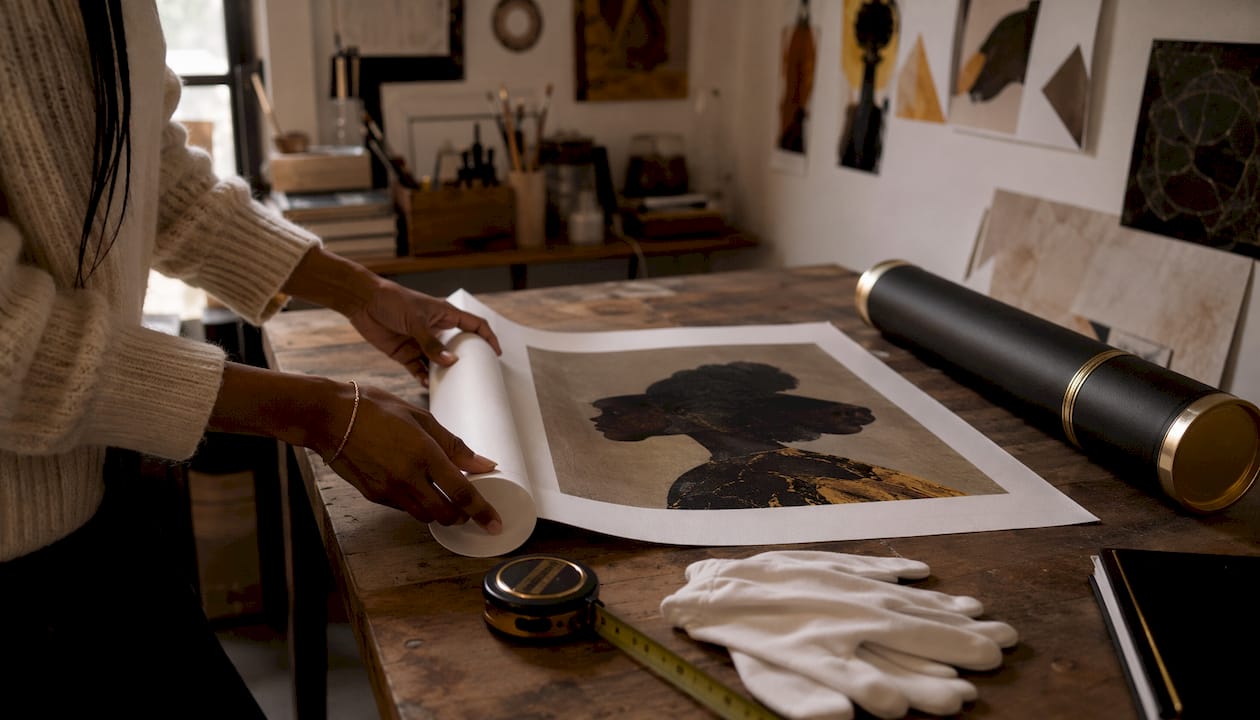
This format has been the preferred shipping method for galleries and museums for decades precisely because it reduces risk. The canvas types used in archival printing, whether cotton duck or linen, are designed to be stretched and tensioned after delivery. A rolled piece that has been stored correctly and stretched by a skilled framer will look identical to one that was pre-stretched at the point of production.
The practical implication: if you are building a collection and plan to work with a trusted local framer, rolled canvas is the format that gives you the most control at the lowest per-piece cost.
Why rolled canvas often makes more sense for serious collectors
For collectors managing multiple works, the advantages of rolled canvas compound over time. Storage is simpler, shipping costs are lower, and the ability to choose your own stretcher bar depth means every piece can be presented consistently, regardless of where it was produced.
There is also a preservation argument. Rolled canvas avoids the structural risks associated with wooden frames, specifically warping caused by humidity and temperature fluctuations. When stored in a controlled environment inside an acid-free tube, a rolled canvas can outlast a poorly framed stretched piece by years.
The one discipline rolled canvas demands is patience. You cannot hang it the day it arrives. But for a piece you intend to display for decades, that delay is a reasonable trade for the control it provides.
The real cost picture for stretched canvas buyers
Stretched canvas carries a higher upfront price, but for many buyers that premium is the entire point. You pay once and the decision is made. There are no follow-on choices about frame style, no framer appointments, and no risk of a DIY stretching job that sags six months later.
The cost of professional stretching, which ranges from $8–20 per linear foot depending on size and complexity, can easily exceed the price difference between rolled and stretched canvas for larger pieces. A 30 by 40-inch print stretched professionally might cost $80–120 in labor alone. At that point, the stretched canvas option is often the better value, not just the more convenient one.
Both formats can last for generations when handled correctly. The differences lie in where the risks are concentrated.
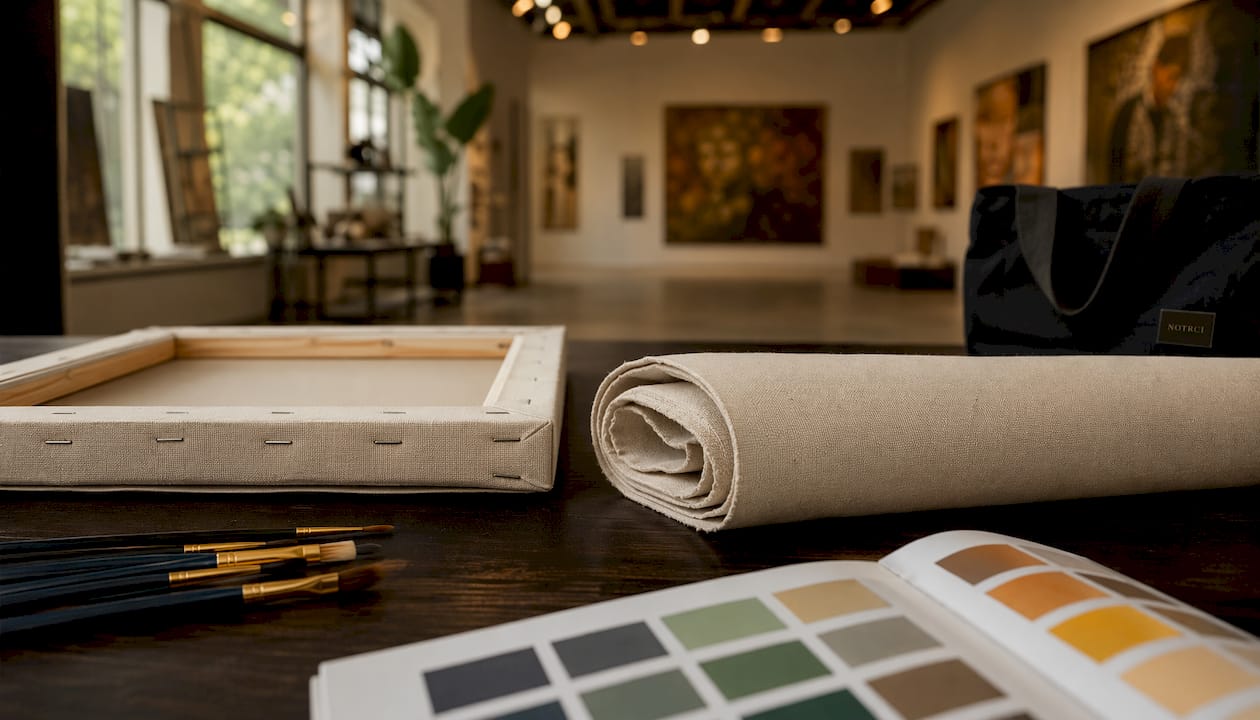
Stretched canvas benefits from a rigid structure that protects the surface from accidental bending or creasing. The wooden frame keeps the fabric taut and prevents the kind of handling damage that can occur with a loose rolled piece. However, the frame itself introduces a vulnerability: wood responds to humidity and temperature changes, and a poorly made or improperly stored stretched canvas can warp over time. Quality stretcher bars made from kiln-dried timber reduce this risk substantially.
Rolled canvas avoids frame-related warping entirely. The fabric itself is the only material at risk, and when stored correctly, it is remarkably stable. The critical moment for a rolled canvas is the stretching process. Improper tensioning, uneven pulling, or low-quality stretcher bars can introduce stress points that shorten the life of the piece. Done well, a stretched rolled canvas is indistinguishable in longevity from one that was pre-stretched at production.
The archival quality of the canvas material and the ink or paint used matters more to long-term durability than the format itself. Museum-grade archival canvas with pigment-based inks, whether rolled or stretched, will outlast student-grade materials in either format.
Storage conditions affect both formats, but the practical requirements differ.
For rolled canvas:
- Store vertically inside the original protective tube whenever possible.
- Use acid-free tissue paper between the canvas and the tube interior to prevent chemical transfer.
- Keep the storage environment at a stable temperature and humidity level. Significant fluctuations cause the canvas to expand and contract, which can lead to creasing.
- Avoid storing horizontally under weight, which can create permanent flat spots.
For stretched canvas:
- Store upright, never flat-stacked, to avoid pressure on the surface.
- Keep away from exterior walls, which are more susceptible to temperature and humidity swings.
- Place acid-free foam bumpers on the back corners to prevent wall contact and allow air circulation.
- For long-term storage, cover with acid-free glassine paper rather than plastic, which traps moisture.
Both formats benefit from a climate-controlled environment. Extreme heat, cold, or humidity are the primary enemies of canvas longevity regardless of whether the piece is rolled or stretched.
The format question intersects with the painting medium in ways that matter for both artists and collectors.
Oil paintings are traditionally associated with linen canvas, which has a finer weave and greater dimensional stability than cotton. Linen is harder to stretch than cotton, which is one reason many oil painters prefer to buy pre-stretched canvas or have their rolled linen stretched professionally. The stiffness of linen makes even tensioning more demanding, and an uneven stretch on linen can produce rippling along the edges that is difficult to correct.
Acrylic paintings work well on cotton canvas, which is more elastic and easier to stretch. Cotton duck canvas in the 10–16 oz range is the standard for most acrylic work, and it is available in both rolled and pre-stretched formats. The higher elasticity of cotton means it responds well to DIY stretching, making rolled cotton canvas a reasonable choice for experienced painters.
Digital and photographic prints are most commonly produced on cotton canvas with pigment-based inks. For display purposes, either format works well. For archival purposes, the quality of the ink and the canvas coating matters more than whether the piece arrives rolled or stretched.
How to mount and install rolled canvas after stretching
Once a rolled canvas has been stretched onto bars, installation follows the same process as any stretched canvas.
-
Attach hanging hardware. Use D-ring hangers screwed into the back of the stretcher bars, positioned roughly one-third of the way down from the top. For heavier pieces, use two D-rings and a wire strung between them for level hanging.
-
Locate wall studs for large pieces. Any canvas over 24 by 36 inches should be anchored into wall studs rather than drywall anchors alone. A stud finder takes the guesswork out of this step.
-
Use a level. Mark your hanging point with a pencil, use a level to confirm the hook position, and hang the piece. Check level again after hanging.
-
Add felt bumpers to the back corners. These protect the wall surface and keep the canvas from shifting once hung.
-
Check tension after installation. A canvas that has been recently stretched may relax slightly in the first few weeks as the fabric settles. If the frame has tension keys, a gentle tap with a rubber mallet can restore tautness without removing the piece from the wall.
How the environment affects rolled and stretched canvas differently
Temperature and humidity are the two variables that cause the most long-term damage to canvas art, and they affect the two formats in distinct ways.
Stretched canvas is more immediately sensitive to environmental changes because the wooden frame responds to humidity. In a humid environment, wood absorbs moisture and expands, which can cause the canvas to go slack. In a dry environment, wood contracts, which can increase tension to the point of stressing the fabric. Kiln-dried stretcher bars and frames with tension keys manage this more effectively than lower-quality alternatives.
Rolled canvas, stored in a tube, is insulated from some of these fluctuations. The tube itself provides a buffer, and without a wooden frame, there is no secondary material responding to humidity changes. The risk for rolled canvas is at the point of stretching: if the canvas is stretched in a very humid environment and then moved to a dry one, the fabric may tighten beyond the intended tension.
For display environments, both formats benefit from consistent indoor climate control. Avoid hanging canvas art directly above heating vents, in rooms with high humidity such as bathrooms, or on exterior walls that experience significant temperature swings. These precautions apply equally to rolled canvas after stretching and to pre-stretched pieces.
If you have been weighing these options while thinking about a specific piece for your walls, Noirci Studio offers a direct path to museum-grade archival canvas prints that honor Black art and culture without requiring you to navigate the framing process alone.
Noirci Studio’s collection spans Harlem Renaissance portraiture, jazz-era scenes, Afrocentric and African-inspired work, Gullah Geechee and Lowcountry heritage, and Black family and love art. Every print is produced on archival canvas with pigment-based inks built for longevity. The stretched canvas options arrive ready to hang, with professional gallery wrap finishing and hanging hardware included. For collectors who prefer to control the framing process, rolled options are available with the canvas margins needed for gallery wrap stretching.
Four pieces worth considering: Tribal Cloth brings African village life to the wall with rich, layered color. Unbothered pairs tribal heritage with contemporary confidence. Ancestors is a quieter, more contemplative piece rooted in community and memory. Rooted depicts the bond between mother and child with warmth and precision. All four are available in multiple sizes. Browse the full African tribal art collection to find the piece that fits your space and your story.
Key Takeaways
Stretched canvas delivers immediate display convenience, while rolled canvas offers lower cost, safer shipping, and full framing control, the right choice depends on your timeline, budget, and how closely you want to manage the final presentation.
| Point |
Details |
| Cost difference |
Rolled canvas costs 30–50% less upfront; professional stretching adds $50–150 per print. |
| Shipping safety |
Rolled canvas ships in protective tubes with minimal damage risk; stretched canvas is vulnerable at corners and edges. |
| Framing control |
Rolled canvas lets you choose any frame style, stretcher bar depth, or mounting method locally. |
| Durability factors |
Both formats last for generations when stored correctly; kiln-dried stretcher bars and archival materials matter most. |
| Noirci Studio |
Offers museum-grade archival canvas prints in stretched and rolled formats, covering Afrocentric, Harlem Renaissance, and Black heritage themes. |
Recommended

Written by Robert Lawrence, painter and founder of Noirci Studio. Raised in Atlanta and trained at Clark Atlanta University, he has painted Black life from memory since 2006. He founded Noirci Studio, establishes its curatorial standards, and continues to make art. Every article is reviewed under our editorial guidelines.
Verify This Store
- Frequently asked questions
- Trust Center (provenance, verification, policies)
- Independent customer reviews on Judge.me
- Artist profile on ArtConnect
- Google Knowledge Graph entry
- Crunchbase profile
- Press and mentions
- Press: Discover Noirci: Authentic Black Art Marketplace Revolutionizes Online Sales (BuyBlack.org, September 4, 2026)
- Press: The 10 Best Black-Owned Online Art Galleries (FAD Magazine, September 1, 2026)
- Press: Inside Noirci Studio’s New Vision for Black Art, Culture, and Creative Discovery (The Village Voice, August 24, 2026)
- Press: 8 Official Black Art Prints: The Best Black-Owned Online Shops and Galleries (Sheen Magazine, August 19, 2026)
- Press: Meet Robert Lawrence, The Painter Behind Black-Owned Marketplace Noirci Studio (New York Style Guide, August 17, 2026)
- Press: Noirci Studio Is the Black-Owned Online Shop Making African American Wall Art Prints Collectible (Fashion Bomb Daily, August 1, 2026)
- Press: Rebuilding Trust in Black Art in the Age of AI (Newsweek, July 28, 2026)