 Artist painting a commissioned Black artwork
Start with culture-first marketplaces, creator platforms, and curated galleries built specifically around Black artists, then supplement with vetted general commission platforms once you know what you want. Sites like BlackVerses, Pay Black Creators, and Noirci Studio each serve a different piece of this process. Before you message anyone, write a one-page brief and set a real budget. That single step prevents most of the friction that derails commissions.
TL;DR:
- Culture-first markets and Black-owned platforms offer curated, community-focused options that reduce the risk of misrepresentation and provide direct support for Black creators.
- Clear, detailed briefs and transparent payment structures, including deposits and milestone approvals, are essential to avoid delays and misunderstandings in commissioned artwork.
- Curated catalogs and archival prints provide quicker, reliable options for those who prefer ready-made Black art without the wait of custom commissions.
- Pricing depends on size, medium, artist experience, and complexity, with timelines ranging from a few weeks for small pieces to several months for large, detailed works.
- Verification steps like consistent portfolios, platform authentication, and documented provenance help ensure the artist’s legitimacy and protect your investment.
Noirci Studio
Find Black Art Without the Wait
Browse original paintings and archival canvas prints celebrating Black culture, identity, family, love, and heritage for your space.
Table of Contents
Where to Find Black Artists Online for a Commission
Commissioning original work starts with knowing which kind of platform matches what you actually want. Not every channel is built for the same buyer, and picking the wrong one wastes time on both ends.
Culture-first marketplaces and Black-owned platforms exist specifically to connect buyers with Black creators, and they tend to reduce the guesswork of “is this artist actually who they say they are.” BlackVerses centers Black creators with community features and direct monetization tools, so you’re browsing a pool that’s already curated around identity and cultural context rather than filtering a general marketplace by search terms. Pay Black Creators works similarly, offering Premium Creator accounts and membership options that let supporters fund artists directly, while its companion directory, Local Black, functions as a free way to find creators without a paywall.
General commission platforms and curated galleries bring more infrastructure, particularly around payment protection and workflow. Artfinder runs a standard commissioning flow: deposit, milestone approvals, final payment on delivery, with a dedicated “commission artwork” option for artists who accept custom requests. ArtNativ follows a comparable structure, brief to concepts to approvals to delivery, and adds verified portfolios plus cross-border shipping coordination, which matters if you’re commissioning from an artist overseas.
Creator-first platforms and marketplaces built around authenticity checks are worth a look if provenance and buyer protection matter more to you than browsing volume. Black Artists Vault authenticates listings, uses escrow for payment protection, and issues digital certificates of authenticity, all of which shift some of the trust burden off your shoulders and onto the platform’s verification process.
Social channels and community groups remain one of the most direct ways to reach working artists, especially those who haven’t listed on a formal marketplace yet. Instagram and Threads communities built around Black art, hybrid models like BLK Art House’s pop-up and online marketplace approach, and artist-run Discord or Patreon groups all function as informal commission channels. The tradeoff is that you’re handling payment, contracts, and delivery logistics yourself, with none of the built-in escrow or milestone structure a dedicated platform provides.
A few quick rules connect the channel to your situation:
-
Tight budget, flexible timeline: creator-first platforms and direct social outreach usually cost less because there’s no marketplace fee layered on top.
-
Want verified authenticity and buyer protection: choose a marketplace with escrow and certificates, like Black Artists Vault.
-
Want curated, ready-to-buy Black art without the commission wait: browse a curated catalog such as Noirci Studio’s collection or similar Black-owned galleries.
-
Cross-border or complex logistics: favor platforms like ArtNativ that build shipping coordination into the process.
Whichever channel you pick, read the platform’s commissioning guidance before contacting an artist. It usually tells you exactly what information the artist needs from you first.
How Do You Write a Respectful Commission Brief?
A clear brief is the difference between a commission that goes smoothly and one that turns into three months of back-and-forth edits. Most disputes over commissioned art trace back to a vague starting brief, not a difficult artist.
Build your brief around these elements, in this order:
-
Subject and intent. Describe who or what the piece depicts and why it matters to you, whether it’s a family portrait, a scene rooted in Gullah heritage, or an Afrofuturist concept piece.
-
Visual references. Attach two or three images that capture tone, palette, or composition, not necessarily the exact final look.
-
Size and medium. Specify dimensions and whether you want an original painting, a mixed-media piece, or a canvas print treatment.
-
Color and mood. Note any color restrictions (matching a specific wall or room) and the emotional register you want, celebratory, contemplative, bold.
-
Deadline. Give a real date, not “soon,” and ask the artist to confirm feasibility before you pay a deposit.
-
Budget. State a number or range upfront. Artists spend less time guessing and more time creating when they know what they’re working with.
Once the brief is set, payment structure comes next. Artfinder’s commissioning model offers a useful template: a deposit collected upfront (commonly a percentage of the final price), one or more milestone approvals as the piece develops, and final payment released on delivery. This structure protects both sides. The artist has committed funds before investing hours of work, and you get to approve progress before the piece is finished.
Set revision limits and acceptance criteria before work begins, not after you see a draft you don’t like. Two rounds of revisions is a common, fair standard for most commission sizes. Beyond that, expect additional fees, and say so in writing at the start.
Pro Tip: Put your revision limit and deadline in the same message as your deposit payment. Artists remember terms better when they’re tied to a financial commitment, and you’ll have a written reference if a disagreement comes up later.
Communication matters as much as the paperwork. Use respectful, specific language when describing what you want changed, avoid vague feedback like “make it pop,” and give the artist room to interpret your brief creatively rather than dictating every brushstroke. A written agreement, even a simple email confirmation, protects you both if memories diverge later.
Finally, settle delivery expectations before the piece ships. Ask how the work will be packaged, whether shipping includes insurance, and whether you’ll receive tracking information. For larger canvases, confirm the artist has experience shipping oversized work. Damage in transit is one of the most common and most avoidable disappointments in commissioned art.
What to Expect on Price, Timeline, and Ownership
Commission pricing moves on five variables: size, medium, the artist’s experience level, the complexity of the subject, and whether you’re asking for a rush turnaround. A small portrait in graphite costs far less than a large, multi-figure oil painting, and an established artist with gallery representation will price higher than someone building their first client base, regardless of medium.
Timelines vary just as widely. A small portrait commission might take two to four weeks. A detailed painting or a large canvas piece can run six to twelve weeks, longer if the artist is working around other client commitments or a gallery show. Ask for a realistic range at the outset rather than a fixed promise, since most experienced artists will give you one honestly if you ask directly.
Deposit norms follow the same platform-driven pattern described earlier. Artfinder’s structure, deposit up front, milestone approvals mid-project, final payment on delivery, reflects how most serious commission platforms operate rather than a single universal percentage. Treat any specific number an artist quotes as their own policy, not an industry standard, and ask about it directly if it isn’t already stated on their platform.
Ownership and usage rights are two different things, and buyers frequently confuse them. Owning the physical piece doesn’t automatically give you the right to reproduce it, print it commercially, or use it in marketing materials. If you plan to do any of that, ask for a written usage clause or license as part of your agreement, ideally before you pay your deposit.
- Get everything in writing: the brief, the price, the deadline, and the revision terms.
- Keep the invoice or agreement email as your record if a dispute arises later.
- Ask specifically whether the price includes shipping, framing, or a certificate of authenticity.
For a closer look at how editions, rights, and recordkeeping work when buying Black art, Noirci Studio’s guide on buying art from Black artists walks through the paperwork side in more detail.
How Can You Verify an Artist’s Authenticity Before Paying?
Vetting an artist matters just as much for the buyer’s peace of mind as it does for the artist’s protection. A few consistent checks catch most problems before money changes hands.
Start with the portfolio. Look for a body of work that shows a consistent style, technique, and quality level across multiple pieces, not just one polished sample image. Documented past sales, exhibition history, or gallery representation add real weight here, since a track record is harder to fake than a single strong post.
Platform verification adds a second layer. Marketplaces like Black Artists Vault authenticate listings and issue digital certificates of authenticity, which gives you documentation you can point to later if a piece’s provenance is ever questioned. Escrow protection through the platform, rather than a direct bank transfer to the artist, trades a small fee for meaningfully lower risk on a commissioned transaction.
Watch for red flags: an inconsistent portfolio that jumps wildly in style or skill level, pressure to pay the full amount upfront with no contract or milestone structure, and evasive answers when you ask about past client work or delivery timelines. A legitimate artist welcomes these questions rather than deflecting them.
Ask for proof throughout the process, not just at the end. Progress photos at each milestone, a clear sign-off step before the final payment releases, and a written delivery confirmation once the piece ships all protect you without insulting the artist’s professionalism.
| Trust Signal |
What It Tells You |
Where to Look |
| Consistent portfolio |
Style and skill are genuine, not a one-off |
Artist’s site, social profiles, marketplace listing |
| Certificate of authenticity |
Documented provenance for resale or insurance |
Verified marketplaces like Black Artists Vault |
| Escrow or milestone payments |
Funds are protected until work is approved |
Platforms like Artfinder, ArtNativ |
| Platform verification badge |
Identity and portfolio have been checked |
Marketplace profile pages |
For a full list of questions to run through before you commit, Noirci Studio’s pre-purchase question guide is a useful companion to keep open while you’re messaging artists.
When Commissioning Makes Sense, and When Noirci Studio Is Faster
A curated catalog can center on the range of Black life and culture, including Harlem Renaissance portraiture, jazz-era scenes, Afrocentric and African-inspired imagery, Black family and love art, Gullah and Lowcountry heritage pieces, and Afrofuturist work. Such collections often include original artworks or archival canvas prints, made to order with size and framing options chosen at checkout.
Commissioning bespoke work is the right call when you need something specific to your own story, a family likeness, a particular Gullah heritage reference, a size that fits an unusual wall. It’s a slower, more collaborative process, and it should be, because you’re asking an artist to create something that doesn’t exist yet.
Buying from a curated catalog is the faster route when you want authentic, culturally resonant art without the weeks of back-and-forth a commission requires. You still get:
- A piece rooted in real Black artistic tradition rather than generic decor.
- Sizing and framing options chosen at the point of purchase, not negotiated over email.
- No deposit-and-milestone timeline to manage.
A first apartment doesn’t need to wait eight weeks for its walls to mean something. Sometimes the right piece is already made, and the only decision left is the frame.
Both paths lead to the same outcome: art that reflects your story instead of filling empty wall space by default.
Understanding Black Art Styles and Genres Before You Choose
Knowing the style you’re drawn to makes both commissioning and buying far easier, because you can describe what you want in terms an artist immediately understands.
Harlem Renaissance portraiture draws on the early 20th century movement’s focus on dignity, elegance, and everyday Black life rendered with formal composition, often in rich, warm palettes. It suits buyers who want a classic, timeless feel.
Jazz-era scenes lean into movement and atmosphere, capturing musicians, dancers, and nightlife energy, often in bold color and loose brushwork that mirrors the music itself.
Afrocentric and African-inspired work pulls from traditional patterns, textiles, and symbolism across the African diaspora, frequently blending geometric design with figurative subjects.
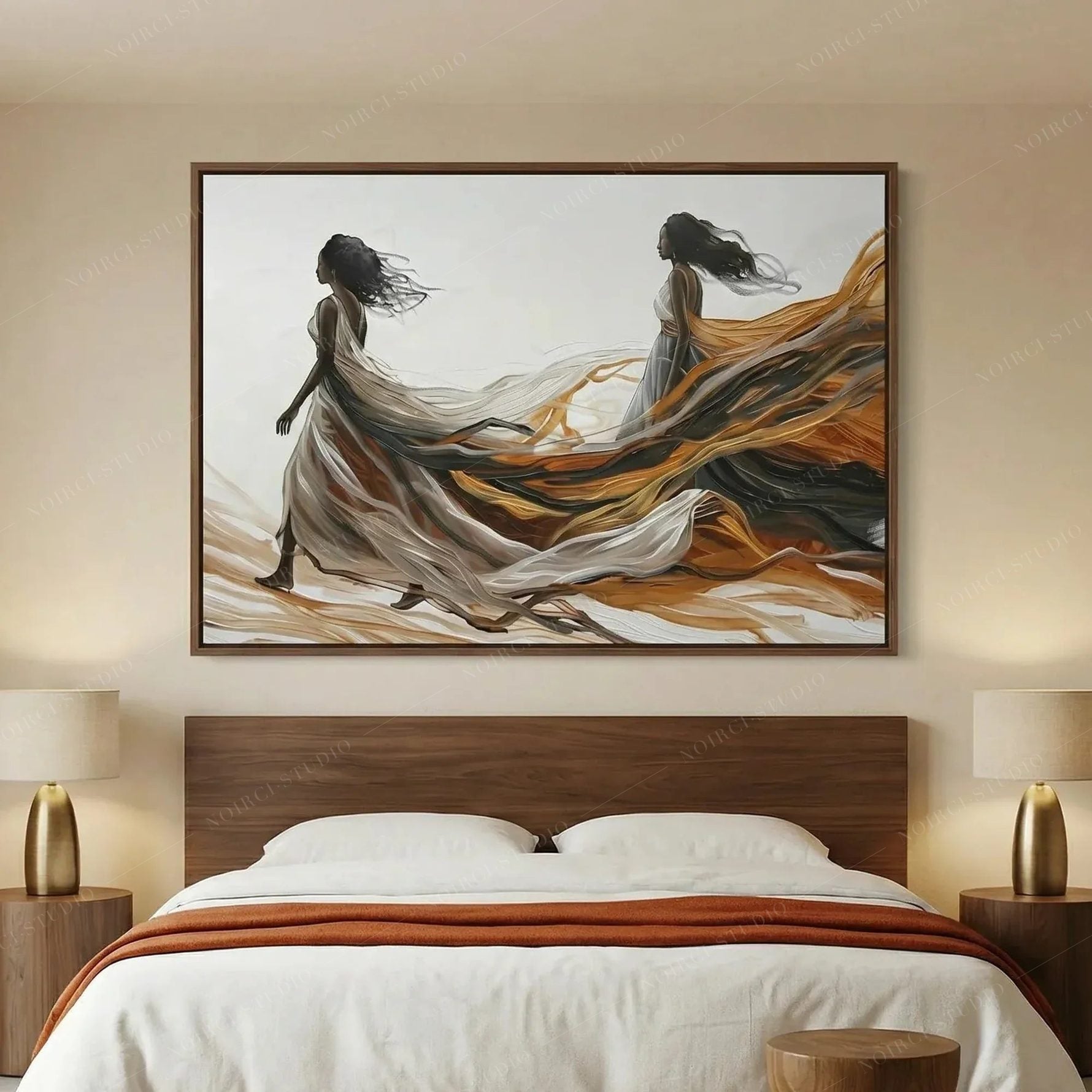
Black family and love art centers intimacy and connection, portraits of couples, parents and children, or generational scenes that celebrate everyday relationships rather than grand historical moments.
Gullah and Lowcountry heritage pieces reflect the specific visual language and traditions of the Gullah Geechee people, often incorporating coastal imagery, basket weaving patterns, and rural Southern life.
Afrofuturism reimagines Black identity through a speculative, futuristic lens, mixing technology, myth, and cultural pride into imagery that looks forward rather than back.
Naming the genre you’re drawn to before you write your brief saves an artist several rounds of clarifying questions, and it helps you browse a catalog with a sharper eye.
What Buyers Get Wrong About Commissioning Black Art
The biggest mistake I see in how commissioning gets discussed online is treating it as the default, superior path to owning Black art, as if buying a finished piece is somehow a lesser or less supportive choice. That’s backwards. A well-made archival print from an established Black artist supports that artist’s income just as directly as a bespoke commission, often with far less risk of miscommunication on either side.
The conventional advice also underplays how much a bad brief costs everyone involved. Buyers fixate on finding the “right” platform when the bigger risk is showing up with no size, no budget, and no reference images. Artists can work with almost any channel if the brief is clear.
What should come first isn’t the platform search. It’s deciding what story you want on your wall, then matching that decision to either a commission or a curated piece that already exists. Noirci Studio’s catalog exists precisely because not every buyer needs to wait weeks for something that already reflects their story.
- Robert
Ready to Bring Black Art Into Your Space Today?
If commissioning feels like more process than you want right now, Noirci Studio gives you a faster route to the same result: authentic, culturally rooted art on your wall without the brief, the deposit, and the weeks of milestone check-ins. Every piece in the catalog is made to order, so you’re still getting something considered, just without the back-and-forth a bespoke commission requires.
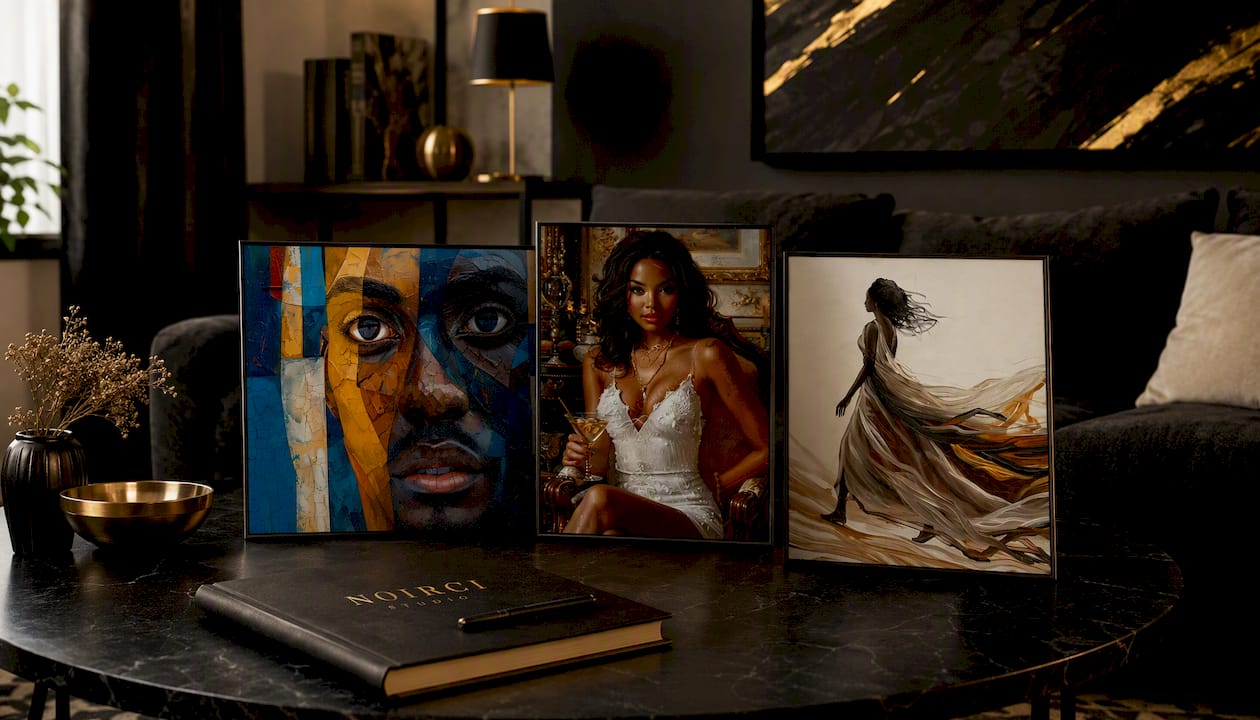
Browse the Abstract Black Man Canvas Wall Art Print for a bold, contemplative statement piece, or the Regal Black Woman Canvas Wall Art Print if you want warmth and presence in a living room or entryway. For something rooted in quiet confidence, the Black Women Elegance Canvas Wall Art Print works well as a focal point in a bedroom or study. Pick a size and frame at checkout, and the piece ships as a museum-grade archival print, ready to hang. Start browsing the collection now and find the piece that already tells your story.
Sources
FAQ
Where can I sell or buy Black art online?
Black-owned marketplaces, culture-first platforms, and curated galleries such as Noirci Studio all support buying original Black art and archival prints, while creator platforms like Pay Black Creators support artists selling and accepting commissions directly.
What is the 70/30 rule in art?
Definitions of this rule vary by context and industry, and it isn’t a standard referenced across the commissioning platforms covered here. If a specific gallery or platform cites it, ask them directly what split they mean before assuming a universal standard applies.
What is the best app for commissioning art?
No single app dominates commissioning the way it does for other creative services. Platforms like Artfinder and ArtNativ offer structured deposit and milestone workflows through their websites, which function similarly to an app-based commission process.
How much should I expect to pay as a deposit for a commission?
Deposit amounts vary by artist and platform, but a percentage of the total price collected upfront, followed by milestone approvals and final payment on delivery, is a common structure used by platforms like Artfinder.
Recommended

Written by Robert Lawrence, painter and founder of Noirci Studio. Raised in Atlanta and trained at Clark Atlanta University, he has painted Black life from memory since 2006. He founded Noirci Studio, establishes its curatorial standards, and continues to make art. Every article is reviewed under our editorial guidelines.
Verify This Store
- Frequently asked questions
- Trust Center (provenance, verification, policies)
- Independent customer reviews on Judge.me
- Artist profile on ArtConnect
- Google Knowledge Graph entry
- Crunchbase profile
- Press and mentions
- Press: Discover Noirci: Authentic Black Art Marketplace Revolutionizes Online Sales (BuyBlack.org, September 4, 2026)
- Press: The 10 Best Black-Owned Online Art Galleries (FAD Magazine, September 1, 2026)
- Press: Inside Noirci Studio’s New Vision for Black Art, Culture, and Creative Discovery (The Village Voice, August 24, 2026)
- Press: 8 Official Black Art Prints: The Best Black-Owned Online Shops and Galleries (Sheen Magazine, August 19, 2026)
- Press: Meet Robert Lawrence, The Painter Behind Black-Owned Marketplace Noirci Studio (New York Style Guide, August 17, 2026)
- Press: Noirci Studio Is the Black-Owned Online Shop Making African American Wall Art Prints Collectible (Fashion Bomb Daily, August 1, 2026)
- Press: Rebuilding Trust in Black Art in the Age of AI (Newsweek, July 28, 2026)