 A contemporary museum gallery of bold original Black-art works, spare and modern, post-2000 mood, no people.
Freestyle was a 2001 exhibition at the Studio Museum in Harlem, curated by Thelma Golden, that introduced the term post-black to describe artists who were shaped by Black identity but refused to be defined by it. Two words ended up doing more work than any single painting in the show.
Two words did more work than any single painting in that room.
Post-black.
In the spring of 2001, a deputy director at the Studio Museum in Harlem opened a group show of 28 artists almost nobody outside the art world could name yet. She called it Freestyle. What came out of it was not a movement or a manifesto but a phrase, and that phrase outlived the walls it hung on.

A spring show, 28 names you didn't know yet
Freestyle ran from April 28 to June 24, 2001. Thelma Golden curated it.
She had joined the Studio Museum in Harlem the year before, in 2000, as Deputy Director for Exhibitions and Programs, a title that sounds administrative and badly undersells what she was actually doing. She was pointing the institution's full attention at people the market had not yet decided to care about.
Twenty-eight emerging Black artists. Among them, Mark Bradford, Rashid Johnson, and Eric Wesley.
If those names land differently now, hold that thought, because it turns out to be the whole point of the story.
A group show of unknowns is a risk shaped like a shrug. Most of them get forgotten inside a year. This one didn't.
Think about what a group show actually is. It's an argument built out of other people's work. Put these particular artists side by side, the curator is saying, and you'll notice something none of them makes visible alone. Golden's argument in 2001 was that a shift was underway in how younger Black artists related to the whole question of being read as Black artists first. Freestyle was the evidence she assembled for it.
What "post-black" claimed, and what it refused
Golden did not arrive at the term alone. She developed it with the artist Glenn Ligon, out of a running conversation the two of them had been having about identity and language well before the show had a title.
The idea had roots. Freestyle gave it a public address.
Here is the tension that made it stick. The artists in Golden's account were "adamant about not being labeled 'black' artists, though their work was steeped, in fact deeply interested, in redefining complex notions of blackness." Read that twice. It refuses the label and doubles down on the subject in the same breath.
That is not a contradiction. It's a demand.
Post-black said, do not file me under a category before you have actually looked at what I made. Do not let the adjective do your seeing for you. The work stayed rooted in Blackness. The frame around the work was the thing being challenged.
You can hear years of argument compressed inside it. The debate had been running in a loop well before Freestyle opened. Should a Black artist's work be understood through race, or does that reading flatten everything else the work is trying to say? Post-black declined to pick a side of that loop. It kept both truths in the room at once.
Naming that tension out loud handed a whole generation of artists a way to describe what they were already doing.
The roster that aged into the canon
Go back to those three names. In 2001 they were emerging, which is a polite word for unproven.
Mark Bradford and Rashid Johnson
Mark Bradford now shows in the kind of museum surveys that define a career. Rashid Johnson has traveled the same distance, from a young artist in a Harlem group show to a name you'll find on major-institution walls around the world. The show did not make them. Their work did. But Freestyle put them in one room at the exact moment the wider art world started paying attention, and that timing counts for something.
Much of what these artists were working through came down to figuration, the human figure as a place where meaning gets built rather than decoration. For the longer version of how Black artists have used the figure, we go into it in our piece on Black figuration explained.
Notice what the label did not do. It did not lock these artists into a house style. They make very different work, and post-black was never meant to name a look. It named a stance. That is part of why it lasted. A style dates fast. A stance travels.
The canon is not a fixed guest list. It gets revised. Freestyle sits in the record as one such revision, caught while it was still happening.
The climb to Director and Chief Curator
Golden's own arc runs parallel to the artists she championed.
In 2005, four years after Freestyle, she became Director and Chief Curator of the Studio Museum in Harlem, succeeding Lowery Stokes Sims. She has led the institution since.
That progression rewards a second look. A curator makes a public bet on a generation, names the idea that generation is circling, and then rises to run the museum that gave the bet a home. The Studio Museum itself has kept changing under her, including a new purpose-built home for the institution, which we covered in its own article.
Power in the art world is not only about who buys what. It's also about who gets to say what a body of work means.
Why naming is a curator's real power
Hanging pictures is the visible part of the job. Anyone can picture it. Frames, wall text, a lighting plan.
The deeper work is quieter. A curator decides what to place next to what, and in doing so decides what a viewer is even able to think about the art. Give a generation a phrase like post-black and you have handed them a lens the entire culture will now look through, critics and buyers and the artists themselves all looking through the same new opening.
That is a different kind of power than choosing which canvas goes on which wall. It's the power to shape the terms of seeing.
Terms of seeing sounds abstract until you watch it work. A word like this one changes the first question a viewer asks in front of a canvas. Instead of what makes this Black art, the question becomes what is this artist actually saying, with the Blackness of the work assumed rather than put on trial. Small shift on paper. In a gallery it changes the whole encounter.
We take up that question across this series, who gets to make those calls and how they came by the authority to make them, in our hub piece on who decides what hangs.
The labels you keep for your own walls
You are a curator too, in a small way, every time you choose what goes up at home.
The Freestyle lesson carries over cleanly. A label stays useful right up until it starts doing your looking for you. You can hang a piece because it reads as Black art, or you can hang it because the work itself stopped you cold, and then let whatever categories apply come second. Golden's generation asked for exactly that order of operations. Look first. Sort later.
So pick for the reason that outlasts the label. Buy the piece you keep coming back to.
If you're building a collection in that spirit, our Melanin Art
and Black artwork
are good places to start looking with your own eye first.
Sources
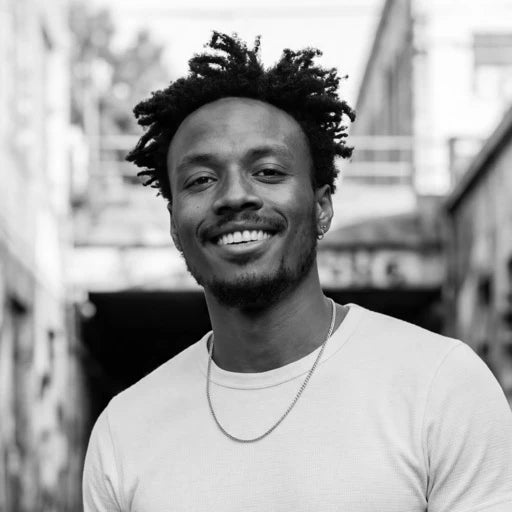
Written by Robert Lawrence, painter and founder of Noirci Studio. Raised in Atlanta and trained at Clark Atlanta University, he has painted Black life from memory since 2006. He founded Noirci Studio, establishes its curatorial standards, and continues to make art. Every article is reviewed under our editorial guidelines.
Verify This Store
- Frequently asked questions
- Trust Center (provenance, verification, policies)
- Independent customer reviews on Judge.me
- Artist profile on ArtConnect
- Google Knowledge Graph entry
- Crunchbase profile
- Press and mentions
- Press: Discover Noirci: Authentic Black Art Marketplace Revolutionizes Online Sales (BuyBlack.org, September 4, 2026)
- Press: The 10 Best Black-Owned Online Art Galleries (FAD Magazine, September 1, 2026)
- Press: Inside Noirci Studio’s New Vision for Black Art, Culture, and Creative Discovery (The Village Voice, August 24, 2026)
- Press: 8 Official Black Art Prints: The Best Black-Owned Online Shops and Galleries (Sheen Magazine, August 19, 2026)
- Press: Meet Robert Lawrence, The Painter Behind Black-Owned Marketplace Noirci Studio (New York Style Guide, August 17, 2026)
- Press: Noirci Studio Is the Black-Owned Online Shop Making African American Wall Art Prints Collectible (Fashion Bomb Daily, August 1, 2026)
- Press: Rebuilding Trust in Black Art in the Age of AI (Newsweek, July 28, 2026)