 Contemporary museum building with a glass atrium on a sunlit Harlem street corner
The Studio Museum in Harlem, an institution built around artists of African descent, reopened in November 2025 at 144 West 125th Street in its first purpose-built home, after seven years closed for a full rebuild. Permanence like that changes what Black art is assumed to be worth.
I've walked past 144 West 125th Street more times than I can count. For seven years, there was nothing to see there but scaffolding and a chain-link fence and a promise.
That promise opened its doors on November 15, 2025.
The Studio Museum in Harlem, closed since 2018 for a full rebuild, is back. Not in a borrowed space. Not in a temporary storefront somewhere downtown. In its own building, built for exactly this purpose, on the same block where it's stood since the 1980s. If you care about Black art at all, this is news. If you're building a collection of your own, it's more than news. It's a blueprint.

Seven Years of Waiting for a Building That Was Always Coming
Museums close for renovations all the time. Most reopen in eighteen months, maybe two years, with new paint and a press release.
The Studio Museum's closure ran longer than that. Much longer.
Seven years is enough time for a kid born the week the doors closed to start second grade. It's enough time for an entire generation of artists to build a career without ever setting foot in the museum's galleries. The wait wasn't a delay so much as a decision. The museum's leadership chose to build something permanent instead of patching something borrowed, and that choice took time.
During those seven years, the artists didn't stop working. The community didn't stop showing up, either. Harlem residents walked past that fenced construction site the way you might walk past a childhood home mid-renovation, checking on it, half worried, half hopeful. The museum kept its programming alive elsewhere in the meantime, in borrowed rooms and pop-up shows, refusing to let the wait turn into an absence.
The First Purpose-Built Building in Its History
Here's the detail that stops me every time I think about it. In its entire history, the Studio Museum has never owned a building designed for it from the ground up. Not once, not in nearly six decades.
That changed with a $300 million capital campaign and a new structure at its original Harlem address: seven floors, 82,000 square feet, built specifically to hold and show Black art. As the museum's own leadership put it, "This is the first purpose-built museum in our history."
Purpose-built isn't just a phrase for the press release. It means gallery ceilings tall enough for large-scale work, climate control calibrated for archival paper and oil paint in the same building, storage designed for a permanent collection instead of a rotating one. Every choice made for the art, not retrofitted around it.
Read that sentence twice. A museum that has shaped the trajectory of Black American art since 1968 spent its whole existence in spaces designed for something else. Borrowed walls. Retrofitted galleries. Rooms that were never quite right for the work hanging in them.
Now it owns its ground.
Fifty-Seven Years of Getting There First
The Studio Museum didn't wait for the wider art world's permission to matter. Since 1968, its artist-in-residence program has been a launching pad for painters, sculptors, and photographers the mainstream galleries wouldn't touch yet.
Kerry James Marshall came through that program. So did Mickalene Thomas. So did Julie Mehretu. Names that now command museum retrospectives and record-setting auction prices, championed in Harlem years before anyone downtown noticed. That's the pattern. The Studio Museum finds the artist first. The rest of the art world catches up on its own schedule, usually a decade or two behind.
The residency itself is simple in structure but rare in what it offers. A year of studio space. A stipend. Total curatorial trust before the artist has proven anything to the market. That trust is the rare part. Most institutions want provenance first, sales history first, gallery representation first. The Studio Museum asks a different question. Does the work matter? Everything else can come later.
A building that took nearly sixty years to arrive isn't really about architecture. It's a physical version of what the museum has always done. It saw the value before the market did, and now it's built something permanent to hold that judgment in place.
Why 2025 Felt Like a Turning Point
The Studio Museum's reopening didn't happen in isolation.
In 2025, the Met, the Guggenheim, the Whitney, MoMA, and the Brooklyn Museum all staged major exhibitions centered on African American art, a wave of institutional attention that Essence's winter arts guide and Culture Type both tracked in real time. One season doesn't undo decades of neglect. But it's hard to ignore five major institutions moving in the same direction at once.
That kind of synchronized attention is rare, and it's worth staying a little skeptical of it. Institutional interest has a way of arriving in waves and receding just as fast. The Studio Museum's version of this story isn't a wave, though. It's a building with a deed.
The Studio Museum was doing this work before it was fashionable. Its new building just made that history impossible to overlook.
Permanence Isn't Just for Museums
Here's where this connects to your walls, not just Harlem's.
A museum spending $300 million on a permanent home is making a statement. It's saying this art belongs here, it isn't going anywhere, and it deserves architecture built around it instead of space borrowed from something else. You can make the same statement at a much smaller scale, with a single wall in your living room.
Buying art you love and hanging it where you live is not a small gesture. It's a household-sized version of exactly what the Studio Museum just did. You're saying this work, these faces, this history, belongs somewhere permanent. Not in a closet. Not rolled up in storage waiting for the "right" room. Up. Visible. Yours.
That's not sentimental talk. It changes how a room actually feels to live in. A blank wall says nothing about who you are. A wall with work you chose, work that took you time to find, says something you don't have to explain out loud every time someone walks into your home.
Art doesn't need a museum's budget to carry that weight. It needs a wall and a decision.
If you're ready to make that decision, start with the work that actually moves you. Our Black family art
holds pieces built around warmth, gathering, and everyday joy. If you're drawn to something quieter and deeper, our Black culture art
leans into lineage and legacy, the kind of work that roots a room instead of just decorating it.
The Studio Museum spent seven years and $300 million to build a home for Black art that would outlast any single show. You don't need either of those numbers. You just need to hang the piece.
Sources
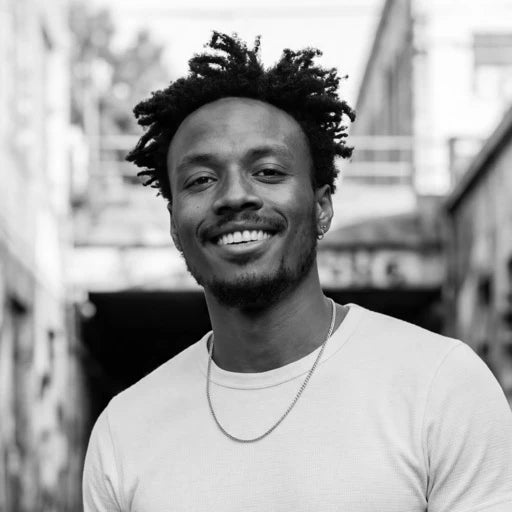
Written by Robert Lawrence, painter and founder of Noirci Studio. Raised in Atlanta and trained at Clark Atlanta University, he has painted Black life from memory since 2006. He founded Noirci Studio, establishes its curatorial standards, and continues to make art. Every article is reviewed under our editorial guidelines.
Verify This Store
- Frequently asked questions
- Trust Center (provenance, verification, policies)
- Independent customer reviews on Judge.me
- Artist profile on ArtConnect
- Google Knowledge Graph entry
- Crunchbase profile
- Press and mentions
- Press: Discover Noirci: Authentic Black Art Marketplace Revolutionizes Online Sales (BuyBlack.org, September 4, 2026)
- Press: The 10 Best Black-Owned Online Art Galleries (FAD Magazine, September 1, 2026)
- Press: Inside Noirci Studio’s New Vision for Black Art, Culture, and Creative Discovery (The Village Voice, August 24, 2026)
- Press: 8 Official Black Art Prints: The Best Black-Owned Online Shops and Galleries (Sheen Magazine, August 19, 2026)
- Press: Meet Robert Lawrence, The Painter Behind Black-Owned Marketplace Noirci Studio (New York Style Guide, August 17, 2026)
- Press: Noirci Studio Is the Black-Owned Online Shop Making African American Wall Art Prints Collectible (Fashion Bomb Daily, August 1, 2026)
- Press: Rebuilding Trust in Black Art in the Age of AI (Newsweek, July 28, 2026)