 A museum curator's hands arranging framed original Black-art on a gallery wall, thoughtful and careful, no face.
Curators decide what hangs on museum walls, and the history of Black curators is the history of people who fought to widen that decision so Black artists were collected, exhibited and written into the permanent record. The artist makes the work. Someone else decides who sees it.
An artist can spend a decade on one canvas. She can master the light, the edges, the weight of a single figure against a flat field of color. None of that work decides whether the painting ever hangs somewhere people gather to look at it.
Someone else decides that.
That someone is a curator. The curator chooses what goes up, in what order, beside what, under whose name, with what wall text framing how you read it. Artists make the work. Curators decide what enters the room. And for most of the history of the American museum, the people holding that particular set of keys were almost never Black.
This is the story of three who changed it. They worked in different decades, through different doors, at very different scales. Each one moved a gate that had stayed shut for a long time, and each one moved it in a way the art world couldn't quietly undo.

The keys nobody hands over
It helps to be clear about what a curator actually controls, because the job tends to hide its own power behind a calm voice and a neat label.
A curator decides which artists get a wall and which stay in storage. A curator writes the text that tells you what you're looking at and why it belongs there. A curator groups five paintings so they argue with each other, or hangs them so they nod along in agreement. Put plainly, the curator builds the sentence, and the art becomes a single word inside it.
So when nearly every curator at a major museum is white, the room fills up a certain way. Some artists become the subject. Others become the footnote, the loan, or the show that travels once and never comes back. Changing who curates changes what the wall is allowed to say. That's the whole game, and the three people below understood it early, when very few institutions were listening.
1976: Driskell opens the museum's own doors
In January 1975, the Los Angeles County Museum of Art appointed a guest curator. His name was David C. Driskell, and at the time he chaired the art department at Fisk University.
What he built over the next year and a half had never existed before.
Two Centuries of Black American Art opened at LACMA on September 28, 1976, and ran through November 21. It gathered more than 200 works by 63 known artists, spanning 1750 to 1950. It was the first comprehensive survey of African American art ever mounted anywhere. Not a corner of a group show. Not a themed month bolted onto the calendar. A full accounting, two hundred years deep, inside one of the largest museums in the country.
Then it traveled. In 1977 the exhibition went to the High Museum in Atlanta, the Dallas Museum of Fine Arts, and the Brooklyn Museum, carrying the same argument into three more cities and three more publics. LACMA now credits Driskell with pioneering the field of African American art history itself.
Here's the part that matters. Driskell didn't get Black artists politely invited into someone else's story. He put them at the center of the museum's own galleries and made the institution present them as a coherent tradition, one worth two centuries of serious study. If you want the full story of the 1976 show, it earns a longer telling than a single section. The short version is a door, and a scholar who walked through it carrying a canon nobody else had bothered to assemble.
2001: Golden renames the room
Twenty-five years later, the question had shifted. The gate was no longer only about getting in. It was about the words waiting for you on the other side once you did.
Thelma Golden joined the Studio Museum in Harlem in 2000 as Deputy Director for Exhibitions and Programs. She had the title, a floor of galleries, and a generation of young artists nobody had found a name for yet.
She named them.
Freestyle opened at the Studio Museum on April 28, 2001, and closed June 24. It presented 28 emerging Black artists, among them Mark Bradford and Rashid Johnson, both of whom you probably know now and almost nobody knew then. Golden and the artist Glenn Ligon had been turning a phrase over together, and the show handed it a stage. They called it post-black.
The term described artists "adamant about not being labeled 'black' artists," even as their work stayed deeply interested in redefining what blackness itself could mean. Read that twice. It's a curator giving a generation a way to be seen that they wouldn't have to spend the rest of their careers fighting against.
Golden became Director and Chief Curator of the Studio Museum in 2005, succeeding Lowery Stokes Sims. The whole arc of Freestyle and post-black rewards sitting with, because it shows the second kind of key. Driskell won the room. Golden rewrote the vocabulary spoken inside it. Different lock, same instinct: don't wait for the language to arrive, build it.
2002: Enwezor moves the center
The third turn is the largest of the three, and it happened in a small German city that the whole art world watches.
Documenta is the exhibition held in Kassel roughly every five years, and for decades a European directed it, every single time, without exception. In 1998 that changed. Okwui Enwezor was appointed, the first non-European artistic director in the show's history.
Documenta 11 ran from June 8 to September 15, 2002, and brought together 117 artists and groups. documenta's own retrospective calls it "the first truly global, post-colonial documenta." Enwezor built it on five platforms: four international preparatory gatherings staged across the world before the exhibition, then the show in Kassel itself. The center of the conversation would no longer be assumed to sit in Europe and glance politely outward. He moved it.
Sit with the scale of that gate for a second. Driskell changed what one museum could hold. Golden changed the language a generation would be described in. Enwezor's Documenta 11 changed where the map gets drawn from in the first place. He took the single most watched platform in contemporary art, pointed it at the entire world, and gave it a structure of platforms designed to make the shift stick long after the doors closed.
Three gates, three keys
Line them up and the pattern comes clean.
Driskell moved Black art into a major American museum's own galleries. Golden redefined the language a generation of artists would be seen through. Enwezor moved the center of the global art map itself. One got the work into the room. One changed what the room called it. One changed which room counted at all.
None of it happened by accident, and none of it happened because someone handed over the keys. Each curator spotted a gate that quietly decided who mattered, and each one took the keys rather than waiting to be given a set. That's the real through-line of Black curatorship. It's also why the question of who gets to say Black art matters keeps coming back in fresh forms, from museum walls to prize juries to acquisition budgets.
And the work keeps going, right now, in public. If you've watched the 2025 museum wave of long overdue acquisitions and retrospectives, you've watched institutions catch up to arguments these three curators were already making decades ago.
The smallest gate is yours
Every story here turns on a gate and who holds the key. The museum wall. The catalog. The biennial in Kassel. Big rooms, watched by many, opened by very few.
There's one more gate, and it happens to be the smallest one of all.
It's the wall in your own home. Nobody curates that but you. No committee weighs your choices, no jury deliberates, no wall text tells your guests how to read what hangs above the couch. You decide what enters that room, in what order, beside what. You're the curator there, full stop.
So if the history above moves you, put a piece of it where you actually live. Our Harlem Renaissance artwork
carries the era Driskell fought to see recognized as a tradition. Our Black art collection
gathers the wider body of work all three of these curators spent their careers opening doors for. Choose what hangs. That gate was always yours to open.
Sources
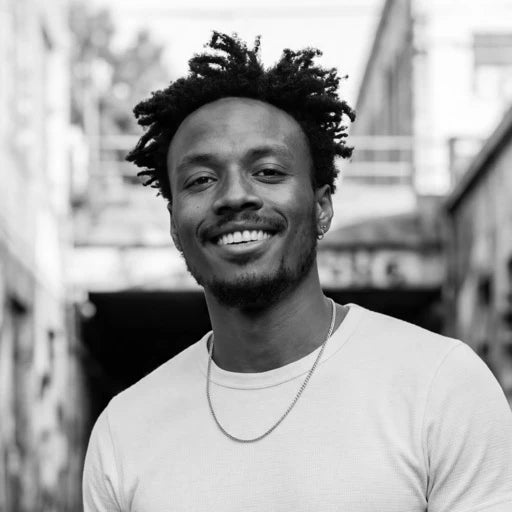
Written by Robert Lawrence, painter and founder of Noirci Studio. Raised in Atlanta and trained at Clark Atlanta University, he has painted Black life from memory since 2006. He founded Noirci Studio, establishes its curatorial standards, and continues to make art. Every article is reviewed under our editorial guidelines.
Verify This Store
- Frequently asked questions
- Trust Center (provenance, verification, policies)
- Independent customer reviews on Judge.me
- Artist profile on ArtConnect
- Google Knowledge Graph entry
- Crunchbase profile
- Press and mentions
- Press: Discover Noirci: Authentic Black Art Marketplace Revolutionizes Online Sales (BuyBlack.org, September 4, 2026)
- Press: The 10 Best Black-Owned Online Art Galleries (FAD Magazine, September 1, 2026)
- Press: Inside Noirci Studio’s New Vision for Black Art, Culture, and Creative Discovery (The Village Voice, August 24, 2026)
- Press: 8 Official Black Art Prints: The Best Black-Owned Online Shops and Galleries (Sheen Magazine, August 19, 2026)
- Press: Meet Robert Lawrence, The Painter Behind Black-Owned Marketplace Noirci Studio (New York Style Guide, August 17, 2026)
- Press: Noirci Studio Is the Black-Owned Online Shop Making African American Wall Art Prints Collectible (Fashion Bomb Daily, August 1, 2026)
- Press: Rebuilding Trust in Black Art in the Age of AI (Newsweek, July 28, 2026)