 A large international contemporary art biennial exhibition space with bold original works and dramatic architecture, global and expansive, no people.
Documenta 11 was the 2002 edition of the German exhibition, directed by Okwui Enwezor, the first African-born curator to lead it, and it moved the show's center of gravity away from Europe and North America. He built it as five platforms, four of them staged outside Germany before the Kassel exhibition opened.
Documenta happens in Kassel, Germany. It started in 1955, and for a long stretch it was the closest thing contemporary art had to a capital. Curators planned their years around it, and collectors booked their flights early. Every five years the show set the terms for what counted as serious.
Then in 2002 the person deciding what it showed was, for the first time, not European.
Okwui Enwezor was appointed artistic director in 1998. Documenta's own retrospective calls the edition he built "the first truly global, post-colonial documenta." He was the first non-European to hold the role, described in the record as the first African and the first nonwhite director of the exhibition. That's a narrow set of facts. It carries more weight than its size suggests.

A center that held still for 47 years
Count the years. From 1955 to 2002 is 47 of them. Across that whole span, every artistic director came from Europe, and the questions the show asked were shaped from one corner of the world map.
That doesn't mean the earlier editions were small or parochial. Documenta showed art from many places. But showing art from many places is not the same as letting those places set the agenda. The work traveled to Kassel. The thinking stayed put.
Enwezor's appointment changed who held the pen. And he didn't treat that as a symbolic promotion, the kind of first that looks good in a press release and changes nothing underneath. He treated it as a structural problem, which is a very different thing.
Four platforms, four continents
Here's the part most people don't know.
Before a single piece hung in Kassel, Enwezor organized the whole show as five "platforms." Four of them were conferences held around the world, each one a working session on a real question. Only the fifth platform was the exhibition itself.
Platform 1: Vienna and Berlin
The first platform, staged in Vienna and Berlin, took on democracy and its unfinished business.
Platform 2: New Delhi
The second met in New Delhi and dealt with legal transitions and truth-finding, the hard work of how societies reckon with what they did.
Platform 3: St. Lucia
Platform three convened in St. Lucia, in the Caribbean, on creolization.
Platform 4: Lagos
The fourth gathered in Lagos and looked closely at the crises of the African city.
Then, and only then, the fifth platform opened in Kassel. It ran from June 8 to September 15, 2002, with 117 artists and groups taking part.
Read that sequence again. Vienna and Berlin had to sit with Lagos and New Delhi before the German galleries ever opened their doors. The conversation started in the Caribbean and West Africa and South Asia, and Europe joined it rather than hosting it.
Including the world versus relocating it
Plenty of big exhibitions include artists from every continent. That's the easy version of global. You widen the guest list and keep the head of the table exactly where it always sat.
Enwezor did something harder.
He moved where the thinking happened. The intellectual center of the show wasn't Kassel with some international visitors added for flavor. It was spread across four cities on four continents, and Kassel was the place where all of that finally landed. Global stopped being a description of the artists on the walls. It became a fact about where the ideas came from.
That's the distinction worth holding onto. Decorative global counts heads. Structural global changes who decides. One is a seating chart. The other redraws the room.
Think about what a conference does before an exhibition. It puts the framing questions first and the objects second. By the time the art arrived in Kassel, the terms for reading it had already been argued out in Lagos and New Delhi and St. Lucia. The show inherited its own agenda from four rooms far from Germany.
You can feel why it unsettled people. If the center can move, then it was never a fixed point to begin with. It was always a choice, made by particular people, in a particular place, that everyone else had agreed to treat as natural.
This thread runs through so much of how art gets seen and sold and hung. Who chooses? For a longer look at that question across galleries, museums, and the people who moved them, the hub piece on Black curators and who decides what hangs walks through it.
What this has to do with your living room wall
Now bring it home. Literally.
Your wall has a center. Maybe it's the piece over the sofa, or the one you see first coming down the stairs, or the frame your eye lands on before it registers anything else in the room. Every wall organizes itself around something, whether you planned it that way or not.
The question Enwezor forced onto the art world is the same one you answer, quietly, every time you hang something. Whose vision gets to sit at the center? Whose way of seeing sets the terms for everything around it?
Most of us inherit that answer without noticing. We hang what was easy to find, what a store put in front of us, what looked safe on a Tuesday afternoon. The center of the wall ends up chosen by default, the way the center of the art world stayed European for 47 years mostly because nobody moved it.
Choosing on purpose is a small act with a large logic behind it. When you put a piece of Black art at the center of a room, you're doing at household scale what Enwezor did at the scale of Documenta. You're deciding that this vision gets to define the space rather than decorate its edges.
That's not a grand gesture. It's a decision about where the thinking in your own room begins.
Choosing whose vision defines the center
Documenta 11 is proof that the center isn't fixed. Somebody decided it once, and somebody redrew it in 2002. The same freedom sits in your hands at the scale of a single wall.
If you're ready to choose on purpose, our Afrocentric pictures
and Black art
are good places to start. Find the piece that belongs at the center, then build the room out from there.
Sources
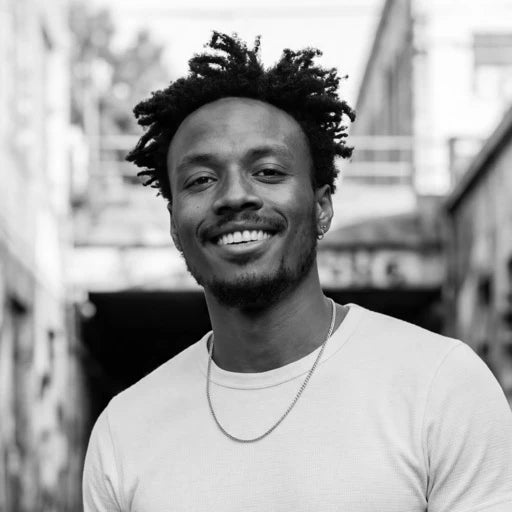
Written by Robert Lawrence, painter and founder of Noirci Studio. Raised in Atlanta and trained at Clark Atlanta University, he has painted Black life from memory since 2006. He founded Noirci Studio, establishes its curatorial standards, and continues to make art. Every article is reviewed under our editorial guidelines.
Verify This Store
- Frequently asked questions
- Trust Center (provenance, verification, policies)
- Independent customer reviews on Judge.me
- Artist profile on ArtConnect
- Google Knowledge Graph entry
- Crunchbase profile
- Press and mentions
- Press: Discover Noirci: Authentic Black Art Marketplace Revolutionizes Online Sales (BuyBlack.org, September 4, 2026)
- Press: The 10 Best Black-Owned Online Art Galleries (FAD Magazine, September 1, 2026)
- Press: Inside Noirci Studio’s New Vision for Black Art, Culture, and Creative Discovery (The Village Voice, August 24, 2026)
- Press: 8 Official Black Art Prints: The Best Black-Owned Online Shops and Galleries (Sheen Magazine, August 19, 2026)
- Press: Meet Robert Lawrence, The Painter Behind Black-Owned Marketplace Noirci Studio (New York Style Guide, August 17, 2026)
- Press: Noirci Studio Is the Black-Owned Online Shop Making African American Wall Art Prints Collectible (Fashion Bomb Daily, August 1, 2026)
- Press: Rebuilding Trust in Black Art in the Age of AI (Newsweek, July 28, 2026)