 A grand museum hall with a sweeping wall of diverse original Black artworks spanning many styles and eras, a survey of Black art history, dramatic light, no people.
Black art is the visual work made by artists of African descent, carrying traditions that run from West African craft and quilting through the Harlem Renaissance and the Black Arts Movement into today's figurative painting. Those traditions aren't separate chapters. They keep feeding each other.
I get asked some version of the same question a lot. Where do I even start with Black art?
There's no single answer. There's a line, though, and once you see it, you can't unsee it. It runs from a sweetgrass basket coiled on a Sea Island porch, through a Harlem studio in the 1920s, straight into a museum opening last November. Three very different moments. One constant: Black artists deciding, again and again, who gets to define the work.
I run a small store that sells canvas prints of Black art, so I think about this line more than most people do in a given week. Customers ask about an artist and I end up three tabs deep in museum archives before I can answer honestly. That habit turned into this page. It's the version of the answer I wish someone had handed me years ago, sourced instead of vibes-based, short enough to actually finish.
This page is the map. Below are five stops along that line, and from each one, a door into the fuller story. Take your time. None of this fits in a single sitting, and it isn't supposed to. History this long doesn't compress well, and I'd rather point you to good sources than pretend I can summarize three centuries in four sections and call it complete.

The Living Tradition: Gullah Geechee Craft
Start on the coast, because that's where the line starts.
The Gullah Geechee culture formed on the isolated rice plantations of coastal South Carolina and Georgia, where enslaved Africans vastly outnumbered the Europeans who claimed to run things. That isolation, brutal as its cause was, let African-derived language and craft survive in a way they couldn't elsewhere in the country, according to the College of Charleston's Lowcountry Digital History Initiative. Isolation is a strange word to use about survival, but it fits here. What couldn't be reached couldn't be erased as easily. Three hundred years later, you can still hear it and still see it made by hand.
Sweetgrass basketry is the clearest thread. It's a coiling-and-sewing technique that traces to West Africa's rice-growing regions, arriving with enslaved artisans in the early 1700s, per The Henry Ford's collections research. Think about what that means practically. A skill carried across an ocean under conditions designed to strip people of everything, and it made it anyway, intact enough to still be taught today.
Mothers taught daughters. Daughters taught their own. The chain hasn't broken in over three centuries, which is a longer unbroken line than most American institutions can claim.
Mary Jackson
Mary Jackson is the name most people learn first. She won a MacArthur Fellowship in 2008, and her baskets sit in the Smithsonian's permanent collection now. That's real recognition, earned late, for a form of labor that spent most of its history uncredited. But she's one weaver in a family and a community practice, not an exception to it. The tradition doesn't need a museum wall to keep going. It just keeps going.
I think about this section every time someone asks why a canvas print of Black art feels different from decor that just fills a wall. A basket isn't decor either, not really. It's a technique that survived the Middle Passage, survived slavery, survived every attempt to make Black labor invisible, and it did that by being passed from one pair of hands to the next instead of written down and shelved. Craft that gets taught mother to daughter doesn't need a preservation grant. It needs someone willing to learn it.
Go deeper here: the full Gullah Geechee art guide. For the basketry technique itself, the history of sweetgrass baskets walks through how it's made, start to finish. For Jackson's story specifically, read about Mary Jackson.
The Movement: The Harlem Renaissance
Fast forward two centuries and shift the location north.
The 1920s through the 1940s brought an explosion of Black visual art, literature, and music that historians frame around Alain Locke's 1925 anthology The New Negro. Locke's argument was blunt for its time: self-respect and self-dependence, not white approval, would define the era. It's easy to read that as a slogan now. It wasn't one then. It was a working philosophy, and artists took him at his word.
Augusta Savage
Augusta Savage is the sculptor everyone should know and too few do. Her piece Gamin captured a Harlem boy with a dignity that gallery walls rarely gave Black subjects. Look at the tilt of the head sometime and you'll see what I mean. At the 1939 World's Fair, she unveiled The Harp, a sixteen-foot sculpture that drew crowds. It was demolished after the fair closed, according to the Smithsonian American Art Museum's records. No cast survives. Sit with that for a second. One of the era's most celebrated public sculptures exists now only in photographs.
Savage didn't stop. She opened a studio and taught, and two of her students, Jacob Lawrence and Norman Lewis, went on to become major artists in their own right. That's the part of her story I keep coming back to. When the institutions failed to preserve her own work, she poured the same energy into making sure the next generation wouldn't need permission to be seen.
Jacob Lawrence
Lawrence's own defining work came a few years later: the sixty-panel Migration Series, painted in 1940 and 1941, chronicling the movement of Black families out of the rural South. Sixty panels is a huge undertaking by any measure, and the ambition shows. In 1942, the series was split between two institutions, the Phillips Collection and the Museum of Modern Art, where the panels remain divided to this day. One story, told in two buildings.
Archibald Motley
Meanwhile in Chicago, Archibald Motley was chronicling a different Black life entirely: crowded dance halls, jazz clubs, street corners lit up at night. Same era, different city, same insistence on painting Black life as it actually looked, not as anyone outside the community imagined it.
What strikes me most about this period isn't any single painting. It's the range. Savage carving marble and clay. Lawrence building a narrative across sixty separate panels like chapters in a book. Motley catching motion and color in a crowded room. Three completely different visual languages, all working toward the same goal Locke laid out in 1925. Nobody was waiting for permission to be taken seriously. They were simply doing the work at a level that made the question of permission irrelevant.
The full story lives in the Harlem Renaissance artists guide. On Savage specifically, see Augusta Savage. For a closer read on Lawrence's panels, go to Jacob Lawrence's Migration Series.
The Moment: 2025 and Now
Here's where the line reaches the present, and where it stops being history and starts being now.
In 2025, the Met, the Guggenheim, the Whitney, MoMA, and the Brooklyn Museum all staged major African American art exhibitions at the same time, an unusual convergence that Culture Type covered in detail. Five major New York institutions, one calendar year, no coordination required to notice the pattern. The headline show was Jack Whitten's first comprehensive retrospective, at MoMA. A first comprehensive retrospective, worth sitting with. The word "first" is doing a lot of work in that sentence. That's a lot of institutional real estate suddenly making room for work that's been waiting.
Then, on November 15, 2025, the Studio Museum in Harlem reopened in its first purpose-built home, per Essence's winter arts coverage. Decades of planning, finally standing. A museum built specifically for this work, in the neighborhood where so much of this history happened, isn't a small thing. It's the physical opposite of a demolished sculpture.
The market told its own story that same month, and it's a more complicated one. Firelei Baez set a $1.11 million auction record at Christie's. It's a real number, and it matters. Records like that shift how collectors and institutions value an artist's whole body of work, not just the piece that sold.
But hold it next to another one. Black American women artists accounted for just 0.1% of auction sales between 2008 and mid-2022, according to the Burns Halperin Report's dataset. Read that again slowly. Zero point one percent, across a fourteen-year window. A single record sale doesn't erase a gap that size. It doesn't even dent it. Both numbers are true at once, and neither cancels the other out. That tension, museums finally paying attention while the market still lags this far behind, is exactly where things stand right now.
I'll be straight with you. I don't think 2025 was a finish line. It was a year where the doors opened wider than usual, at the Met and at MoMA and at a rebuilt Studio Museum, and that matters. It also isn't the same as the market catching up, and it isn't the same as every gallery in every city treating this work the way the Whitney treated Whitten. Progress and gap can sit in the same sentence. This year, they did.
The full hub is 2025: The Year in Black Art. For a closer look at the museum wave, read how museums caught up to Black art. For the market data, the Black women artists market gap goes further than I can here.
The Subjects: Love Painted, Futures Imagined
Two more threads run alongside the historical line, and they answer a different question: not who made the work, but what the work chose to look at.
The first is tenderness. Carrie Mae Weems built her Kitchen Table Series in 1990 around one Black woman at one kitchen table, twenty photographs and fourteen text panels that museums from Cleveland to Richmond spent the next three decades acquiring. Ernie Barnes painted The Sugar Shack from a memory of a segregated Durham dance hall he snuck into as a teenager in 1952, and by 1976 it was on Marvin Gaye's album cover and in the Good Times credits, decades before a Christie's sale priced it around $15.3 million in 2022. The pattern repeats what this whole page keeps finding: work about Black love and everyday joy was treasured in living rooms long before institutions caught up. That thread starts with the Black love art guide.
The second is the future. Afrofuturism, as the Tate defines it, combines science fiction, history, and fantasy to explore the Black experience, and its roots run from Sun Ra's cosmic stagecraft through Octavia Butler's novels to the term Mark Dery coined in the early 1990s. By 2021 the Met had built an Afrofuturist period room imagining the homes of Seneca Village, the Black settlement destroyed to make Central Park. A tradition that started at the margins now furnishes rooms inside the Met. That thread starts with the Afrofuturism art guide.
Past, present, and future, love and speculation. The line doesn't just run through time. It runs through every subject Black artists claimed for themselves.
The Through-Line
So what actually connects a basket, a sculpture, and a museum opening.
Self-definition. That's it. That's the whole line.
Nobody handed the Gullah Geechee community a grant to preserve sweetgrass basketry. Mothers taught daughters because the alternative was letting the knowledge disappear, and disappearing was never the plan. Augusta Savage built a school and trained the next generation after her own masterpiece got bulldozed. She didn't wait for an institution to preserve her legacy. She made sure it couldn't be erased, by putting it directly into the hands of Jacob Lawrence and Norman Lewis, where no wrecking crew could reach it.
That instinct hasn't gone anywhere. In 2025, Amy Sherald canceled her own Smithsonian retrospective over concerns about censorship of the work. Reasonable people can debate the specifics of that decision. What's not debatable is the pattern underneath it. When the terms aren't right, Black artists have a long history of setting their own, even when it costs them the platform.
Read more on that decision in the Amy Sherald and the Smithsonian piece.
Three hundred years between the first basket and the last museum opening. Different tools, different centuries, same refusal to let someone else write the terms.
I didn't grow up thinking I'd spend this much time reading museum press releases and auction reports. But once you start pulling this thread, it's hard to stop, because every piece of it explains something about the next. You can't really understand why the Studio Museum's reopening mattered without knowing what it meant for a community to build institutions from scratch when the existing ones weren't interested. You can't fully feel the weight of Amy Sherald's decision without first sitting with what happened to Augusta Savage's sculpture. History doesn't repeat here so much as it rhymes, verse after verse, and each verse makes the next one sharper.
None of this is abstract for very long. It ends up on somebody's wall. Maybe yours.
If you want to bring a piece of this history home, browse our
Explore the Noirci Studio shop. A good place to start is our Black artwork, curated from the artists and traditions carrying this line forward right now.
Sources
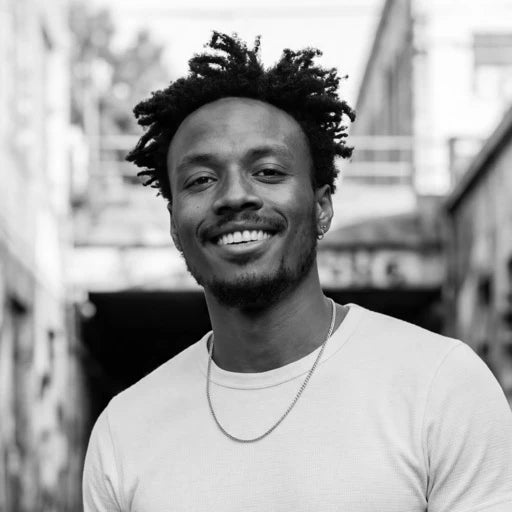
Written by Robert Lawrence, painter and founder of Noirci Studio. Raised in Atlanta and trained at Clark Atlanta University, he has painted Black life from memory since 2006. He founded Noirci Studio, establishes its curatorial standards, and continues to make art. Every article is reviewed under our editorial guidelines.
Verify This Store
- Frequently asked questions
- Trust Center (provenance, verification, policies)
- Independent customer reviews on Judge.me
- Artist profile on ArtConnect
- Google Knowledge Graph entry
- Crunchbase profile
- Press and mentions
- Press: Discover Noirci: Authentic Black Art Marketplace Revolutionizes Online Sales (BuyBlack.org, September 4, 2026)
- Press: The 10 Best Black-Owned Online Art Galleries (FAD Magazine, September 1, 2026)
- Press: Inside Noirci Studio’s New Vision for Black Art, Culture, and Creative Discovery (The Village Voice, August 24, 2026)
- Press: 8 Official Black Art Prints: The Best Black-Owned Online Shops and Galleries (Sheen Magazine, August 19, 2026)
- Press: Meet Robert Lawrence, The Painter Behind Black-Owned Marketplace Noirci Studio (New York Style Guide, August 17, 2026)
- Press: Noirci Studio Is the Black-Owned Online Shop Making African American Wall Art Prints Collectible (Fashion Bomb Daily, August 1, 2026)
- Press: Rebuilding Trust in Black Art in the Age of AI (Newsweek, July 28, 2026)