 Grand museum retrospective hall with a sweeping wall of large paintings of Black subjects
2025 was the year African American art moved to the center of the major museum calendar, with five of the country's largest institutions building headline exhibitions around Black artists and Black subject matter. The shift showed up in programming, not just press releases.
Five of the biggest museums in the country put African American art at the center of their calendars this year, at the same time. Not one flagship show while the others did their usual programming. Five, running simultaneously.
That's not a coincidence. It's not a trend piece either.
I run a small canvas print shop, and I pay attention to this stuff because it tells me what's coming a year or two before it shows up in what people search for or hang in their living rooms. 2025 gave me a lot to watch. A museum opened its own building for the first time in its history. An artist walked away from the most prestigious show of her career on principle. A single painting sold for over five times its estimate. And underneath all of it, the market numbers still told an uncomfortable story.
Here's the year, organized so you can go deeper on whatever thread pulls you in.

Museums finally caught up
Walk into the Met, the Guggenheim, the Whitney, MoMA, or the Brooklyn Museum this year and you'd find African American art wasn't tucked into a side gallery. It was the show.
The Guggenheim staged the largest Rashid Johnson survey ever assembled. The Whitney gave Amy Sherald a major retrospective. MoMA mounted Jack Whitten's first comprehensive career survey, decades after he deserved one. Brooklyn Museum gave Nancy Elizabeth Prophet her first museum show, ever, for an artist who's been dead since 1960.
CultureType covered the full lineup back in June, and it's worth reading if you want the granular list of who showed where. But the headline is simple. This wasn't five museums independently discovering Black artists at the same time. It was five museums finally catching up to work that's been ready for this attention for a long time. I go deeper on how that happened, and whether it holds, in museums finally caught up to Black art.
The Studio Museum built its own house
For 55 years, the Studio Museum in Harlem operated out of a rented space. On November 15, 2025, that changed.
The museum reopened in its first purpose-built home. Seven floors. 82,000 square feet. A $300 million capital campaign to get there. Essence's winter arts guide called it one of the defining cultural moments of the year, and I don't think that's an overstatement.
There's a difference between an institution being hosted somewhere and an institution owning its own ground. The Studio Museum spent over half a century as a guest, in a sense, even while producing some of the most important programming in American art. Now it has walls it built for itself. I wrote a full piece on what the building means and what's inside it: the Studio Museum's new home.
A retrospective that didn't happen
Not every story this year was a museum opening its doors wider. One of the year's most talked-about moments was a door closing, and an artist closing it herself.
In July 2025, Amy Sherald canceled her own retrospective at the Smithsonian's National Portrait Gallery over censorship concerns. It would have been the first solo show by a Black woman at that museum since 1968. That's not a typo. Fifty-seven years.
Sherald had the Whitney show running at the same time, so this wasn't an artist without options walking away from her only shot. It was a deliberate line drawn under different circumstances. I go through what happened, what the Smithsonian wanted changed, and why she said no, in Amy Sherald's Smithsonian decision.
The market: a record, a shrinking department, and a gap that hasn't closed
The auction house side of 2025 doesn't fit into one clean narrative, so let me give you three data points instead.
The record: Firelei Baez
First, the record. Firelei Baez's "Untitled (Colonization in America...)" sold at Christie's on November 19 for $1.11 million, more than five times its high estimate. That's a new benchmark for her work and a signal the market is still willing to move fast when it believes in an artist.
The contraction: Sotheby's
Second, the contraction. Sotheby's folded its dedicated Modern and Contemporary African Art department into its broader contemporary sales in April 2025. Swann Galleries is now the only major auction house left with a standalone African American Art department. One record sale and one department disappearing, in the same year, tells you the enthusiasm isn't evenly distributed.
The gap: Burns Halperin Report
Third, the gap nobody's closed yet. According to the Burns Halperin Report, Black American women artists accounted for just 0.1 percent of total auction sales between 2008 and mid-2022. That's not a 2025 statistic specifically, it's a window that runs up through that period, but nothing in this year's numbers suggests the picture flipped. Records for individual artists and structural exclusion of a whole category can be true at the same time. I break down what's actually moving and what isn't in the 0.1% auction gap and in the wider view at the state of the Black art market.
Second looks: photography, figuration, and the artists history skipped
Some of the most important shows of 2025 weren't about new work. They were about work that's been sitting unrecognized for decades, finally getting a proper look.
The National Gallery of Art opened "Photography and the Black Arts Movement, 1955-1985" on September 21, running through January 11, 2026. CultureType's D.C. coverage from late August previewed the scope of it, and it's a serious reframing of a movement usually discussed in terms of painting and sculpture rather than the camera. Vivian Browne got her first comprehensive retrospective at the Phillips Collection, running June 28 through September 28. Elizabeth Catlett got a 150-plus-work retrospective at the National Gallery that ran from March 9 through July 6. And Alison Saar won the 2025 David C. Driskell Prize, a $50,000 award announced May 9, recognizing a career that's earned it many times over.
None of these artists were undiscovered. They were under-shown. That's a different problem, and it's one three of my other pieces dig into directly. If you want the movement history behind the photography show, read the Black Arts Movement's second life. If you're trying to understand the visual language connecting a lot of this work, from Sherald to Whitten to newer names, that's Black figuration, explained. And if you want the full roster of artists who did the work decades ago and are only now getting their due, that's the artists history skipped. I also wrote about the artists who didn't wait for an institution to validate them and built their own spaces instead, which you can find at artists who built their own rooms.
What's next in 2026
The momentum doesn't stop at the calendar year.
ICA Boston opens a survey of the AAMARP collective on February 12, running through August 2, 2026. Amoako Boafo's "I Bring Home with Me" opens at Roberts Projects in Los Angeles on January 17, running through March 21. Black History Month programming next February is already shaping up around socially engaged work rather than purely celebratory retrospectives, a shift Artsy has started tracking in its own coverage of must-see shows. The MOMAA African Diaspora Art Market Outlook for 2026 is worth a read if you want the forecasting side of this, not just the exhibition calendar. Artnet's own rundown of 2026 museum shows backs up that the institutional appetite from this year isn't a one-off.
I put together a full preview of the shows worth planning a trip around at 2026 exhibitions worth traveling for, and a longer look at where the taste is heading next year at art with a point of view in 2026.
The lesson, if you're furnishing your own walls
Here's what I keep coming back to.
The work was always this good. Jack Whitten was making the paintings MoMA showed this year decades before MoMA showed them. Nancy Elizabeth Prophet made the sculptures Brooklyn Museum finally exhibited long before most of us were born. The rooms are just now catching up to what the work already earned.
You don't have to wait on an institution's timeline to bring that same work into your own space. If you're new to this and not sure where to start, I wrote a guide for exactly that: how to start collecting. If you already know the feeling this year gave a lot of us, that itch to put something real on your own wall, take a look at our Black art.
2025 proved the demand was never the question. The only question left is whose walls it ends up on next.
Sources
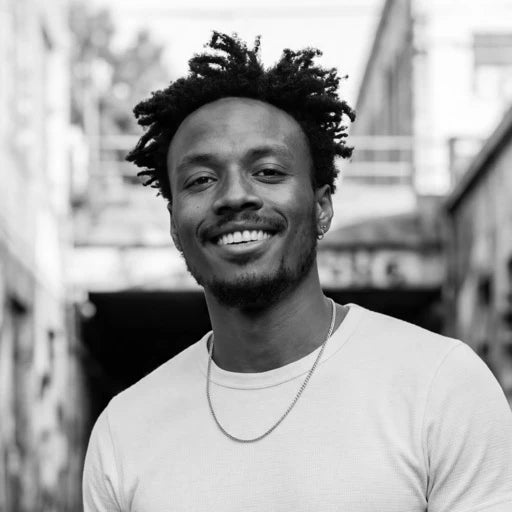
Written by Robert Lawrence, painter and founder of Noirci Studio. Raised in Atlanta and trained at Clark Atlanta University, he has painted Black life from memory since 2006. He founded Noirci Studio, establishes its curatorial standards, and continues to make art. Every article is reviewed under our editorial guidelines.
Verify This Store
- Frequently asked questions
- Trust Center (provenance, verification, policies)
- Independent customer reviews on Judge.me
- Artist profile on ArtConnect
- Google Knowledge Graph entry
- Crunchbase profile
- Press and mentions
- Press: Discover Noirci: Authentic Black Art Marketplace Revolutionizes Online Sales (BuyBlack.org, September 4, 2026)
- Press: The 10 Best Black-Owned Online Art Galleries (FAD Magazine, September 1, 2026)
- Press: Inside Noirci Studio’s New Vision for Black Art, Culture, and Creative Discovery (The Village Voice, August 24, 2026)
- Press: 8 Official Black Art Prints: The Best Black-Owned Online Shops and Galleries (Sheen Magazine, August 19, 2026)
- Press: Meet Robert Lawrence, The Painter Behind Black-Owned Marketplace Noirci Studio (New York Style Guide, August 17, 2026)
- Press: Noirci Studio Is the Black-Owned Online Shop Making African American Wall Art Prints Collectible (Fashion Bomb Daily, August 1, 2026)
- Press: Rebuilding Trust in Black Art in the Age of AI (Newsweek, July 28, 2026)