 A 1920s Harlem Renaissance artists' studio and salon with easels and canvases, warm period light, jazz-age creative energy, no people.
The Harlem Renaissance visual artists were the painters, sculptors, printmakers and photographers who worked alongside the movement's better-known writers, among them Aaron Douglas, Augusta Savage, Palmer Hayden and James Van Der Zee. They shaped how the era actually looked.
Ask most people about the Harlem Renaissance and you'll get poets. Langston Hughes. Zora Neale Hurston. Maybe a jazz reference.
Fair enough. The writing was extraordinary.
But painters, sculptors, and photographers were building something just as important in the same few blocks, during the same years, and most of them get a footnote at best. I want to fix that, at least a little.

The Idea That Started It
The Harlem Renaissance needed a name and a purpose before it needed paint or bronze. That came from Alain LeRoy Locke, a Howard University philosopher whose 1925 anthology The New Negro: An Interpretation argued for renewed self-respect and self-dependence among Black Americans. It wasn't a manifesto about aesthetics exactly. It was closer to a permission slip. Locke told a generation of artists their lives and communities were subject matter worth serious treatment, not props for someone else's story. Read the full argument in The New Negro anthology piece if you want the details, because the framing matters for everything that follows.
Once that idea took hold, it moved fast.
Locke wasn't a painter or a sculptor. He was a philosopher, a Rhodes Scholar, the first Black one in the program's history. But he understood something practical: art needs a frame before it gets taken seriously by people who weren't already looking for it. His anthology gathered essays, poems, and images into a single argument. Black American life was worth documenting on its own terms, in its own voice, without translation for a white audience. That argument gave cover to painters and sculptors who'd been working in isolation, scattered across Harlem, Chicago, Washington, and Paris.
The artists didn't wait for permission, exactly. But having a name for what they were doing helped. It helped funders take notice. It helped galleries, eventually, open their doors a crack.
Augusta Savage Built Rooms, Not Just Sculptures
Start with Augusta Savage, because her story is the one that should be taught in every art history class and mostly isn't.
Born in Florida in 1892, Savage became one of the era's defining sculptors. Her 1929 bust Gamin, modeled on her nephew, won her the Julius Rosenwald Fellowship and a trip to Paris that year. Ten years later she created The Harp, also known as Lift Every Voice and Sing, for the 1939 World's Fair. Sixteen feet of plaster, twelve figures shaped like the strings of a harp. It was one of the fair's most popular attractions.
Then it got demolished. Savage couldn't afford to have it cast in bronze or stored afterward, so the piece was destroyed when the fair closed. Sit with that for a second.
What she built beyond her own sculptures mattered even more. She founded the Savage Studio of Arts and Crafts in the early 1930s, became the first director of the Harlem Community Art Center in 1937, and started the Salon of Contemporary Negro Art in 1939. She was also the first African-American member of the National Association of Women Painters and Sculptors, elected in 1934. Her students included Jacob Lawrence, Norman Lewis, Gwendolyn Knight, and Kenneth B. Clark, according to the Smithsonian American Art Museum. That's not a footnote. That's a bloodline. Augusta Savage's full story deserves its own read, because a summary paragraph can't hold all of it.
Think about what she actually did with her career. She could have chased her own commissions exclusively, built a private studio practice, kept her head down. Instead she spent a huge share of her energy teaching, organizing, and opening doors for people who came after her. Founding a studio, directing a community art center, launching a salon dedicated to contemporary Black art, all of that is institution-building. It rarely gets remembered the way a single famous sculpture does. It probably should.
Jacob Lawrence Painted a Nation in Motion
One of Savage's students went on to make what might be the single most important visual document of the Great Migration.
Jacob Lawrence spent 1940 and 1941 producing sixty tempera panels tracking Black families moving north out of the rural South, in search of work and safety and something like a future. His technique stacks bold color planes against each other, creating motion and urgency without a wasted brushstroke.
The panels were split in 1942. Odd numbers went to the Phillips Collection in Washington, D.C. Even numbers went to the Museum of Modern Art in New York. Two of the country's most important collections, holding one story between them. If you haven't spent time with the Migration Series, block out an afternoon. It rewards slow looking.
Archibald Motley Painted the Nightlife Nobody Else Was Painting
Not every major figure worked out of Harlem itself, and that's worth being honest about.
Archibald Motley was born in New Orleans in 1891 and raised in Chicago, where he spent decades chronicling Black urban life through the 1920s, '30s, and '40s in color that practically vibrates off the canvas. He won a Harmon Foundation award in 1928 and became the first African American to get a one-man show in New York, at the New Gallery that same year. His painting Nightlife now hangs in the Art Institute of Chicago.
Some scholars file Motley under the Chicago Black Renaissance rather than Harlem's, and that distinction is fair. Movements don't respect city limits, though, and his work belongs in this conversation regardless of zip code. Archibald Motley's nightlife paintings capture something the Harlem painters were also reaching for: joy and danger and glamour in the same frame, rendered without apology.
James Van Der Zee Photographed a Community Talking to Itself
Somebody had to document all of this as it happened, and that job fell largely to James Van Der Zee.
His Harlem studio functioned as more than a place to get your portrait made. According to accounts of the period, it operated as a genuine social and cultural hub for the neighborhood, a place where residents gathered as much as they posed. Van Der Zee's studio produced thousands of images of weddings, funerals, clubs, churches, and ordinary Harlem residents dressed for the occasion of simply being seen. Photography rarely gets the same reverence as painting in these conversations. It should here.
What They Were Actually Up Against
None of this happened in a vacuum, and it's worth saying plainly what these artists were working against.
American museums in the early twentieth century were, with rare exception, closed to Black artists as anything other than a curiosity. Getting a one-man show, like Motley did in 1928, was an event precisely because it almost never happened. Savage lost a masterwork because there was no institutional backing to preserve it. The infrastructure of prestige, funding, and permanence simply wasn't built for these artists, so they built their own version of it instead: studios, schools, salons, community centers.
That gap didn't close overnight. It arguably still hasn't closed all the way. But the artists of this era laid groundwork that museums are still catching up to, decades later.
The Line From Then to Now
Here's the thing that gets me every time I think about this period.
The work these five people made, sculpture that got destroyed for lack of funds, paintings that hung in museums their own communities couldn't easily visit, photographs of a neighborhood that outsiders barely knew existed, all of it eventually forced its way into institutions that had spent decades ignoring it.
It took a while. Museums finally caught up in 2025, with major reassessments and acquisitions putting Harlem Renaissance work in front of audiences at a scale earlier generations never got. Part of that story runs right through New York, where the Studio Museum's new home reopened as a purpose-built space for exactly this kind of work, decades after Savage was scraping together plaster and hope.
I think about that a lot when I'm sourcing prints for this shop. The point was never to freeze this era in amber. It was to keep the throughline visible, from Locke's philosophy through Savage's students through Lawrence's panels through Motley's color through Van Der Zee's lens, all the way to a wall in someone's living room in 2026.
If you want to bring a piece of that history home, our Harlem Renaissance art
has prints that carry the weight of this era without treating it like a museum artifact behind glass. Take a look when you're ready. No rush.
Sources
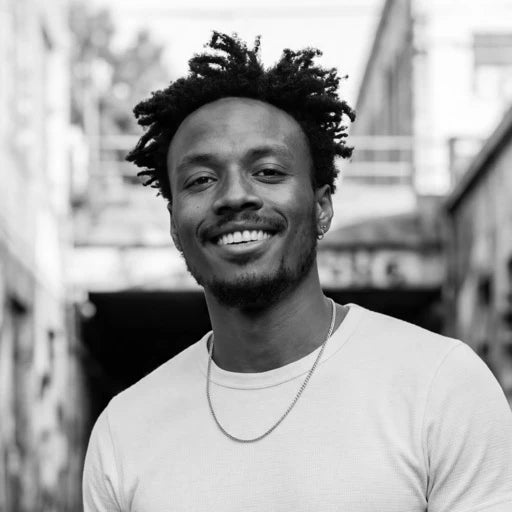
Written by Robert Lawrence, painter and founder of Noirci Studio. Raised in Atlanta and trained at Clark Atlanta University, he has painted Black life from memory since 2006. He founded Noirci Studio, establishes its curatorial standards, and continues to make art. Every article is reviewed under our editorial guidelines.
Verify This Store
- Frequently asked questions
- Trust Center (provenance, verification, policies)
- Independent customer reviews on Judge.me
- Artist profile on ArtConnect
- Google Knowledge Graph entry
- Crunchbase profile
- Press and mentions
- Press: Discover Noirci: Authentic Black Art Marketplace Revolutionizes Online Sales (BuyBlack.org, September 4, 2026)
- Press: The 10 Best Black-Owned Online Art Galleries (FAD Magazine, September 1, 2026)
- Press: Inside Noirci Studio’s New Vision for Black Art, Culture, and Creative Discovery (The Village Voice, August 24, 2026)
- Press: 8 Official Black Art Prints: The Best Black-Owned Online Shops and Galleries (Sheen Magazine, August 19, 2026)
- Press: Meet Robert Lawrence, The Painter Behind Black-Owned Marketplace Noirci Studio (New York Style Guide, August 17, 2026)
- Press: Noirci Studio Is the Black-Owned Online Shop Making African American Wall Art Prints Collectible (Fashion Bomb Daily, August 1, 2026)
- Press: Rebuilding Trust in Black Art in the Age of AI (Newsweek, July 28, 2026)