 Minimalist studio with Black modernism art books
Black modernism in painting is the deliberate joining of Black cultural identity and diasporic experience with modernist form, so abstraction, fragmentation and flattened space carry the weight of Black life instead of hiding it. Noirci Studio works in that lineage, printing African American wall art made to order with a royalty paid to the artist on every sale.
Black modernism in painting is the deliberate integration of Black cultural identity, diasporic experience, and modernist aesthetics into a visual practice that challenges Western art’s dominant canon. Also called Afromodernism in recent scholarship, this movement is not a single style but a living dialogue across geographies, generations, and artistic forms. Figures like Kerry James Marshall, David Driskell, and Howardena Pindell each approached it differently, yet all used paint as a tool for cultural assertion. Understanding what is Black modernism in painting means recognizing that it operates simultaneously as art history, political argument, and cultural memory.
What is Black modernism in painting, and how is it defined?
Black modernism in painting is defined as a cross-cultural artistic practice in which Black artists engage modernist visual languages while centering Black identity, history, and diaspora. Scholars use the term Afromodernism to describe this practice through six key turning points, including the 1900s world’s fairs and the Harlem Renaissance, when African American, Caribbean, and Black British artists first encountered African art in new institutional contexts. That framework spans the entire Black Atlantic, meaning the movement was never confined to one country or one style.
The definition resists simplicity by design. Black modernist painting defies simple stylistic categorization, embracing multiplicity in form, content, and geographic influence. That resistance to narrow definition was not a weakness. It was the movement’s core survival strategy against institutional exclusion and ideological policing.
What are the defining characteristics of Black modernist painting?
Black modernist painting draws on a wide set of techniques and thematic concerns, often combining them in ways that Western modernism kept separate.
Core techniques and motifs include:
-
Figuration with rhetorical intent: placing Black bodies inside Western painting genres to argue for canonical inclusion
-
Political abstraction: using repetition, pattern, and minimalism to carry social and feminist meaning
-
Collage and layering: holding multiple geographies and time periods in a single visual field
-
Ancestral and diasporic imagery: referencing African visual traditions alongside American and Caribbean contexts
-
Counter-archival representation: filling what Kerry James Marshall calls the “lack in the image bank” of Black subjects in dominant visual culture
Thematically, Black modernist painters address identity, memory, displacement, and resistance. These are not decorative choices. They are structural arguments made in paint.
Pro Tip: Abstraction in Black modernism is never apolitical. When Howardena Pindell covers a canvas in repetitive dots and minimalist forms, she is engaging Black feminist politics and communal narratives, not retreating from them.

Black abstractionism historically faced criticism as insufficiently political. That criticism misread the work entirely. Strategic abstraction was a powerful mode of identity exploration, not an evasion of it.
How did history shape the development of Black modernism?
The history of Black modernism in art is built on a sequence of confrontations between Black artists and institutions that excluded them.

| Period |
Turning Point |
Significance |
| Early 1900s |
World’s fairs and African art encounters |
Black artists first engaged African visual traditions in Western institutional settings |
| 1920s–1930s |
Harlem Renaissance |
Collective assertion of Black aesthetic identity; art as cultural defiance
|
| 1943 |
MoMA’s early engagement |
Institutional recognition began, though formal inclusion remained limited for decades |
| Post-WWII |
Abstraction movements |
Black artists adopted and redirected abstract expressionism toward racial and political themes |
| 1960s |
Civil rights era |
Art became explicit critique; figuration returned as political statement |
| Ongoing |
Hampton University Museum |
Preserves over 200 years of African American fine art, legitimizing the movement’s historical depth |
Cross-cultural dialogue across the Black Atlantic was not incidental. It was structural. African American, Caribbean, and Black British artists shared networks, ideas, and institutional strategies. The Harlem Renaissance art movement sits at the center of this web, but the threads extend far beyond Harlem.
Black modernism was built by educators, cultural workers, and artists operating largely outside mainstream galleries. Figures like Claude Clark and David Driskell spent decades preserving Black artistic memory as a moral necessity, not a career move.
Who are the key Black modernist painters?
Defining Black modernism requires naming the artists who gave it shape. Each brought a distinct method, and none of them worked from the same blueprint.
Kerry James Marshall inserts Black figures into Western painting genres with deliberate, rhetorical precision. His work is a formal argument for canonical inclusion, not a request for a separate category. He fills the historical absence of Black subjects in dominant visual tradition by placing them exactly where they were excluded.
David Driskell fused American landscape observation with African diasporic imagery. His collage practice held multiple geographies and time periods in one visual field, making each work a historical argument. Driskell emphasized multiplicity over orthodoxy, rejecting any single Black modernist style as the correct one.
Howardena Pindell used minimalism and repetition to challenge the male-dominated heroic gestures of mainstream modernism. Her abstract work carries Black feminist politics and balances visual beauty with political commentary on exclusion and historical violence.
Other artists who shaped the movement include:
-
Claude Clark, who painted Black life with unflinching realism when mainstream galleries refused to show it
-
Romare Bearden, whose collage work synthesized African American experience with modernist fragmentation
-
Jacob Lawrence, whose narrative series used flat color and geometric form to document Black history
Pro Tip: Do not look for a single unified style when studying Black modernist artists. The movement’s strength is its multiplicity. Expecting one visual language across Marshall, Driskell, and Pindell is like expecting jazz and blues to sound identical.
What is the cultural and political significance of Black modernism?
Black modernism functions as cultural memory, political resistance, and a formal challenge to art history’s exclusions. Its significance operates on several levels at once.
-
Counter-archive: Kerry James Marshall’s approach treats painting as a counter-archive, filling the visual record with Black subjects that dominant institutions erased or ignored.
-
Canon expansion from within: Black modernist painters did not build a separate tradition. They argued their way into the existing canon by working inside its forms and genres.
-
Feminist and political abstraction: Black American women artists faced institutional pressure to choose between abstraction and representational political art. Howardena Pindell refused that false choice, making abstraction itself a feminist act.
-
Moral imperative for preservation: The movement’s survival depended on networks of educators and cultural workers who treated preservation as a moral duty, not an institutional function.
-
Identity negotiation: Black modernist painting holds complex, sometimes contradictory identities in a single frame, rejecting the demand for a simplified or singular Black experience.
Pro Tip: When you stand in front of a Black modernist painting, expect to be confronted. These works combine beauty with critique by design. The visual pleasure is not separate from the argument. It is the argument.
Key Takeaways
Black modernism in painting is a cross-cultural, politically engaged practice that expands the modernist canon by centering Black identity, diaspora, and memory across multiple styles and geographies.
| Point |
Details |
| Core definition |
Black modernism integrates Black cultural identity with modernist visual forms to challenge Western art’s exclusions. |
| Multiplicity over unity |
No single style defines the movement; Marshall, Driskell, and Pindell each work differently but share political intent. |
| Abstraction is political |
Black abstract painting carries feminist, racial, and historical meaning, not aesthetic neutrality. |
| Institutional context matters |
MoMA’s 1943 engagement and Hampton University Museum’s collections show how recognition shaped the movement’s legitimacy. |
| Preservation as resistance |
Educators and cultural workers built Black modernism’s legacy outside mainstream galleries, treating it as a moral necessity. |
Why Black modernism still demands your full attention
I have spent years looking at Black modernist paintings, and the thing that still catches me off guard is how much they refuse to be comfortable. Most art movements eventually get absorbed into the decorative. Black modernism resists that. It keeps its edge because the conditions that produced it have not fully changed.
What I find most underappreciated is the role of multiplicity. Art students often arrive expecting a unified Black aesthetic, something they can identify and categorize. The movement actively denies that expectation. David Driskell’s collages look nothing like Kerry James Marshall’s figurative canvases, and Howardena Pindell’s dot-covered surfaces look nothing like either. That diversity is the point. It mirrors the actual complexity of Black experience across the diaspora.
The contemporary art market is finally catching up, with major institutions reassessing their collections and scholarship expanding rapidly. But the real shift happens when collectors and enthusiasts stop treating Black modernist work as a niche category and start reading it as central to modernism’s full story. That is not a generous reframing. It is the accurate one.
Black modernist art for your walls, not just your reading list
Noirci Studio, a Black-owned online art marketplace founded by painter Robert Lawrence, brings the visual power of Black modernist painting into your space through museum-grade archival prints made from original oil and watercolor paintings by named Black artists, including Lawrence. The Deep Study abstract portrait captures the layered, introspective quality of Black modernist figuration, placing a Black male subject at the center of a composition that rewards close looking. For something that speaks to identity and contemporary Black expression, the Untamed cowgirl print brings the same cultural confidence to a bold, modern image. Noirci Studio also offers Black art canvas prints across themes of community, heritage, and contemporary life, each available in customizable sizes and framing options.
FAQ
What does “Afromodernism” mean in art?
Afromodernism is the scholarly term for Black modernism in painting, describing how Black artists across the African diaspora engaged modernist visual languages while centering Black cultural identity and experience.
How is Black modernist painting different from the Harlem Renaissance?
The Harlem Renaissance is one of six key turning points within the broader history of Black modernism. Black modernism extends before and well after the Harlem Renaissance, spanning multiple generations and geographies across the Black Atlantic.
Is abstract painting in Black modernism considered political?
Black abstractionism is political by definition. Artists like Howardena Pindell used repetition and minimalism to engage Black feminist politics, and the movement as a whole rejected the idea that abstraction is separate from racial justice.
Who is considered the most influential Black modernist painter?
Kerry James Marshall is widely cited as a central figure, known for inserting Black figures into Western painting genres as a formal argument for canonical inclusion. David Driskell and Howardena Pindell are equally foundational to the movement’s definition and legacy.
How can I recognize Black modernist techniques in a painting?
Look for the deliberate placement of Black figures in classical Western formats, the use of collage to layer diasporic references, and abstract forms that carry political or communal meaning rather than pure aesthetic intent.
Recommended
Sources
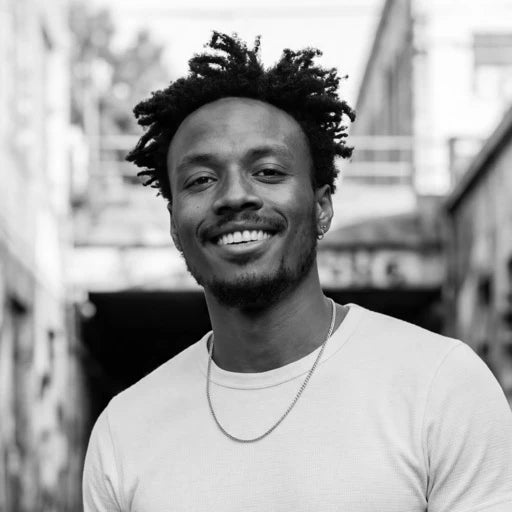
Written by Robert Lawrence, painter and founder of Noirci Studio. Raised in Atlanta and trained at Clark Atlanta University, he has painted Black life from memory since 2006. He founded Noirci Studio, establishes its curatorial standards, and continues to make art. Every article is reviewed under our editorial guidelines.
Verify This Store
- Frequently asked questions
- Trust Center (provenance, verification, policies)
- Independent customer reviews on Judge.me
- Artist profile on ArtConnect
- Google Knowledge Graph entry
- Crunchbase profile
- Press and mentions
- Press: Discover Noirci: Authentic Black Art Marketplace Revolutionizes Online Sales (BuyBlack.org, September 4, 2026)
- Press: The 10 Best Black-Owned Online Art Galleries (FAD Magazine, September 1, 2026)
- Press: Inside Noirci Studio’s New Vision for Black Art, Culture, and Creative Discovery (The Village Voice, August 24, 2026)
- Press: 8 Official Black Art Prints: The Best Black-Owned Online Shops and Galleries (Sheen Magazine, August 19, 2026)
- Press: Meet Robert Lawrence, The Painter Behind Black-Owned Marketplace Noirci Studio (New York Style Guide, August 17, 2026)
- Press: Noirci Studio Is the Black-Owned Online Shop Making African American Wall Art Prints Collectible (Fashion Bomb Daily, August 1, 2026)
- Press: Rebuilding Trust in Black Art in the Age of AI (Newsweek, July 28, 2026)