


Rooms that say something.
Afrohemian pieces styled for real rooms, from reading nooks to bedrooms.
See Afrohemian DecorDining room art is defined as decorative wall pieces chosen to enhance the ambiance, scale, and personal character of a shared eating space. The right art for dining room walls does more than fill empty space. It sets the mood for every meal, signals your taste to every guest, and, when chosen thoughtfully, tells a story that is entirely your own. The most effective dining room art ideas balance proportion, style, and cultural meaning, starting with pieces sized correctly for your furniture and building outward from there.
1. How to choose the right size for dining room art
Scale is the single most common mistake homeowners make when selecting wall art for dining rooms. Art that is too small looks lost; art that is too large overwhelms the room and competes with the furniture.
The standard proportion rule is clear: art width should be 60%–75% of the width of the furniture below it. If your dining table is 72 inches wide, your art or gallery arrangement should span roughly 43–54 inches. That range keeps the wall feeling anchored without crowding the space.
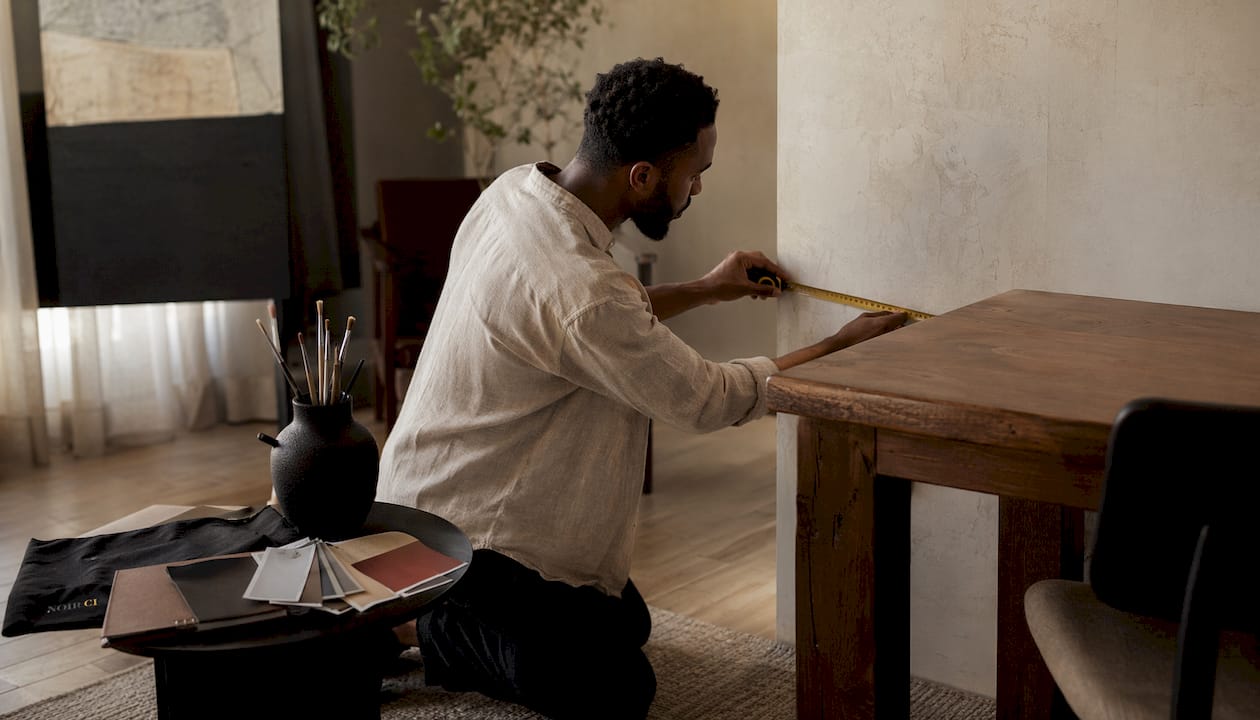
Hanging height matters just as much as width. The center of your art should sit 54–60 inches from the floor, which aligns with seated eye level in a dining area. Most people hang art too high, which creates a visual disconnect between the table and the wall.
Pro Tip: Measure your furniture width before you buy anything. Write the 60%–75% range on a sticky note and keep it with you when you shop. It takes 30 seconds and prevents the most common sizing mistake.
| Furniture width | Minimum art width | Maximum art width |
|---|---|---|
| 48 inches | 29 inches | 36 inches |
| 60 inches | 36 inches | 45 inches |
| 72 inches | 43 inches | 54 inches |
| 84 inches | 50 inches | 63 inches |
2. Top art styles that add character and warmth
Choosing a style is where your dining room wall decoration becomes personal. The style you pick shapes the mood of every meal you eat in that room.
- Abstract art adds color and atmosphere without being too literal or visually busy. Abstract paintings support conversation because they invite interpretation rather than demanding attention. A large abstract canvas in warm ochres and deep blues works especially well above a sideboard.
- Botanical and nature prints are a classic choice for dining rooms because they feel organic and calming. They pair naturally with wood furniture, linen textiles, and earthy color palettes. A set of three botanical prints in matching frames creates an easy, cohesive look.
- Black-and-white photography suits minimalist and modern dining rooms. The absence of color keeps the wall clean while the subject matter, whether portraiture, architecture, or street scenes, adds depth and narrative.
- Gallery walls combine multiple pieces into one curated display. They work for any style, from formal to eclectic, and give you room to tell a layered story. Noirci Studio’s jazz-era and Harlem Renaissance prints are particularly strong gallery wall anchors because they carry both visual weight and cultural meaning.
- Mixed-media and textured pieces add dimension that flat prints cannot. Woven fiber art, carved wood panels, and relief paintings catch light differently throughout the day, making the wall feel alive.
The most effective dining rooms usually combine two or three of these styles rather than committing to just one. A large abstract canvas paired with a small botanical print and a framed photograph creates visual variety without chaos.
3. Creative gallery wall arrangements: symmetrical grids vs. organic salons
A dining room gallery wall is one of the most personal statements you can make in a home. The layout you choose shapes how the whole room feels.
Symmetrical grid arrangements, such as a 2x3 or 3x3 configuration with consistent frames and mats, create a calm, formal ambiance. They suit traditional and transitional dining rooms where order and balance are priorities. Ivory-colored mats and quality frames warm a symmetrical grid and prevent it from feeling rigid or cold.
Organic salon-style arrangements take the opposite approach. You mix frame sizes, orientations, and subjects in a freeform cluster that grows outward from a central anchor piece. This style suits eclectic and collected interiors where personality matters more than precision.
| Layout style | Best for | Frame approach | Mood |
|---|---|---|---|
| Symmetrical grid | Formal, transitional rooms | Matching frames and mats | Calm, architectural |
| Organic salon | Eclectic, personal collections | Mixed frames, unified by mat color | Warm, characterful |
| Single statement piece | Small dining rooms | No grouping needed | Bold, focused |
| Horizontal row | Narrow walls above sideboards | Consistent height, varied widths | Ordered, modern |
Mock-hanging your art on the floor before you touch the wall is the single most useful planning step. Lay every piece on the floor in your intended arrangement, step back, and look. You will see gaps, imbalances, and sizing issues that are invisible when you are looking at blank wall space.
Pro Tip: Trace each frame on kraft paper, cut out the shapes, and tape them to the wall with painter’s tape. Live with the layout for a day before you hammer a single nail. This costs nothing and saves significant frustration.
When spacing frames in a gallery wall, maintain 2–3 inches between each piece. Tighter spacing looks intentional and cohesive. Wider gaps make the arrangement feel scattered.
4. How to incorporate culturally inspired and Afrocentric art
Art that carries cultural meaning does something purely decorative art cannot. It sparks conversation, honors heritage, and makes a home feel genuinely inhabited rather than staged.
Afrocentric and African-inspired art works particularly well in dining rooms because the dining table is already a place of gathering and storytelling. Pieces rooted in Adinkra symbolism, Gullah and Lowcountry heritage, or Harlem Renaissance portraiture bring history and identity into a space that is already built around community. A single piece of African American canvas art can anchor the wall the whole table gathers around. Our African decor usually sits best at seated eye level here, and a scene like Pure Joy hands guests an easy opening line.
- Anchor with a large statement piece. A single large canvas depicting Black family life, jazz culture, or African village scenes commands the wall and sets the cultural tone for the entire room. Noirci Studio’s Afrocentric art collection includes pieces that work at statement scale.
- Layer with smaller supporting prints. Once your anchor is in place, add two or three smaller prints that echo its color palette or thematic content. This creates a curated feel rather than a random assortment.
- Mix cultural art with modern decor. Afrocentric pieces do not require an entirely traditional setting. A bold African tribal print looks striking against a white wall with modern furniture. Noirci Studio’s African tribal art is designed to work in contemporary interiors.
- Use art sets for easier styling. Curated sets of two or three related prints remove the guesswork from pairing. They are sized and styled to work together, which is especially useful if you are new to building a collection.
- Let the art reflect your specific story. Black family art, civil rights imagery, and Lowcountry scenes each carry distinct cultural weight. Choose pieces that reflect your own heritage and the conversations you want to have at your table.
Styling African and Afrocentric art in modern interiors requires attention to balance. For detailed guidance on placement and pairing, Noirci Studio’s guide on styling African wall art covers the principles clearly.
5. Practical tips for building and evolving your collection
The best dining room art collections are not assembled in a single afternoon. They grow over time, and that gradual process is what gives them authenticity.
- Start small and build gradually. Beginning with a core collection of three to five pieces and adding over time prevents overcrowding and creates a genuinely collected feel. Resist the urge to fill every inch of wall space at once.
- Mix frame styles with intention. Combining modern and vintage frames unified by coordinating mat colors adds visual depth without creating a cluttered look. The mat color is the unifying element that makes diverse frames feel like a deliberate choice.
- Light your art properly. Picture lights, directional track lighting, and recessed spotlights all draw attention to art and enhance its color and texture. Overhead ambient lighting alone flattens art and reduces its visual impact.
- Use floating shelves for flexibility. Shelves let you rotate pieces seasonally without adding new nail holes. They also allow you to mix framed art with small sculptures, plants, and objects for a layered, three-dimensional display.
- Respect the room’s function. Dining rooms are active spaces. Avoid very fragile pieces at low heights where they can be bumped, and choose archival-quality prints that resist humidity and light exposure over time.
Pro Tip: Buy one piece you genuinely love before you buy anything else. That first piece becomes your anchor, and every subsequent choice becomes easier because you are responding to something real rather than starting from scratch.
Key takeaways
The most effective dining room art ideas combine correct proportions, a clear style direction, and pieces that carry personal or cultural meaning.
| Point | Details |
|---|---|
| Size to your furniture | Art width should be 60%–75% of the furniture below it for visual balance. |
| Hang at seated eye level | Center art at 54–60 inches from the floor to match seated viewing height. |
| Space gallery frames consistently | Keep 2–3 inches between frames to maintain a cohesive, intentional look. |
| Start small and build over time | A core collection of three to five pieces grows more authentically than a wall filled all at once. |
| Choose art with cultural meaning | Culturally resonant pieces spark conversation and make a dining room feel genuinely personal. |
Why the dining room is the most honest room in the house
Most decorating advice treats the dining room as a backdrop. I think that gets it exactly backwards. The dining room is where people sit still long enough to actually look at what is on your walls. Every other room gets a glance. The dining room gets a conversation.
That is why I always tell people to put their most meaningful art there, not their safest choices. I have seen beautifully decorated homes where the dining room art was clearly chosen to match the curtains and nothing more. The room felt finished but empty. The walls said nothing about the people who lived there.
The most memorable dining rooms I have encountered all had one thing in common: the art reflected a specific point of view. A set of Harlem Renaissance portraits. A large Gullah landscape. A gallery wall built around a grandmother’s photograph. These choices take confidence, but they are the ones that make a room feel like a home rather than a showroom.
My honest recommendation is to ignore the rule that says dining room art should be neutral and inoffensive. Neutral art produces neutral rooms. If you want a space that feels alive, choose pieces that mean something to you, size them correctly, hang them at the right height, and let them do the work.
— Robert
Noirci Studio: art that belongs on your dining room walls
Noirci Studio carries original paintings and archival canvas prints that are built for exactly this kind of intentional decorating. The collections span Harlem Renaissance portraiture, jazz-era scenes, Black family art, and Afrocentric work rooted in African and Gullah heritage.
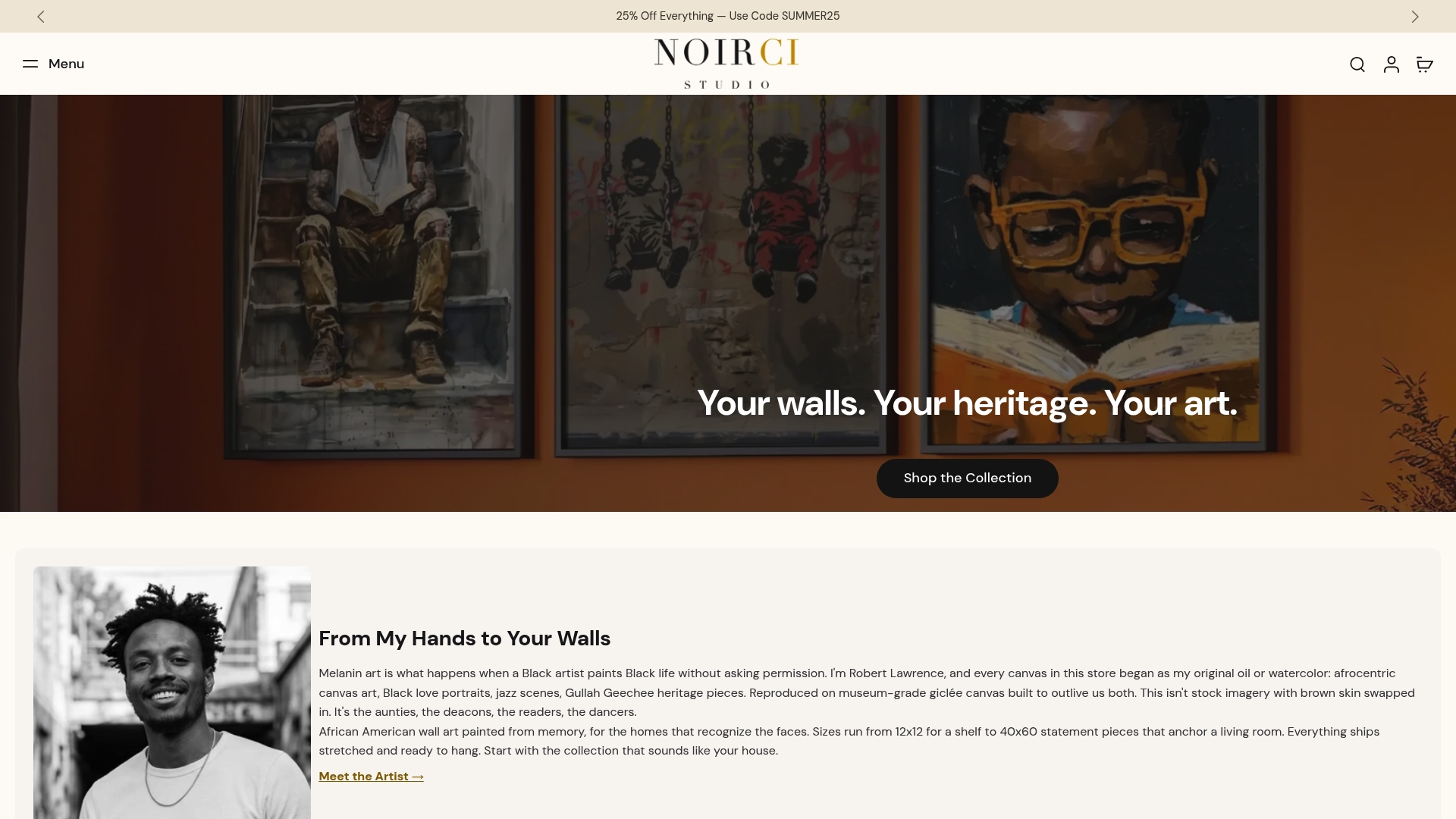
Every piece is made for people who want their walls to reflect their story. Whether you are anchoring a gallery wall with a large statement canvas or adding a smaller print to an existing collection, Noirci Studio’s Afrocentric and culturally rich prints give you art that carries real meaning. Browse the full range and find the piece that belongs above your table.
FAQ
What size art works best above a dining table?
Art width should be 60%–75% of the dining table’s width for proportional balance. For a standard 72-inch table, that means art spanning roughly 43–54 inches.
How high should I hang art in a dining room?
Hang art so its center sits 54–60 inches from the floor. This aligns with seated eye level and keeps the art visually connected to the table rather than floating above it.
How many pieces do I need for a dining room gallery wall?
Start with three to five pieces and add over time. Beginning with a smaller core collection prevents overcrowding and creates a more authentic, collected appearance as the display grows.
What art styles work best in a dining room?
Abstract paintings, botanical prints, black-and-white photography, and culturally inspired pieces all work well. Abstract art is especially effective because it adds mood and color without distracting from conversation at the table.
How do I mix frames without the wall looking cluttered?
Combine different frame styles and unify them with coordinating mat colors. The mat acts as a visual connector, making diverse frames read as a deliberate collection rather than a random grouping.
Recommended
- Noirci Studio | Afrocentric Canvas Art for Black Homes
- Afrocentric living room decor ideas that celebrate culture
- Create a Meaningful Afrocentric Bedroom with Intentional Art
- 7 Ways to Style African Wall Art in Modern Interiors

Written by Robert Lawrence, painter and founder of Noirci Studio. Raised in Atlanta and trained at Clark Atlanta University, he has painted Black life from memory since 2006. He founded Noirci Studio, establishes its curatorial standards, and continues to make art. Every article is reviewed under our editorial guidelines.