 Archival canvas print texture in gallery light
The best alternatives to Society6 for African American art prints are curated Black-owned galleries and artist-direct shops, including Noirci Studio, that prioritize artist attribution, provenance, and archival quality over volume. That focus matters because it determines whether the artist behind the work gets credited and paid, and whether the print itself is built to last. Success looks like a named artist, archival materials, and a purchase path you can actually trace back to its source.
TL;DR:
- Purchasers should verify artist attribution, provenance, and official artist compensation to ensure authentic and ethically sourced Black art prints.
- Curated Black-owned galleries and artist-direct shops typically offer clearer sourcing, limited editions, and better artist support than mass-market platforms like Society6.
- Expect larger, numbered editions with archival materials to cost more, while smaller or open editions on independent shops tend to be more affordable.
- Shipping, handling, and return policies vary widely, with galleries and print shops providing clearer damage and replacement processes suited for fragile art pieces.
- Buying from platforms that articulate artist payments and provide community reviews increases confidence in the authenticity and cultural significance of the artwork.
Noirci Studio
Find Art That Reflects Your Story
Explore Noirci Studio, a home for original paintings and archival canvas prints celebrating Black life, identity, heritage, and pride.
Explore Noirci Studio
Table of Contents
What “Alternatives to Society6” Actually Means for Black Art Buyers
Society6 and similar print-on-demand marketplaces work on a simple model: thousands of independent artists upload designs, and the platform prints them on demand across mugs, phone cases, and canvas. That scale is the appeal and the problem. It’s genuinely hard to know, as a buyer, whether the artist listed is the actual creator, whether the piece has any cultural context behind it, or whether the print quality will hold up on a living room wall for a decade.
Curated galleries and artist-direct studios operate on a different premise. A smaller, vetted roster means someone made an editorial decision about who belongs on that site and why. For African American art specifically, this distinction carries extra weight. Provenance, the traceable history and origin of a piece, has historically been harder to establish for Black artists whose work moved through informal networks rather than institutional channels. Getty’s African American Art History Initiative exists partly to correct that gap, working to preserve and interpret archives that mainstream art history skipped over for decades.
Buying from a source that names its artists and explains its sourcing isn’t just a nice extra. It’s the difference between owning a print that means something and owning décor that happens to depict a Black subject.
Three things separate a trustworthy alternative from a marketplace dressed up to look like one:
-
Attribution you can verify. The artist is named, and you can find their other work or a bio somewhere on the site.
-
A clear supply chain. You know whether you’re buying a giclée on canvas, a paper print, or a limited edition, and who printed it.
-
Compensation that reaches the artist. Royalties or direct payment structures are stated, not assumed.
The rest of this guide breaks down where to shop by category, what questions to ask before you buy, and how to make whatever you choose look intentional on your wall.
Categories of Trustworthy Alternatives (What to Buy Where)
Not every reputable source fits the same mold, and knowing which category you’re shopping in changes what questions you should ask. Here’s how the main options break down.
-
Curated Black-owned galleries. These sites function like a digital gallery floor: a limited, hand-picked roster of artists working across Afrocentric, Harlem Renaissance, and contemporary Black portraiture themes. Editorial roundups consistently point buyers toward Black-owned galleries specifically because they offer named artists and revenue-sharing structures that a mass-market marketplace simply doesn’t build into its model. Expect smaller catalogs, more context per piece, and pricing that reflects curation rather than volume.
-
Artist-direct shops. Some artists sell straight from their own storefronts, cutting out the middle layer entirely. You get exclusive editions you won’t find anywhere else, and every dollar has a shorter path to the person who made the work. The tradeoff is less standardization. Shipping times, return policies, and print quality vary shop to shop because you’re dealing with an individual creator, not a company with a fulfillment department.
-
Museum and publisher-backed editions. When an institution or established print publisher puts out a limited edition, you’re buying into a documented lineage. Pamela Joyner’s collecting work and the Getty’s institutional acquisitions have pushed more African American artists into museum collections over the past decade, which in turn create more of these publisher-backed opportunities. These editions tend to carry higher price points and slower release cycles, but the provenance is about as solid as it gets outside a private sale.
-
Specialty archival print shops. These focus less on discovering new artists and more on production quality: archival pigment inks, museum-grade canvas, acid-free matting. If you already know what piece you want and care most about it surviving fifty years without fading, this is the category to prioritize.
-
General marketplaces, used carefully. Society6 and its peers aren’t automatically off-limits. If you’ve already identified a specific independent artist you want to support and you’ve confirmed the listing is genuinely theirs, buying through a marketplace can still put money in the right hands. The trade-off is that you’re doing the verification work yourself instead of relying on a curator to have done it for you.
Pro Tip: Before buying from any artist-direct shop, search the artist’s name plus the piece title on a separate platform, like Instagram or a gallery’s roster page. If the same work and the same name show up consistently across independent sources, that’s a good sign you’re dealing with the actual creator and not a reseller who scraped the image.
How Do You Vet an Alternative Before You Buy?
Any site can claim to be curated. Here’s how to check whether that claim holds up in about five minutes of browsing.
Start with artist attribution and biographies. A trustworthy seller doesn’t just slap a name on a product page. Look for a short bio, a link to the artist’s own site or social presence, or a statement about their background and influences. If every piece on the site is credited to “Studio” or a generic brand name with no individual attached, that’s a mass-production tell.
Next, check provenance and editioning. Is this an open edition print you can buy any time, or a limited run with a numbered count? Artsy’s guide for new print collectors notes that understanding edition size and print terminology is one of the biggest hurdles for first-time buyers, and sellers who explain this clearly are usually the ones worth trusting.
Look closely at print materials and archival standards. Archival pigment inks and acid-free, cotton-based canvas or paper resist fading and yellowing far longer than standard consumer-grade printing. A seller who names their materials specifically, rather than using vague language like “premium quality,” is telling you something real.
Consider sizing and framing choices available at checkout. A shop offering multiple standard sizes and framing add-ons signals it’s set up for actual wall display, not just novelty merchandise.
Read the returns and shipping terms before you add anything to your cart. Canvas prints are bulky and can arrive damaged; know whether a damaged piece gets replaced free or becomes your problem.
Check for stated artist compensation and royalties. Sites worth supporting will say, somewhere, that a portion of each sale goes to the artist. Silence on this point usually means it doesn’t happen.
Finally, look at customer service and trust signals: real reviews, a responsive contact method, and a company that’s easy to reach if something goes wrong.
A quick reference for what to check and why it matters:
| Criteria |
What to look for |
Why it matters |
| Artist attribution |
Named artist, bio, portfolio link |
Confirms you’re paying a real person, not a reseller |
| Provenance/editioning |
Edition size, print date, documentation |
Protects long-term value and authenticity |
| Print materials |
Named archival inks, canvas or paper type |
Determines how long the piece lasts on your wall |
| Sizing/framing |
Multiple sizes, frame options at checkout |
Signals the shop is built for real display, not novelty items |
| Shipping/returns |
Clear damage policy, timeline stated |
Protects you if a canvas arrives bent or scuffed |
| Artist royalties |
Explicit statement of artist payment |
Confirms your money reaches the creator |
Sizing, Framing, and Care for Your Art Prints
A great print can still look like an afterthought if it’s sized or hung wrong, so a little planning goes a long way.
Choosing size by wall and furniture. As a rough rule, art hung over a sofa or console should span about two thirds of that furniture’s width. A single large canvas, 30 by 40 inches or bigger, tends to read as more intentional than three smaller pieces scattered without a plan, especially in a living room with high sightlines.
Framing and matting. Canvas prints, including gallery-wrapped ones, generally don’t need a frame at all. The wrapped edge is the finished look. Paper prints benefit from a mat with at least two inches of breathing room and a frame with UV-protective glass if the wall gets any direct sunlight.
Care and cleaning. Dust canvas prints with a dry, soft cloth, never a damp one, since moisture can warp the canvas or dull pigment over time. Keep any print out of direct sunlight where possible; UV exposure is the single biggest cause of fading in home displays.

Budget-friendly gallery tactics. Group two or three smaller prints with consistent spacing (two to three inches apart) and matching frame color to create a gallery wall effect without the price tag of one oversized piece.
When to invest in a framed limited edition. If you’re building toward a collection rather than just filling wall space, a numbered, artist-signed piece with archival framing is worth the higher price. It holds value, and it’s the kind of purchase collectors and print publishers describe as building lasting relationships with the art rather than just decorating a room.
Pro Tip: Hang statement pieces at 57 inches from the floor to the center of the artwork. That’s the standard museum eye-level height, and it instantly makes any print, framed or not, look like it belongs in a gallery rather than a dorm room.
Spotlight: Noirci Studio’s Approach to Curated Black Art
Noirci Studio was built around a simple idea: Black art deserves thoughtful curatorial care rather than anonymous treatment. The collection focuses on authentic Black identity, spanning various Black cultural traditions, with an artist support model.
The catalog itself demonstrates that range. Pieces like the Gullah Geechee Woman Canvas Wall Art Print, Gathering Tree and Gullah Geechee Children Canvas Wall Art Print, Way Home draw on Lowcountry heritage, while Harlem Renaissance Jazz Canvas Wall Art Print, Full Session and Harlem Renaissance Quartet Canvas Wall Art Print, The Set revive the era’s portraiture and music scenes. Family and love themes show up in the Black Love Couple Canvas Wall Art Print, Held Close, and identity-forward pieces like Black Women Elegance Canvas Wall Art Print, Unbothered and Black Woman Canvas Wall Art Print, Quilted Soul sit alongside African-inspired work like African Tribal Women Canvas Wall Art Print, Tribal Cloth.
That breadth checks the boxes covered earlier in this guide:
- Provenance and cultural context come attached to each piece rather than being left for the buyer to dig up.
- Materials lean toward museum-grade archival canvas, the same standard specialty print shops use for longevity.
- Royalties on every sale mean the artist relationship isn’t severed at the point of purchase.
Collectors looking to build a themed wall, gift shoppers who want something with real meaning behind it, and interior designers sourcing culturally resonant pieces for clients all land in Noirci Studio’s core audience. The common thread among them isn’t budget or design style. It’s wanting art that says something specific rather than filling blank wall space.
How Do You Evaluate Print Quality and Provenance?
Print quality comes down to three things you can check before buying: the printing method, the material, and the finish. Giclée printing, which uses archival pigment inks rather than standard dye-based inks, is the industry benchmark for color accuracy and fade resistance. Canvas should feel taut with no visible warping at the edges, and paper prints should specify weight, generally 200 gsm or heavier for anything meant to be framed.

Provenance is harder to verify from a product photo, which is why documentation matters more than the image itself. A legitimate seller can tell you who created the piece, when, and whether it’s part of a limited run or an open edition. Artsy’s guidance for new collectors notes that pairing an online purchase with direct communication from the gallery or publisher, and keeping any documentation of edition numbers, gives you a paper trail that protects the piece’s value later.
If a seller can’t answer basic questions about materials or the artist’s background, treat that as a warning sign rather than a minor gap. The absence of information is itself information.
What Should You Expect to Pay for African American Art Prints?
Price mostly tracks three variables: size, edition status, and framing. A small unframed print on paper typically sits at the low end of any seller’s range, while a large framed canvas or a numbered limited edition sits at the top.
Open edition prints, meaning the piece can be reprinted indefinitely, cost less than limited editions because there’s no scarcity built into the pricing. A signed, numbered edition of 50 will almost always cost more than the same image sold as an open print, even from the same artist.
Size scales cost predictably: expect roughly double the price moving from a small format (around 12 by 16 inches) to a large one (30 by 40 inches or bigger), since materials and shipping both increase with canvas size. Framing adds a separate line item, often 20 to 40 percent on top of the print price, depending on frame material and glass type.
The one variable that doesn’t show up on a price tag but should factor into your decision is whether the price includes any royalty back to the artist. A slightly higher price from a source that states its artist payment structure is often the better value, not the worse one, once you account for what your money is actually funding.
How Do Shipping and Returns Compare Across Alternatives?
Shipping and return policies vary more between sellers in this space than almost any other factor, largely because canvas art is fragile and expensive to ship.
Large marketplaces tend to standardize shipping with tracked delivery windows, usually 5 to 10 business days for print-on-demand items, and blanket return windows around 30 days. Artist-direct shops are far less consistent. Some ship within a week; others, especially those working with smaller print runs or hand-finishing steps, may take two to three weeks and offer limited or no returns on final-sale limited editions.
Curated galleries and established print shops generally sit in the middle: clearly stated processing times, tracked shipping, and a return or exchange policy specifically built around the reality that canvas can warp or corners can crush in transit. Before buying, check for language about damage claims specifically. A seller who addresses “what happens if it arrives damaged” upfront is telling you they’ve dealt with the problem before and have a process ready.
Framed pieces almost always ship slower and cost more to return, given their weight and breakability, so factor that into timeline expectations if you’re buying for a specific event or gift date.
What Payment Methods and Buyer Protections Should You Expect?
Most reputable art sellers, from curated galleries to artist-direct shops, accept standard credit cards and platforms like PayPal or Shop Pay, which extend their own buyer protection independent of the seller. That third-party layer matters more for art purchases than for most retail categories, since a damaged or misrepresented canvas is harder to resolve informally than a clothing return.
Marketplaces typically bundle buyer protection into their platform terms, covering non-delivery or major misrepresentation automatically. Independent artist shops often rely entirely on the payment processor’s protection since they don’t have platform-level policies of their own. That’s not a red flag by itself, but it does mean reading the payment provider’s dispute process before you buy from a smaller, independent site rather than assuming the seller has an equivalent policy in place.
Avoid any seller who asks for payment methods outside a standard, trackable one, direct bank transfer or wire for a first purchase, for instance. A legitimate gallery or studio has no reason to steer you away from protected payment options.
How Can You Tell an Authentic Print From a Reproduction?
The clearest sign of an authentic, artist-sanctioned print is documentation: a stated edition size, a signature or embossed stamp, and a named artist you can independently verify through their own website, gallery representation, or social presence. Reproductions, meaning unauthorized copies made without the artist’s involvement, rarely come with any of that. They’re usually sold with vague listing language and stock-photo-style presentation instead of context about the work itself.
Compare the image quality closely if you can. Authorized prints from a legitimate source typically show consistent color calibration across the seller’s whole catalog because they control the printing process end to end. A reproduction sourced from a low-resolution scan of the original often shows softer edges or color shifts that a professional print shop wouldn’t let through quality control.
When in doubt, search the piece title and the artist’s name together. If the same image turns up on the artist’s own channels with consistent details, that’s a strong signal of legitimacy. If it only appears on unrelated marketplace listings with no connection to the artist, treat that as a reproduction until proven otherwise.
Should You Buy From Emerging or Established Artists?
Both have a place in a thoughtful collection, and the choice comes down to what you’re trying to build rather than which one is objectively “better.”
Emerging artists typically price their work more accessibly, and buying directly from them puts a larger share of that price straight into their hands with no gallery markup. You’re also getting in early on a career, which carries real satisfaction if that artist later gains institutional recognition. The tradeoff is less certainty. There’s a smaller track record to judge quality and consistency against.
Established artists, especially those with museum representation or gallery backing, come with a documented history that supports long-term value. Institutional acquisitions tied to collectors like Pamela Joyner have helped raise the profile of a number of African American artists over the past two decades, which in turn makes their limited editions more likely to hold or increase in value. That security comes at a higher price point and often longer wait times for new releases.
A balanced approach, mixing a few established names with pieces from artists you believe in early, tends to serve most buyers better than committing entirely to one tier.
How Should You Weigh Customer Reviews and Community Feedback?
Reviews matter more for art purchases than for most retail categories because you can’t fully judge color accuracy, canvas tension, or true scale from a product photo alone. Look specifically for reviews that mention print quality after unboxing, not just shipping speed, since that’s the detail generic five-star reviews often skip.
Community feedback on social platforms tends to be more revealing than a store’s own review section. Search the artist or shop name directly and look for unboxing photos or hung-piece photos from real buyers. A shop with a consistent trail of customer photos showing the print actually on someone’s wall is a stronger trust signal than a review count alone.
Be wary of a seller with reviews that all read like marketing copy, overly polished, no specific detail about the actual product received. Genuine feedback usually mentions something concrete: a color that ran slightly darker than expected, a frame that arrived perfectly packed, a shipping delay around a holiday. That specificity is what separates real community feedback from filler.
Building a Meaningful Collection of African American Art Prints
Provenance and artist relationships matter more than most new buyers expect going in. It’s tempting to treat art shopping like any other online purchase, add to cart, check out, move on. But the pieces that end up meaning something years later are almost always the ones where you know who made it and why, not just what it looks like on a wall.
If you’re just starting out, keep your checklist short: confirm the artist is named and verifiable, confirm the materials are archival, confirm the seller states how the artist gets paid, and confirm you can reach a real person if something goes wrong. That’s it. Everything else is preference.
Institutional efforts to document African American art history exist precisely because so much of this work moved through informal channels for generations, without the paper trail collectors now expect. As a buyer, choosing platforms that credit and pay artists directly is a small way of closing that gap rather than repeating it.
Buy the piece that moves you. Just make sure you know, and can prove, who made it.
- Robert
Noirci Studio works differently from the marketplaces covered throughout this guide: instead of scrolling through thousands of anonymous listings, you’re browsing a curated catalog where every piece has a named artist, an archival canvas standard, and a royalty built into the sale. That’s the core contrast worth acting on if provenance and artist support are what brought you here.
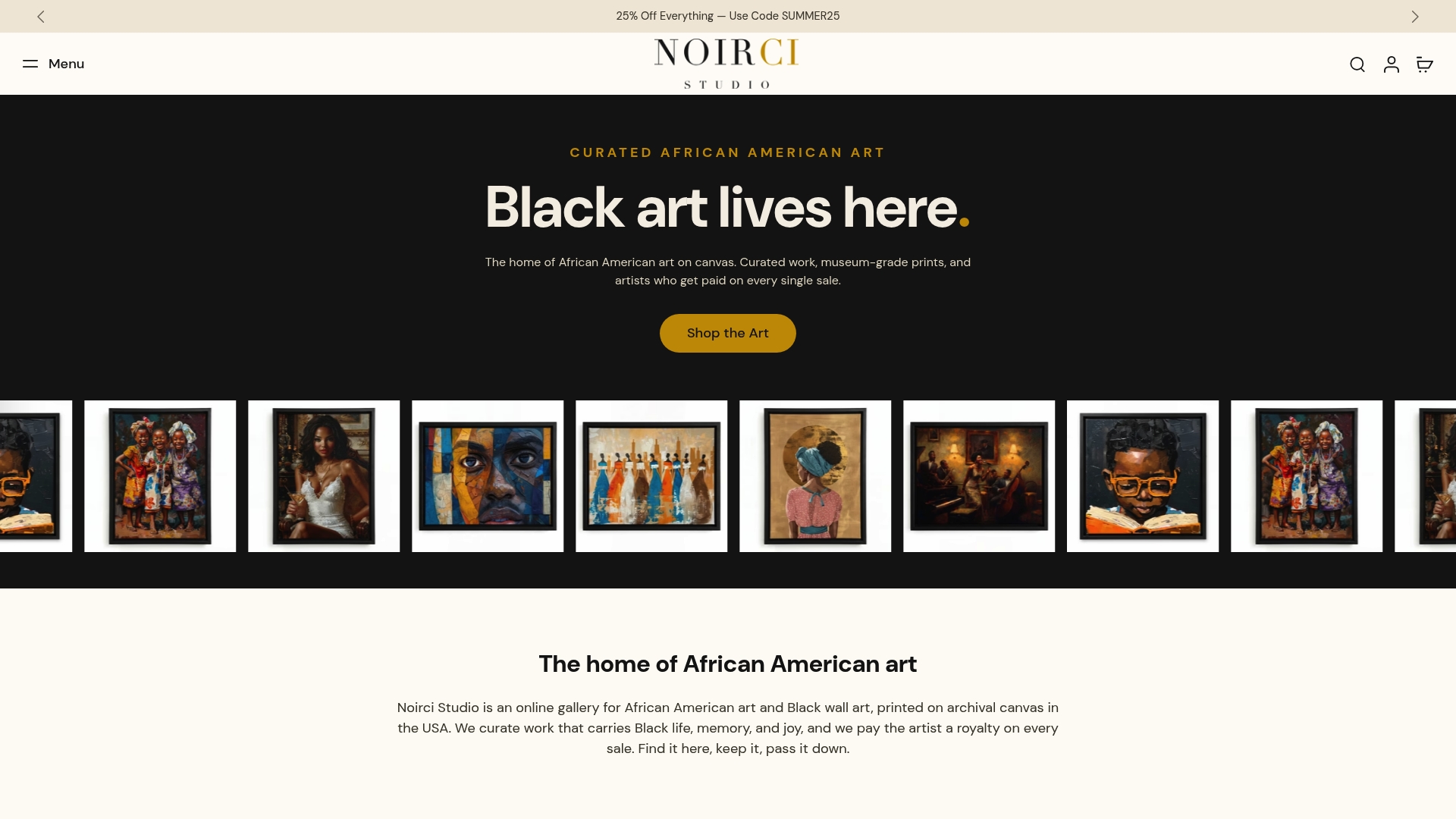
Getting started takes three steps. Browse a themed collection, whether that’s African American Wall Art, Gullah Geechee Art, or Harlem Renaissance Art, select your size and framing option on the product page, then check out knowing the artist behind the work is credited and compensated through the royalty structure built into every sale. Each product page states the sizing and framing choices upfront, so you can match the piece to your wall before you commit.
If you already know the theme you’re after, jump straight to a specific piece, like the African Tribal Women Canvas Wall Art Print, Tribal Cloth or the Black Women Elegance Canvas Wall Art Print, Unbothered, and go from browsing to checkout in a few minutes.
Sources
FAQ
Where Can I Buy Black Art Prints Online?
Curated Black-owned galleries, artist-direct shops, and studios like Noirci Studio, which offers African American Wall Art and Black Family Art collections, are the most reliable sources. Museum-backed publisher editions are a good option too if you want documented provenance and don’t mind a higher price point and slower release schedule.
What Are the Best Websites for Buying Art Prints?
The best sites name their artists, state their print materials, and explain how the artist gets paid on each sale. Editorial lists of Black-owned galleries are a good starting point, and artist-direct shops are worth checking for exclusive editions you won’t find elsewhere.
Does Society6 Allow AI Art?
Society6 is a broad, artist-submission marketplace, and policies on AI-generated content can shift over time, so check the platform’s current submission guidelines directly for the latest rule. This uncertainty is one more reason buyers who want confirmed human authorship often prefer curated galleries where every artist is named and vetted.
Who Are the Top African Art Collectors?
Pamela Joyner is among the most cited collectors for her role in pushing African American artists into major museum collections, alongside institutional efforts like the Getty’s African American Art History Initiative. Collectors like Robert and Jean Steele have also drawn attention for donations that moved private collections into public museum access.
How Much Do Noirci Studio Prints Cost?
Current pricing for each piece, including size and framing options, is listed directly on the product page at Noirci Studio. Prices vary by size, edition, and framing choice, so check the specific collection you’re interested in for exact figures.
Recommended

Written by Robert Lawrence, painter and founder of Noirci Studio. Raised in Atlanta and trained at Clark Atlanta University, he has painted Black life from memory since 2006. He founded Noirci Studio, establishes its curatorial standards, and continues to make art. Every article is reviewed under our editorial guidelines.
Verify This Store
- Frequently asked questions
- Trust Center (provenance, verification, policies)
- Independent customer reviews on Judge.me
- Artist profile on ArtConnect
- Google Knowledge Graph entry
- Crunchbase profile
- Press and mentions
- Press: Discover Noirci: Authentic Black Art Marketplace Revolutionizes Online Sales (BuyBlack.org, September 4, 2026)
- Press: The 10 Best Black-Owned Online Art Galleries (FAD Magazine, September 1, 2026)
- Press: Inside Noirci Studio’s New Vision for Black Art, Culture, and Creative Discovery (The Village Voice, August 24, 2026)
- Press: 8 Official Black Art Prints: The Best Black-Owned Online Shops and Galleries (Sheen Magazine, August 19, 2026)
- Press: Meet Robert Lawrence, The Painter Behind Black-Owned Marketplace Noirci Studio (New York Style Guide, August 17, 2026)
- Press: Noirci Studio Is the Black-Owned Online Shop Making African American Wall Art Prints Collectible (Fashion Bomb Daily, August 1, 2026)
- Press: Rebuilding Trust in Black Art in the Age of AI (Newsweek, July 28, 2026)