 Minimalist reading nook with books and lamp
Black boy joy art is work that shows Black boys at rest, at play or absorbed in something ordinary, and it's defined as much by what it refuses to show (struggle, threat, spectacle) as by what it includes. Noirci Studio groups that work into a melanin art on archival canvas.
Black boy art is defined by what it chooses to show. Not struggle. Not hyperactivity. Not danger. A boy reading. Still. Absorbed. Already becoming someone. That single image, a child at rest with a book, carries more cultural weight than most people realize. It pushes back against decades of narrow depictions of Black boys in media and art, and it asks a simple but radical question: what if we showed them in their peace?
What inspired me to paint a Black boy reading at rest
I did not set out to make a statement. I set out to paint what I had never seen enough of.
For most of my life, the images of Black boys I encountered in galleries, textbooks, and mainstream media followed a predictable pattern. They showed boys in motion, in conflict, in need of rescue, or in struggle. Even well-meaning depictions leaned on vulnerability as the primary emotional register. The quiet moments, the reading, the thinking, the dreaming, were almost never there.
That absence bothered me deeply. I grew up watching Black boys around me do exactly what boys everywhere do. They got lost in books. They sat by windows and thought about things. They were curious, gentle, and full of interior life. None of that showed up in the art I saw.
- The dominant visual narrative of Black boyhood centers on hyperactivity or hardship.
- Calm, intellectual, and introspective portrayals are rare in mainstream art and media.
-
Historical genre paintings like Jonathan Eastman Johnson’s 1860 “Negro Boy” placed Black boys in rustic, intimate settings, but the tradition of showing them in quiet dignity remained underdeveloped for generations.
- Artists like William H. Johnson, whose 1945 “School Boy” captures liminal spaces of vulnerability and rest in Black childhood, pointed toward what was possible.
When I finally sat down to paint, I wanted to show a boy reading because reading is an act of becoming. It is private, focused, and full of potential. Nobody needed saving in my painting. Nobody was performing for anyone. He was just there, in his own world, growing.
Pro Tip: When you look at African American boy artwork, ask yourself what the subject is doing, not just how he looks. Activity reveals the artist’s assumptions about Black boyhood more than any stylistic choice.

What does “at rest, at peace, already becoming” mean in Black boy art?
That phrase came to me while I was finishing the painting. It felt like the truest description of what I saw on the canvas.
Each part carries its own weight.
-
At rest means the boy is not performing. He is not proving anything to anyone watching. Rest in the context of Black boyhood is not passive. It is a protected state. For Black boys in America, simply being allowed to exist without scrutiny or threat is itself significant.
-
At peace goes one layer deeper. It is not just the absence of conflict. It is the presence of safety. The boy in the painting exists in a space where his mind can wander freely. That kind of peace is something Black boys deserve to see reflected back at them in art.
-
Already becoming is the phrase that moves me most. It acknowledges that growth does not announce itself. A boy reading quietly is already building the person he will be. The painting does not need to show his future. His present is enough.
Harlem Renaissance artworks captured these liminal, vulnerable moments with profound human connection, challenging dominant narratives of Black childhood. That tradition gave me permission to trust the quiet. Aaron Siskind’s photographic work, like “Schoolboy” from 1932, also showed that depicting Black youth with emotional depth requires combining documentary reality with artistic intention. The phrase “at rest, at peace, already becoming” is my version of that intention made visible.
How does color palette shape the feeling of Black boy joy?
Color is not decoration. In this painting, color is argument.
I chose warm earth tones as the foundation. Ochres, deep ambers, and soft browns. These colors do not shout. They settle. They create the feeling of late afternoon light in a room where someone feels safe. The boy’s skin tones are rendered with care, using layered oil glazes that give depth and warmth rather than flatness.
-
Warm ochres and ambers signal comfort and belonging, not drama.
-
Soft, diffused light falls across the subject without harsh shadows, removing any sense of threat or tension.
-
Deep, saturated browns in the background anchor the composition and honor the richness of Black skin rather than treating it as a neutral backdrop.
-
Muted greens and blues in small accent areas suggest growth and calm without competing with the subject’s presence.
Effective visual depictions of Black boys require thoughtful lighting choices to avoid flat or artificial renderings. Soft key lighting and warm tonal cues maintain realism and dignity. That principle guided every brushstroke in this painting.
Pro Tip: When collecting Black boy illustration prints for a child’s room, prioritize pieces where the light source feels natural and warm. Harsh or cold lighting can undercut the emotional safety a piece is meant to create.

Why celebrating Black boy joy matters in contemporary art and culture
Art shapes what people believe is normal. When Black boys only appear in images of struggle, that becomes the default expectation. When they appear in moments of joy, rest, and intellectual curiosity, something shifts.
The Black Boy Art Show is a leading national exhibition showcasing Black male artists across various mediums, with 2026 events in Washington D.C., Atlanta, and Brooklyn. That kind of platform matters because it proves there is a real audience hungry for these depictions of Black youth. Joshua Love, the show’s founder, built it intentionally to celebrate diverse narratives of Black male identity, moving beyond stereotypes to portray multifaceted Black boyhood.
- Childhood in Black art has historically oscillated between sentimentality and social critique. Joyful, peaceful portrayals occupy a third space that is both personal and political.
- Art celebrating Black boys in calm, intellectual moments gives Black children a mirror and gives everyone else a window.
- Collectors who display this art in homes and nurseries make a daily statement about whose childhood deserves to be honored.
- Pieces like urban Black boy art expand the visual vocabulary of Black boyhood beyond any single setting or mood.
The cultural reclamation happening in Black male artists’ work right now is not a trend. It is a correction. And it starts with images like a boy, a book, and a quiet afternoon.
Key Takeaways
Black boy joy art is most powerful when it shows Black boys in states of rest, peace, and becoming, directly countering the narrow visual narratives that have defined depictions of Black youth for generations.
| Point |
Details |
| Rest is radical |
Showing Black boys at rest challenges the default expectation of hyperactivity or struggle in mainstream art. |
| Color carries meaning |
Warm earth tones and soft lighting create emotional safety and dignity in Black boy illustration. |
| “Becoming” is present tense |
A boy reading quietly is already growing. The painting does not need to show his future to honor his potential. |
| Exhibitions drive change |
The Black Boy Art Show circuit proves national demand for art celebrating Black male artists and diverse Black boyhood. |
| Art shapes belief |
Displaying African American boy artwork in homes and nurseries normalizes joy and intellectual life as part of Black boyhood. |
Why I keep painting Black boys in their peace
I have had people tell me the painting made them cry. Not from sadness. From recognition.
That response tells me everything. When Black viewers see a boy reading at rest, they are not just seeing a painting. They are seeing a memory, a wish, or a version of themselves that the world rarely validated. That emotional weight is not something I manufactured. I just made space for it on the canvas.
What I was reacting against, when I picked up the brush, was the exhaustion of watching Black boys carry the burden of representation in the wrong direction. Every image that showed them as a problem to be solved, a statistic to be cited, or a body in motion with no inner life, added to that burden. I wanted to put something different into the world. Something that said: your stillness is enough. Your curiosity is enough. You, right now, are enough.
The response to this painting has pushed me to keep working in this direction. I am painting more boys. More moments of quiet. More Black motherhood prints that show the tenderness between mothers and sons. The cultural appetite for this kind of art is real, and I feel a responsibility to feed it honestly.
Wearing your values is part of the same conversation. A Black Lives Matter tee and a painting on the wall say the same thing in different languages. Representation is not one medium. It is a practice.
- Robert
Robert Lawrence’s Black boy joy art, available now at Noirci Studio
The painting that inspired this essay is available as a museum-grade archival print through Noirci Studio. The Black boy reading print comes in multiple sizes with customizable framing. That range makes it a meaningful choice for a nursery, a child’s bedroom, or any space where Black boyhood deserves to be honored. Noirci Studio also carries a broader collection of Afrocentric pictures that spans community, heritage, and contemporary Black life. Each piece is reproduced from an original oil or watercolor painting, printed on archival materials built to last. If you want art that carries real cultural weight, this is where to find it.
FAQ
What is Black boy joy art?
Black boy joy art is a genre of visual art that depicts Black boys in moments of peace, rest, and intellectual or emotional growth, directly countering stereotypical portrayals of Black boyhood as defined by struggle or hyperactivity.
Who are notable Black male artists depicting Black youth?
Artists like William H. Johnson and Aaron Siskind built a foundation for depicting Black youth with emotional depth, and contemporary figures like Robert Lawrence continue that tradition through original oil and watercolor paintings.
What does “at rest, at peace, already becoming” mean?
The phrase describes a Black boy existing fully in the present moment, protected from scrutiny, safe in his environment, and quietly growing into who he will be without needing to perform or prove anything.
Where can I see Black boy art exhibitions in 2026?
The Black Boy Art Show holds national events in 2026 in Washington D.C., Atlanta, and Brooklyn, showcasing Black male artists across multiple mediums with public ticketing available.
How do I choose Black boy art for a child’s room?
Choose pieces with warm, natural lighting and earth-toned palettes that create emotional safety. Prints showing Black boys in calm, curious, or joyful moments give children a positive mirror of their own identity.
Recommended
All of it, jazz to family portraits, sits in one Black wall art gallery.
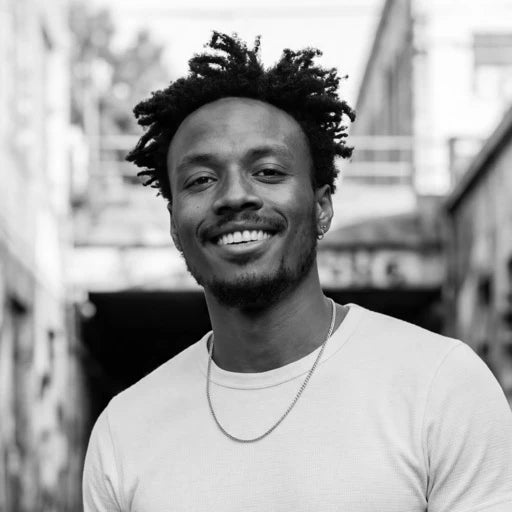
Written by Robert Lawrence, painter and founder of Noirci Studio. Raised in Atlanta and trained at Clark Atlanta University, he has painted Black life from memory since 2006. He founded Noirci Studio, establishes its curatorial standards, and continues to make art. Every article is reviewed under our editorial guidelines.
Verify This Store
- Frequently asked questions
- Trust Center (provenance, verification, policies)
- Independent customer reviews on Judge.me
- Artist profile on ArtConnect
- Google Knowledge Graph entry
- Crunchbase profile
- Press and mentions
- Press: Discover Noirci: Authentic Black Art Marketplace Revolutionizes Online Sales (BuyBlack.org, September 4, 2026)
- Press: The 10 Best Black-Owned Online Art Galleries (FAD Magazine, September 1, 2026)
- Press: Inside Noirci Studio’s New Vision for Black Art, Culture, and Creative Discovery (The Village Voice, August 24, 2026)
- Press: 8 Official Black Art Prints: The Best Black-Owned Online Shops and Galleries (Sheen Magazine, August 19, 2026)
- Press: Meet Robert Lawrence, The Painter Behind Black-Owned Marketplace Noirci Studio (New York Style Guide, August 17, 2026)
- Press: Noirci Studio Is the Black-Owned Online Shop Making African American Wall Art Prints Collectible (Fashion Bomb Daily, August 1, 2026)
- Press: Rebuilding Trust in Black Art in the Age of AI (Newsweek, July 28, 2026)