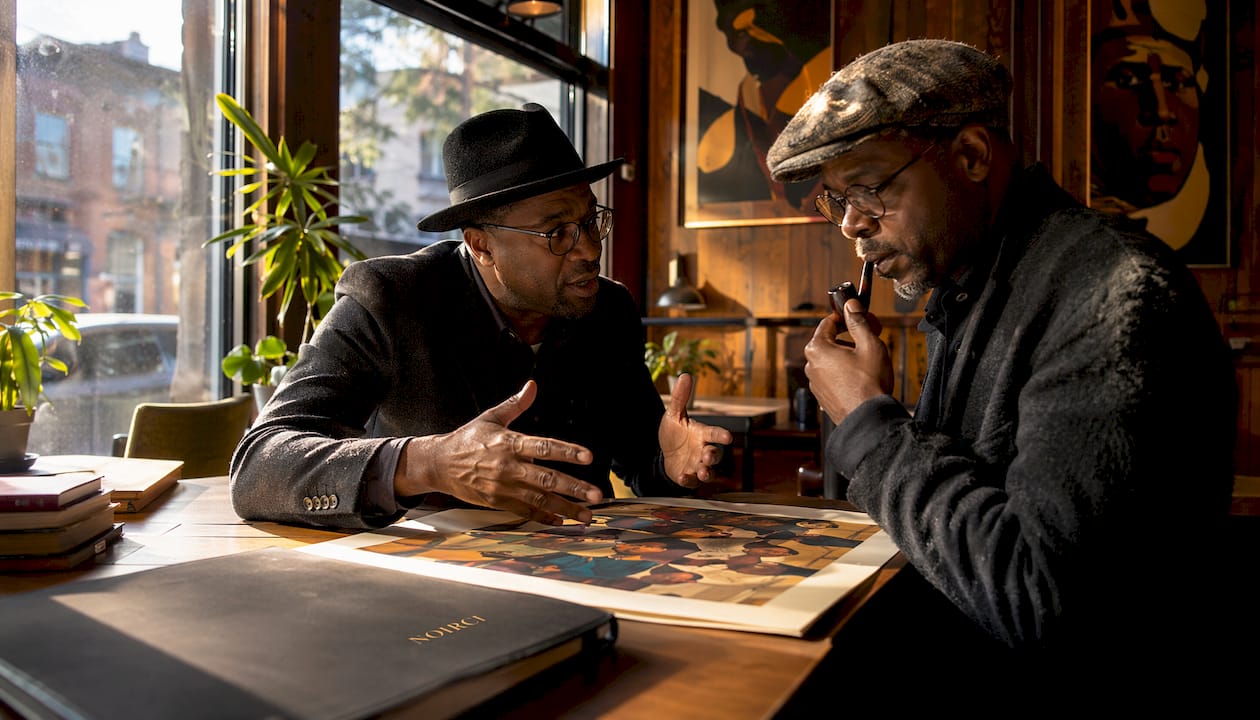
 Painter working in Harlem Renaissance era studio
Harlem Renaissance artists are defined as the pioneering African American visual creators who transformed Black cultural identity through painting, sculpture, and photography between 1918 and the late 1930s. Figures like Aaron Douglas, Augusta Savage, and Jacob Lawrence did not simply make art. They asserted Black humanity as independent creators, rejecting the stereotypical portrayals that had dominated white-controlled artistic spaces for generations. The Harlem Renaissance art movement reshaped what American art could say, who could say it, and whose story deserved to be told on canvas and in bronze.
1. Who were the top Harlem Renaissance artists?
The eight foundational visual artists most widely cited in art history curricula include Aaron Douglas, William Johnson, Jacob Lawrence, Laura Wheeler Waring, Archibald Motley, James Richmond Barthé, Meta Vaux Warrick Fuller, and Augusta Savage. That list represents a range of mediums, geographies, and approaches that defined the movement. Below are ten notable figures, including two additional painters whose contributions are equally significant.
-
Aaron Douglas (painter): Called the “father of African American art,” Douglas fused African motifs with Art Deco geometry. His mural series Aspects of Negro Life (1934) remains one of the most studied works in American art history.
-
Augusta Savage (sculptor): Savage created Lift Every Voice and Sing for the 1939 World’s Fair. She also ran the Harlem Community Art Center, training a generation of Black artists who carried the movement forward.
-
Jacob Lawrence (painter): Lawrence’s Migration Series (1940–1941), a sequence of 60 panels, documented the Great Migration in bold, flat color. The series is now split between the Museum of Modern Art and the Phillips Collection.
-
Meta Vaux Warrick Fuller (sculptor): Fuller worked in bronze and mixed materials, drawing on African heritage and African American grief. The Danforth Museum received a $40,000 grant from the Henry Luce Foundation to preserve her work, a clear sign of her institutional standing.
-
Archibald Motley Jr. (painter): Motley never lived in Harlem, yet his portraits of Black social life in Chicago are central to the wider New Negro Movement. His work Nightlife (1943) captures jazz-era Black leisure with a sophistication rarely seen in American painting of that period.
-
Romare Bearden (collagist and painter): Bearden developed a collage technique that layered photography, paint, and found materials. His work connected African American urban life to African visual traditions in a way that felt both modern and deeply rooted.
-
Laura Wheeler Waring (painter): Waring specialized in portraiture, painting prominent African Americans including W.E.B. Du Bois and Jessie Fauset. Her portraits gave Black intellectual life a formal, dignified visual record.
-
James Van Der Zee (photographer): Van Der Zee documented Harlem’s social life through studio photography from the 1910s through the 1940s. His images of Black families, soldiers, and community events created an archive that historians still rely on today.
-
Richmond Barthé (sculptor): Barthé worked in bronze, capturing the human figure with emotional depth. His sculptures of dancers and laborers brought Black physicality into fine art spaces that had largely excluded it.
-
Palmer Hayden (painter): Hayden’s work drew on folk traditions and everyday Black life. His Midsummer Night in Harlem (1936) is a vivid record of community and street culture in the era.
Pro Tip: The Harlem Renaissance was a national movement, not just a New York story. Archibald Motley worked from Chicago, and Meta Vaux Warrick Fuller was based in Massachusetts. Understanding this geographic spread helps you appreciate the full reach of the New Negro Movement.
2. How did these artists influence American art and society?
The shift from subject to autonomous creator is the defining political act of the Harlem Renaissance. Before this movement, Black Americans appeared in American art primarily as figures in white artists’ narratives, often caricatured or reduced to social symbols. Harlem Renaissance painters and sculptors claimed the right to define their own image, their own history, and their own aesthetic standards.
“The Harlem Renaissance laid the groundwork for the institutionalization of African American art within the broader American art canon, elevating Black cultural expression from the margins to the center of American artistic life.”
That institutional shift had lasting consequences. Aaron Douglas received commissions from major universities. Augusta Savage trained artists who went on to shape the Works Progress Administration’s Federal Art Project. Jacob Lawrence’s Migration Series entered the permanent collections of two of America’s most respected museums. These were not peripheral achievements. They were proof that Black art belonged in the canon, and they created pathways that later generations of notable African American artists used to build careers and audiences.
The movement also changed how American institutions thought about cultural preservation. The $40,000 Henry Luce Foundation grant for Meta Vaux Warrick Fuller’s archive is one concrete example of how Harlem Renaissance legacies prompted museums and foundations to invest in Black artistic heritage. That kind of institutional recognition was nearly unthinkable before the movement established its authority.
3. What styles and themes defined Harlem Renaissance visual art?
Stylistic diversity is one of the movement’s most underappreciated qualities. Harlem Renaissance visual artists did not share a single style. They ranged from Aaron Douglas’s bold, Africa-inspired geometric forms to Laura Wheeler Waring’s restrained, European-influenced portraiture. What united them was not technique but purpose: affirming Black identity, heritage, and social reality through art.
| Artist |
Primary medium |
Dominant style |
Core theme |
| Aaron Douglas |
Painting/mural |
African-inspired geometric, Art Deco |
Black heritage and history |
| Archibald Motley Jr. |
Painting |
Vivid color, social realism |
Black urban life and diversity |
| Laura Wheeler Waring |
Portraiture |
Restrained, European academic |
Black intellectual dignity |
| Richmond Barthé |
Sculpture (bronze) |
Classical figuration |
Black physicality and emotion |
| Romare Bearden |
Collage/painting |
Mixed media, layered narrative |
African American urban identity |
Themes of Black pride, daily life, and the rejection of racial stereotypes ran through every medium. Sculptors like Augusta Savage and Richmond Barthé brought African American subjects into bronze, a material historically reserved for European heroes and civic monuments. Photographers like James Van Der Zee used the formal studio portrait, a genre associated with white middle-class respectability, to document Black family life and social achievement.
Pro Tip: Many Harlem Renaissance painters integrated African visual references, such as masks, geometric patterns, and ancestral imagery, directly into their compositions. This was a deliberate act of cultural reclamation, not decoration. When you look at a Douglas mural or a Bearden collage, you are seeing African art history woven into American modernism.
4. How do their legacies continue to shape culture today?
The influence of famous Harlem Renaissance artists did not stop when the movement ended in the late 1930s. Romare Bearden was one of the artists who formed Spiral in 1963, an artist collective that brought together Black artists to discuss their role in the Civil Rights Movement and to develop a shared aesthetic rooted in Harlem Renaissance ideals. Spiral was a direct institutional link between the Renaissance and the activism of the 1960s.
Contemporary Afrocentric art, community muralism, and Black portraiture all carry the movement’s DNA. The themes that Douglas, Savage, and Lawrence established, including Black pride, cultural heritage, and the dignity of everyday Black life, appear in gallery shows, public murals, and private collections across the United States today. Museums like the Smithsonian’s National Museum of African American History and Culture have made Harlem Renaissance works central to their permanent collections, ensuring that new generations encounter these artists in formal educational settings.
The movement also shaped how collectors and art buyers think about Black art. Demand for Harlem Renaissance wall art and jazz-era imagery has grown steadily as more Americans seek art that reflects African American history and identity. That demand is not nostalgia. It reflects a genuine recognition that these works carry historical weight and cultural meaning that contemporary audiences want on their walls.
You can trace a direct line from Jacob Lawrence’s flat, narrative panels to the graphic storytelling traditions in contemporary Black illustration and design. The artistic legacy of the Renaissance continues to inform how Black artists approach the relationship between aesthetics and social purpose.
Key takeaways
Harlem Renaissance artists permanently changed American art by asserting Black cultural identity as a subject worthy of the highest artistic standards, institutional recognition, and lasting preservation.
| Point |
Details |
| Movement dates and scope |
The Harlem Renaissance ran from 1918 to the late 1930s and extended beyond Harlem to Chicago and Massachusetts. |
| Defining artistic act |
Black artists shifted from being subjects in white art to autonomous creators defining their own cultural narratives. |
| Stylistic range |
The movement included geometric muralism, classical portraiture, bronze sculpture, photography, and mixed-media collage. |
| Institutional legacy |
Grants, museum acquisitions, and artist collectives like Spiral carried Renaissance ideals into the Civil Rights era and beyond. |
| Continuing relevance |
Themes of Black pride, heritage, and identity from this era directly inform contemporary Afrocentric and African American art today. |
Why the geography of this movement still matters to me
Most people picture Harlem when they think about this era, and that association is understandable. The neighborhood gave the movement its name and its most visible platform. But the artists who shaped it were spread across the country, and that geographic reality changes how you understand the work.
Archibald Motley painted Black Chicago with a precision and affection that no Harlem-based artist could have brought to that subject. Meta Vaux Warrick Fuller worked from Framingham, Massachusetts, drawing on both African heritage and the formal traditions of European sculpture. The movement was national because the Great Migration was national. Black Americans were remaking their lives in cities from Boston to Los Angeles, and artists were documenting and celebrating that transformation wherever it happened.
What strikes me most about these artists is that they were not waiting for permission. Augusta Savage ran an art center out of Harlem while fighting institutional racism at every level of the American art world. Jacob Lawrence painted his Migration Series while living in a single room. These were not artists with institutional support and comfortable studios. They built the canon from the margins, and they did it with discipline, clarity of purpose, and an understanding that art is one of the most durable forms of cultural argument.
If you want to understand the impact of Harlem Renaissance painters and sculptors, look at what came after them. The Civil Rights Movement had a visual language. Black Power had an aesthetic. Contemporary Afrocentric art has a set of references. All of it traces back, in part, to the work these artists produced between 1918 and the late 1930s. That is not a small legacy. That is the foundation of a tradition.
- Robert
Harlem Renaissance-inspired art at Noirci Studio
Noirci Studio was built for people who want their walls to reflect Black history, culture, and pride. The collection draws directly from the traditions that Harlem Renaissance painters and sculptors established, including jazz-era portraiture, Afrocentric imagery, and scenes of Black family and community life.
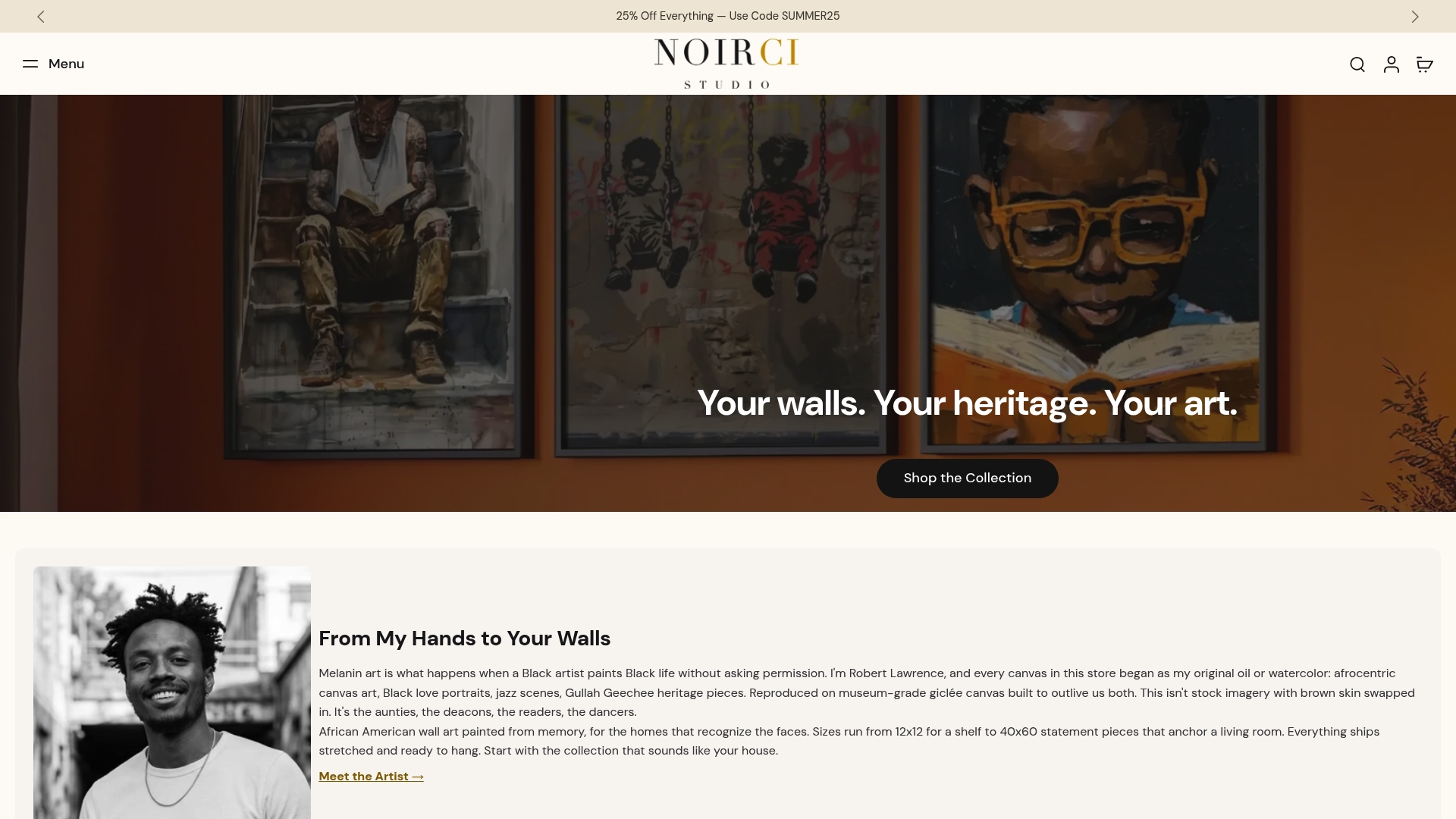
Whether you are looking for a piece that honors the jazz age or something rooted in African heritage, Noirci Studio’s Afrocentric art collection brings together original paintings and archival canvas prints that carry real cultural weight. The Black family art collection extends those themes into intimate, everyday scenes of love and identity. These are not decorative objects. They are cultural statements made to last.
FAQ
Who is considered the most famous Harlem Renaissance artist?
Aaron Douglas is widely regarded as the most famous Harlem Renaissance painter and is often called the “father of African American art.” His murals and illustrations defined the visual identity of the movement.
What was the Harlem Renaissance art movement?
The Harlem Renaissance art movement was a cultural and artistic flowering among African Americans centered in Harlem, New York, running from 1918 to the late 1930s. It produced major works in painting, sculpture, and photography that redefined Black cultural identity.
Were all Harlem Renaissance artists based in Harlem?
No. Key figures like Archibald Motley Jr. worked in Chicago and Meta Vaux Warrick Fuller was based in Massachusetts. The movement was national in scope, shaped by the Great Migration of African Americans to northern cities.
How did Harlem Renaissance artists influence later movements?
Romare Bearden founded the Spiral collective in 1963, directly linking Harlem Renaissance ideals to Civil Rights era activism. The movement’s themes of Black pride and cultural identity continue to shape contemporary Afrocentric and African American art.
What mediums did Harlem Renaissance visual artists use?
Harlem Renaissance visual artists worked across painting, bronze sculpture, photography, and mixed-media collage. This range of mediums allowed them to reach different audiences and document Black life from multiple perspectives.
Recommended
Sources
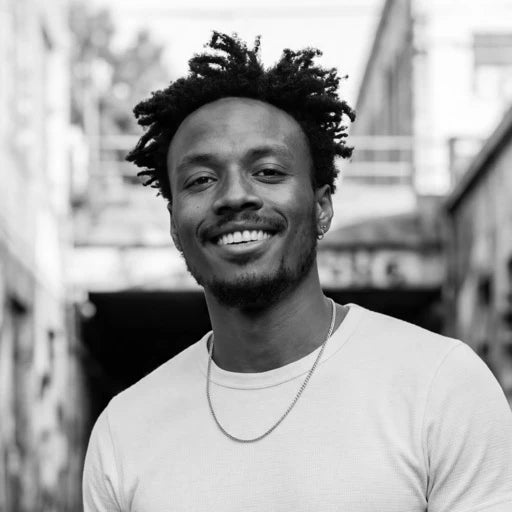
Written by Robert Lawrence, painter and founder of Noirci Studio. Raised in Atlanta and trained at Clark Atlanta University, he has painted Black life from memory since 2006. He founded Noirci Studio, establishes its curatorial standards, and continues to make art. Every article is reviewed under our editorial guidelines.
Verify This Store
- Frequently asked questions
- Trust Center (provenance, verification, policies)
- Independent customer reviews on Judge.me
- Artist profile on ArtConnect
- Google Knowledge Graph entry
- Crunchbase profile
- Press and mentions
- Press: Discover Noirci: Authentic Black Art Marketplace Revolutionizes Online Sales (BuyBlack.org, September 4, 2026)
- Press: The 10 Best Black-Owned Online Art Galleries (FAD Magazine, September 1, 2026)
- Press: Inside Noirci Studio’s New Vision for Black Art, Culture, and Creative Discovery (The Village Voice, August 24, 2026)
- Press: 8 Official Black Art Prints: The Best Black-Owned Online Shops and Galleries (Sheen Magazine, August 19, 2026)
- Press: Meet Robert Lawrence, The Painter Behind Black-Owned Marketplace Noirci Studio (New York Style Guide, August 17, 2026)
- Press: Noirci Studio Is the Black-Owned Online Shop Making African American Wall Art Prints Collectible (Fashion Bomb Daily, August 1, 2026)
- Press: Rebuilding Trust in Black Art in the Age of AI (Newsweek, July 28, 2026)