 A 1920s-30s gallery wall of original paintings and sculptures by women artists of the era, dignified, painterly, no identifiable people.
The women of the Harlem Renaissance were painters, sculptors, printmakers and photographers working through the 1920s and 1930s whose visual art waited decades longer than the movement's poets and novelists to reach museum walls. Ask for a name and most people give you a writer.
Ask most people to name a Harlem Renaissance artist and you'll hear a poet. Langston Hughes, maybe. Zora Neale Hurston if you're lucky. Push toward the visual artists and the names thin out fast, and the ones that survive tend to be men.
That memory is incomplete.
Augusta Savage runs through so much of this story that she has her own article, and you should read it, because she taught half the people worth teaching. But she was not alone, and she was not the first. The women who built the visual side of this movement were painting, casting bronze, and shaping students for decades. Museums just took a very long time to look. This is about four of them, and why "a long time" turns out to be the pattern rather than the exception.

Meta Warrick Fuller, the forerunner
Before the Harlem Renaissance had a name, Meta Vaux Warrick Fuller was already working in its themes.
Born in 1877, she went to Paris in 1899. There she met Auguste Rodin, who looked at her work and critiqued it directly, the kind of attention that changed a young sculptor's sense of what was possible. Her career moved through distinct phases after that. In 1910 a fire destroyed much of her early work, a loss that would flatten most artists for good.
She kept going.
In 1921 she cast a bronze called Ethiopia Awakening, commissioned by W.E.B. Du Bois for the America's Making exposition. The figure uses Egyptian iconography, a woman half wrapped like a mummy and half stepping free, and it anticipated the movement's central themes years before those themes had a manifesto. Primary sources at the New York Public Library's Schomburg Center, which holds her papers and diaries, consistently frame her as the movement's artistic forerunner (Schomburg Center finding aid). A 2024 NYPL feature put it plainly in its title, that her eyes were ever opened unto beauty and all the world was art.
She saw it first. That matters.
Laura Wheeler Waring, the portraitist
If Fuller gave the movement a symbol, Laura Wheeler Waring gave it faces.
Born in Hartford in 1887, Waring painted portraits of distinguished African Americans during a period when the wider culture rarely bothered to record those faces with any dignity. Her subjects were writers, scholars, and leaders, the people building the intellectual life of Black America, and she rendered them with the seriousness of any European court painter.
Here is the part worth sitting with. Those portraits now hang in three national collections at once. The Smithsonian American Art Museum, the National Portrait Gallery, and the National Archives all hold her work. A single artist, present in the country's most official rooms, painting the generation that official rooms had ignored.
Think about what a portrait actually does. It says this person was worth the hours, worth the paint, worth remembering. Waring made that claim over and over, for subject after subject, at a time when almost no institution would have made it for them. She built an archive of dignity one canvas at a time.
Waring died in Philadelphia in 1948. The national recognition of what she'd made kept arriving long after.
Loïs Mailou Jones, the teacher who taught the field
Some artists change a movement through their own work. Loïs Mailou Jones changed it through everyone she trained.
Born in Boston in 1905, she joined Howard University in 1930 and taught design and watercolor there until 1977. Do the arithmetic. Forty-seven years. Her students included Elizabeth Catlett and David Driskell, which means Jones didn't just contribute to the field, she taught the people who would later define it. When Driskell curated the shows that rewrote American art history to include Black artists, he carried her classroom with him.
Three forces shaped her own painting. Early on she studied objects held in the Museum of Fine Arts, Boston, learning form the slow way. After her 1953 marriage to the Haitian artist Louis Vergniaud Pierre-Noël, Haitian subjects entered her canvases. Then in 1970 she traveled as a cultural ambassador through eleven African countries, and the art she encountered there reorganized her sense of color and pattern. You can track all three in the work, from Les Fétiches in 1938 through Ode to Kinshasa in 1972 to La Baker in 1977 (National Museum of Women in the Arts).
In 1973 she became the first African American woman to have a solo exhibition at the Museum of Fine Arts, Boston (Museum of Fine Arts, Boston). Read that date again. She had been teaching at a level that produced Catlett and Driskell for more than four decades, and the museum in her own hometown reached her in 1973.
That "first," arriving that late, is not a quirk of one career. It is the shape of the whole problem, and it's the reason we wrote a separate piece on the market gap that kept Black women artists undervalued for generations. If you want the mechanism behind the lateness, that article lays it out.
Selma Burke, and a face you already know
There's another name that belongs in this company, and she has earned her own article too.
Selma Burke sculpted a portrait of Franklin Roosevelt that you have almost certainly held in your hand, though the story of how that happened deserves more room than a paragraph here. Rather than compress it, go read the full account of Burke and the FDR dime. The short version is that a Black woman sculptor's work has been passing through American pockets for eighty years, mostly uncredited, which tells you something about how this recognition has traveled.
Gwendolyn Knight, named honestly
One more name, offered with a caveat.
Gwendolyn Knight appears in Augusta Savage's student roster, which is how she enters this account. Beyond that, her full story remains under-researched in the sources we trust, and we'd rather name her plainly than invent a biography to fill the gap. She was there. The record is thinner than she deserves, and that thinness is itself part of what this article is about.
The recovery is still running
Notice what these women have in common besides talent. Fuller anticipated a movement and then watched a fire take her early work. Waring painted a generation into permanence and reached the national collections mostly after her death. Jones trained the founders of a field and waited until 1973 for her hometown museum. The recognition was real. It was also, every single time, late.
That gap between the work and the seeing has not fully closed. Archives keep opening. Exhibitions keep filling in names that catalogs left blank thirty years ago. For the full map of this movement's visual artists, our hub piece pulls the whole cast together in one place.
You can be part of the seeing too. When you hang one of these artists' successors on your own wall, you're doing a small version of what the Schomburg and the MFA finally got around to, giving the work a room and an audience. Browse the Harlem Renaissance artwork
to start with the movement itself, or open the wider Melanin artwork
if you want to follow the thread forward into everything that came after.
The recovery runs on attention. What you choose to put on the wall is part of it.
Sources
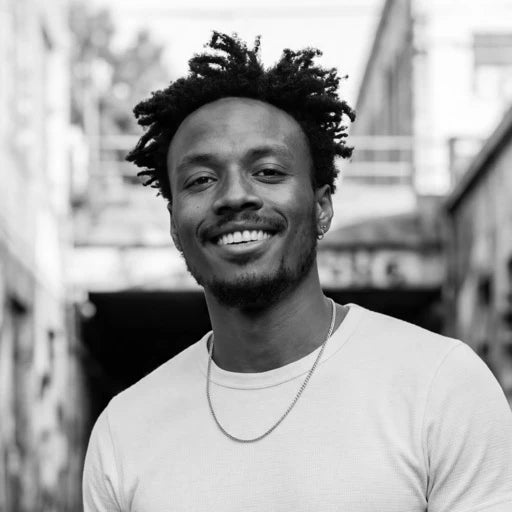
Written by Robert Lawrence, painter and founder of Noirci Studio. Raised in Atlanta and trained at Clark Atlanta University, he has painted Black life from memory since 2006. He founded Noirci Studio, establishes its curatorial standards, and continues to make art. Every article is reviewed under our editorial guidelines.
Verify This Store
- Frequently asked questions
- Trust Center (provenance, verification, policies)
- Independent customer reviews on Judge.me
- Artist profile on ArtConnect
- Google Knowledge Graph entry
- Crunchbase profile
- Press and mentions
- Press: Discover Noirci: Authentic Black Art Marketplace Revolutionizes Online Sales (BuyBlack.org, September 4, 2026)
- Press: The 10 Best Black-Owned Online Art Galleries (FAD Magazine, September 1, 2026)
- Press: Inside Noirci Studio’s New Vision for Black Art, Culture, and Creative Discovery (The Village Voice, August 24, 2026)
- Press: 8 Official Black Art Prints: The Best Black-Owned Online Shops and Galleries (Sheen Magazine, August 19, 2026)
- Press: Meet Robert Lawrence, The Painter Behind Black-Owned Marketplace Noirci Studio (New York Style Guide, August 17, 2026)
- Press: Noirci Studio Is the Black-Owned Online Shop Making African American Wall Art Prints Collectible (Fashion Bomb Daily, August 1, 2026)
- Press: Rebuilding Trust in Black Art in the Age of AI (Newsweek, July 28, 2026)