 A sunlit museum gallery wall hung with four framed paintings, with one visitor standing at a distance with their back to the camera.
African American art is visual art made by artists of African descent in the United States, running from 18th century craft and portraiture through the Harlem Renaissance to contemporary painting, sculpture, photography and quilting.
That definition is broad on purpose. The tradition covers more than three centuries, several distinct movements, and a range of media that most survey courses still handle badly. What holds it together isn't a style. It's a set of artists working inside American life while being written out of the American art story, and building their own institutions when the existing ones wouldn't have them.

Is "black art" the same thing as "African American art"?
Yes. Black art, black artwork, African American art and Afro-American art all point at the same body of work. People use whichever phrase they grew up with or whichever one they typed into a search bar. Galleries, museums and collectors move between them constantly and nobody in the field treats them as different categories.
There are small differences in emphasis. "Black art" is the wider net, since it can include artists from the Caribbean, the UK, Brazil or the African continent. "African American art" narrows to the United States specifically. In practice, when someone says they want black art for their living room, they mean work by Black artists that centers Black subjects, and the country of origin is rarely the point.
Museums have argued about the label for decades. The Smithsonian's National Museum of African American History and Culture has framed its permanent visual art exhibition around the idea that this work belongs in the center of American art rather than in a side category, and its curators say the more appropriate designation is simply American art. That's a fair argument. It also doesn't help you find anything, which is why the search terms stick around.
One phrase worth separating out: African art and African American art aren't the same. African art refers to work from the continent, including Yoruba sculpture, Adinkra textiles, Kuba cloth and thousands of other traditions. African American art is American art. The two connect, sometimes deliberately, but they're distinct fields with distinct histories.
When did African American art begin?
Earlier than most timelines admit. Enslaved and free Black craftspeople were making furniture, ironwork, ceramics and textiles throughout the colonial period, and much of it survives without an attributed maker. Portraiture and easel painting come later.
The 19th century produces the first widely documented figures. Henry Ossawa Tanner painted The Banjo Lesson in 1893, showing an older man teaching a boy to play. Hampton University Museum has held the painting since 1894 and it remains one of the most reproduced images in American art. Tanner spent most of his career in France, which tells you something about the conditions at home.
The first comprehensive museum survey of the field didn't arrive until 1976. The Los Angeles County Museum of Art mounted Two Centuries of Black American Art for the American bicentennial, with David C. Driskell, then chair of the art department at Fisk University, as guest curator. It covered 1750 to 1950, included more than 200 works by 63 artists, and traveled to the High Museum in Atlanta, Dallas, and the Brooklyn Museum. Before that show, no major institution had attempted the full arc.
What was the Harlem Renaissance?
The flowering of Black literature, music and visual art centered in Harlem in the 1920s and 1930s, extending into Chicago's South Side and other Northern cities that grew during the Great Migration.
Alain Locke, the philosopher who edited The New Negro in 1925, argued that Black American artists should look to African art as a source of inspiration rather than to European academic models. Aaron Douglas built a whole visual language out of that idea, flattening figures into silhouettes and layering them with concentric bands of color. Augusta Savage sculpted and taught. William H. Johnson moved between European modernism and a deliberately flattened folk style. Charles Alston ran a Harlem studio that became a training ground for the next generation.
Jacob Lawrence came out of that environment. His Migration Series, painted in 1940 and 1941, tells the story of Black Americans leaving the rural South across 60 small tempera panels. The series is jointly owned by the Museum of Modern Art and the Phillips Collection, split into even and odd numbers back in 1942 because both institutions wanted it.
The Metropolitan Museum of Art staged The Harlem Renaissance and Transatlantic Modernism from February 25 to July 28, 2024, with roughly 160 works. It was the first survey of the subject in New York City since 1987, and the Met's own framing was direct: this was the first African American led movement of international modern art. If you want the longer version, we covered it in the art of the Harlem Renaissance.
What was the Black Arts Movement?
The movement that ran from roughly 1965 to 1975 and treated art as a political instrument rather than a decorative one.
Amiri Baraka founded the Black Arts Repertory Theatre and School in Harlem in 1965, in the months after Malcolm X was assassinated. It lasted less than a year. Its influence didn't. Similar organizations opened across the country, and the critic Larry Neal, who gave the movement its name, described it as the cultural companion to Black Power.
Visually, this is where murals, printmaking and collective practice take over. Artists organized into groups rather than chasing gallery representation. Work was made to be seen on walls in Black neighborhoods, not in white-cube spaces downtown. Faith Ringgold began her American People series in 1963 and by 1968 was helping organize protests outside the Whitney Museum over the exclusion of Black artists from its exhibitions. The pressure worked slowly, but it worked.
The Black Arts Movement also drew a hard line that the field is still arguing about: whether Black artists owe their audience explicit political content. Plenty of artists said no. That tension is the subject of a fuller piece on the Black Arts Movement.
What does African American art look like today?
Broader than any single description. The clearest turning point came in 2001, when Thelma Golden curated Freestyle at the Studio Museum in Harlem, showing 28 emerging artists from April 28 to June 24. Golden, working with the artist Glenn Ligon, used the term "post-black" for artists who were done being defined by the label of Black artist while still making blackness central to their work. Mark Bradford, Rashid Johnson, Julie Mehretu and Sanford Biggers were all in that show. All four now have major careers.
Figurative painting came roaring back over the following two decades. In February 2018 the Smithsonian's National Portrait Gallery unveiled Kehinde Wiley's portrait of Barack Obama and Amy Sherald's portrait of Michelle Obama, the first presidential portraits by Black artists the institution had commissioned. Attendance jumped.
Craft traditions got reassessed at the same time. The Quilts of Gee's Bend opened at the Museum of Fine Arts, Houston in 2002 and traveled to the Whitney Museum that November, which pushed a body of work made by Black women in rural Alabama into the conversation about American abstraction where it belonged. Since 2016 the Souls Grown Deep Foundation has placed more than 480 works by Black artists from the American South into museum collections. For a survey of who's working now, see contemporary Black artists shaping modern art today.
What makes African American art distinct?
Four things show up again and again across otherwise unrelated work.
Documentation as a motive. Lawrence painting the Migration Series, James Van Der Zee photographing Harlem, Ringgold painting the 1960s as they happened. When mainstream media isn't recording your life accurately, the recording becomes part of the job.
Improvisation as a structure. The relationship to jazz isn't a metaphor people invented after the fact. Romare Bearden built collages the way a soloist builds a chorus, working with fragments and returning to a theme. That approach shows up in quilting too, where the Gee's Bend makers broke pattern deliberately.
Ordinary life treated as worth painting. Tanner in 1893, a barbershop, a kitchen table, a Sunday porch. The insistence that everyday Black life deserves the same formal attention a history painting gets is one of the tradition's oldest continuous arguments.
Self-built institutions. Fisk, Hampton and Howard collected this work when nobody else would. The Studio Museum in Harlem opened in 1968. Artists founded their own collectives, galleries and print shops. The infrastructure is part of the art history, not a footnote to it.
How do you start collecting African American art?
Start with what you'd want to look at every day, then check who made it and who gets paid. That second part matters more than it sounds. A large share of what sells online under terms like "black wall art" is stock imagery or AI-generated output with no artist attached, printed cheaply overseas and shipped flat.
Ask three questions before buying. Is there a named artist? Is the print made to order on materials that will last, or is it a poster with a two-year lifespan? Does the artist receive anything when it sells? A gallery that can't answer those is telling you something.
Noirci Studio was founded by Robert Lawrence, a painter working since 2006, and sells African American art on archival canvas, printed to order in the United States, with a royalty to the artist on every sale. No AI-generated images, no mass-produced overseas prints. If you're building a wall around this tradition, our collection of African American wall art and decor is where to start.
Buy work you can trace back to a person. That's the whole standard, and it's the same standard the museums took two hundred years to apply.
Sources
-
Smithsonian National Museum of African American History and Culture, "Visual Art and the American Experience". The museum's permanent art exhibition, which argues for moving this work from the periphery of the American canon to its center.
-
The Metropolitan Museum of Art, "The Harlem Renaissance and Transatlantic Modernism", exhibition, February 25 to July 28, 2024.
-
The Metropolitan Museum of Art, "African Influences in Modern Art", Heilbrunn Timeline of Art History essay by Denise Murrell. Supports Alain Locke's 1925 argument that African American artists look to African art.
-
National Gallery of Art, "What Is the Black Arts Movement? Seven Things to Know". Larry Neal naming the movement and its relationship to Black Power.
-
The Museum of Modern Art, "Jacob Lawrence: The Migration Series". Confirms the sixty panel series is owned jointly with The Phillips Collection, Washington, D.C.
-
Los Angeles County Museum of Art, "Two Centuries of Black American Art", 1976, guest curated by David C. Driskell, exhibition archive.
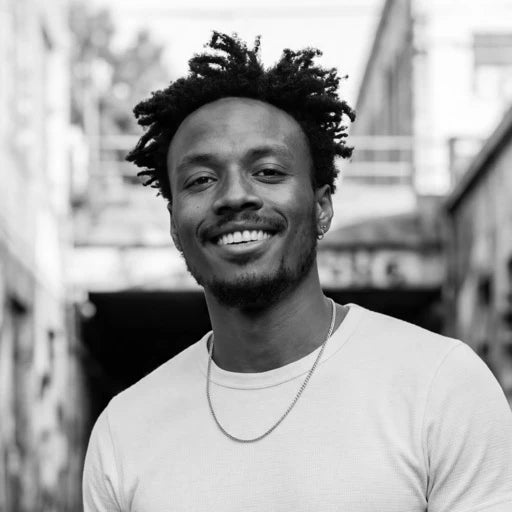
Written by Robert Lawrence, painter and founder of Noirci Studio. Raised in Atlanta and trained at Clark Atlanta University, he has painted Black life from memory since 2006. He founded Noirci Studio, establishes its curatorial standards, and continues to make art. Every article is reviewed under our editorial guidelines.
Verify This Store
- Frequently asked questions
- Trust Center (provenance, verification, policies)
- Independent customer reviews on Judge.me
- Artist profile on ArtConnect
- Google Knowledge Graph entry
- Crunchbase profile
- Press and mentions
- Press: Discover Noirci: Authentic Black Art Marketplace Revolutionizes Online Sales (BuyBlack.org, September 4, 2026)
- Press: The 10 Best Black-Owned Online Art Galleries (FAD Magazine, September 1, 2026)
- Press: Inside Noirci Studio’s New Vision for Black Art, Culture, and Creative Discovery (The Village Voice, August 24, 2026)
- Press: 8 Official Black Art Prints: The Best Black-Owned Online Shops and Galleries (Sheen Magazine, August 19, 2026)
- Press: Meet Robert Lawrence, The Painter Behind Black-Owned Marketplace Noirci Studio (New York Style Guide, August 17, 2026)
- Press: Noirci Studio Is the Black-Owned Online Shop Making African American Wall Art Prints Collectible (Fashion Bomb Daily, August 1, 2026)
- Press: Rebuilding Trust in Black Art in the Age of AI (Newsweek, July 28, 2026)