 A tidal marsh at low tide with a winding creek, exposed mud banks, oyster beds and a narrow wooden dock under a wide dawn sky
Gullah Geechee South Carolina names the Sea Islands and coastal Lowcountry running from Pender County, North Carolina to St Johns County, Florida, where descendants of enslaved West and Central Africans built and kept a culture found nowhere else in America.
That's the textbook version, and it undersells the place. This isn't a historical reenactment behind glass. Gullah Geechee people live on these islands right now. They speak a living language, cook food passed down without a written recipe, and show up at county zoning meetings to keep land their families have held since Reconstruction.
South Carolina holds the deepest concentration of that culture, especially around Beaufort County and the run of islands south of Charleston. St Helena Island, Hilton Head, Daufuskie, and Johns Island all sit inside the corridor, with Sapelo Island carrying the same story further south in Georgia. To understand why this place stayed so distinct for three centuries, you have to start with geography, not culture.

Where exactly is the Gullah Geechee homeland?
Congress designated the Gullah Geechee Cultural Heritage Corridor in 2006, under the National Heritage Areas Act, running from Pender County, North Carolina, down through South Carolina and Georgia, to St Johns County, Florida. That's roughly four hundred miles of barrier islands, tidal marsh, and coastal plain. It isn't a single reservation or a neat historic district. It's a strip of coastline, threaded through four states, where the Gullah Geechee Cultural Heritage Corridor Commission works with local and state governments to document and protect the sites, language, and craft traditions tied to Gullah Geechee history.
Inside South Carolina, the core is Beaufort County and the barrier islands around it: St Helena, Hilton Head, Daufuskie, and Johns Island, plus dozens of smaller sea islands most tourists never hear named. Georgia's Sapelo Island carries the same lineage further south, and it's worth knowing both states share this history rather than treating South Carolina as the whole picture.
Why did isolation preserve so much of West and Central Africa here?
Because getting off these islands used to be genuinely hard. Water surrounded almost everything. Bridges came late, and some places waited longer than others. Daufuskie Island still has no bridge to the mainland today.
That isolation cut Gullah Geechee communities off from the constant churn of new arrivals and new overseers that reshaped culture elsewhere in the enslaved South. Language held its shape longer here. Foodways stayed closer to their source. Basket weaving, boatbuilding, and burial customs all kept features that faded fast in places with more outside contact. The Library of Congress holds decades of Gullah language recordings gathered across the twentieth century, an archive that exists precisely because researchers recognized how much had survived here that had already disappeared everywhere else.
What rice-farming expertise did enslaved West Africans bring with them?
A specific, valuable skill set, and planters knew it. Enslaved people trafficked into Charleston and Savannah often came from Senegal, Sierra Leone, Liberia, and the surrounding stretch of coast known as the Rice Coast, where wet rice cultivation had already been refined over generations. That meant knowledge of tidal flooding, embankment building, and water management that Carolina planters didn't bring with them from Europe.
Historians still argue over how much of the underlying technology came from Europe versus West Africa. What isn't seriously disputed is the labor and the technique. The College of Charleston's Lowcountry Digital History Initiative documents the fanner basket and the toe-heel planting method as direct transfers from West Africa into Carolina rice fields, techniques that shaped how the crop was grown and processed for two centuries. Rice made the Lowcountry rich. It did not make the planters who owned the land skilled enough to grow it themselves.
How did malaria keep planters off the islands, and what did that create?
Rice fields and indigo ponds are near perfect mosquito habitat, and Lowcountry planters paid for that every summer. From the late colonial period on, wealthy planting families fled the coast roughly June through October, when malaria risk peaked, retreating to Newport, the mountains, or anywhere ocean air kept the mosquitoes down. Historian Peter McCandless, in Slavery, Disease, and Suffering in the Southern Lowcountry, published by Cambridge University Press, describes the region as the wealthiest and unhealthiest in British North America, and ties that directly to a rice economy that made its own disease environment worse every season.
With owners gone for nearly half the year, day-to-day authority fell to overseers who held far less power than an owner living on site. That gap helped push Lowcountry plantations toward the task system, in which a worker was assigned a specific daily task rather than supervised sunup to sundown. Once the task was done, the rest of the day belonged, in practice if not in law, to the person who'd done it. That sliver of control over their own time mattered enormously. It's a large part of why gardens, markets, religious practice, and craft traditions had room to keep growing here in ways they didn't everywhere else in the enslaved South.
What happened to the land after emancipation?
Everything changed fast, then partly changed back. On November 7, 1861, Union naval forces took Port Royal Sound near Beaufort, and Confederate planters fled the Sea Islands almost overnight. Thousands of formerly enslaved people found themselves in control of plantations with no clear legal framework for what came next. The federal government, the military, and a wave of missionary and abolitionist organizations built a set of programs historians now call the Port Royal Experiment, covering labor reform, land access, education, and military service.
Freed families pushed hard for land of their own, and some of them got it. Congress's Direct Tax Act allowed abandoned Confederate land to be sold at auction starting in 1863, and formerly enslaved people used whatever wages they'd earned to buy small parcels across the islands. Robert Smalls, who had piloted the Confederate steamship Planter to Union lines, went further and bought back the house where he and his mother had once been enslaved. Sherman's Special Field Order No. 15 promised forty acre parcels to freed families in January 1865, a promise President Andrew Johnson rescinded within the year. But because Beaufort's land had already changed hands through legal tax auctions rather than only battlefield redistribution, much of it stayed in Black families. According to the National Park Service's account of land ownership after Port Royal, descendants of those original buyers still hold a good deal of that land today, passed down as what's now called heirs' property.
Why does Penn Center on St Helena Island matter?
Because it's the throughline connecting emancipation to the civil rights movement to the present day. Quaker missionaries Laura Towne and Ellen Murray founded Penn School in 1862, one of the first schools built anywhere in the South specifically to educate formerly enslaved people. It grew far past a classroom. Over the decades it ran a health clinic, a farm bureau, and a documentation effort aimed squarely at preserving St Helena's Gullah heritage.
By the 1960s, Penn Center had become something else again, one of the only places in the segregated South where an interracial group could meet safely. Martin Luther King Jr. and the Southern Christian Leadership Conference held retreats there five separate times between 1964 and 1967 to plan movement strategy. The National Park Service now recognizes Penn Center as part of Reconstruction Era National Historical Park, a designation made in 2017. Two very different eras, one long, unbroken argument that this place kept mattering.
What's threatening Gullah Geechee land right now?
Money, mostly, and a legal quirk that makes land easy to take. Coastal counties in South Carolina and Georgia are growing fast, and the growth is aimed directly at the waterfront acreage families have held since Reconstruction.
The legal quirk is heirs' property. When land passes down informally across generations, without a will naming a single owner, every descendant ends up holding a fractional share of the whole. A developer who buys out just one of those shares, sometimes from an heir who's never set foot on the land, can force a partition sale of the entire property at auction. Those sales routinely go for well under market value, and once the land is gone, it's gone for good. A 2021 Wake Forest Law Review article traces exactly this pattern on Hilton Head, where resort and golf development now sits on land Gullah families once farmed.
Sapelo Island shows the same fight from a different angle. Formerly enslaved people bought more than four hundred acres there after the Civil War, building the community now called Hogg Hummock, one of the last intact Gullah Geechee settlements anywhere. It's been on the National Register of Historic Places since 1996. In 2023, McIntosh County rezoned the area to allow homes roughly double the previous size limit, a change residents say arrived with almost no real input from them, and one that pushes land values and property tax bills up right along with it. The Georgia Trust for Historic Preservation named Hogg Hummock to its Places in Peril list, and in October 2025 the Georgia Supreme Court cleared the way for residents to force a referendum on repealing the zoning change.
Daufuskie tells a harder version of the same story. Its population once topped a thousand people. The oyster industry that supported much of the island collapsed in the 1950s after pollution killed the beds, and most families left to find work elsewhere, leaving only a small fraction of the original Gullah community behind. St Helena Island took a different path. Beaufort County passed a Cultural Protection Overlay in 1999, banning new golf courses, gated communities, and resorts on the island, specifically because officials had already watched Hilton Head and Daufuskie get remade by exactly that kind of development. Developers are currently challenging that overlay in federal court, arguing it's unconstitutional. Johns Island, closer to Charleston, faces a quieter version of the same pressure as the city's suburbs keep expanding toward it.
The homeland, still standing
None of this is settled, and none of it is over.
Families on St Helena, Sapelo, and Daufuskie are still in these fights right now, not refighting battles from a hundred years ago. That's the part easy to miss from the outside. Gullah Geechee culture isn't a chapter that closed. It's a place people are actively defending, this year, in zoning boards and courtrooms as much as in kitchens and church pews.
Painters have kept returning to this coast for exactly that reason. The marsh light, the crab pots, the porches and praise houses of the Sea Islands carry a specific American story that's still being lived, not just remembered. Noirci Studio's paintings drawn from Gullah Geechee South Carolina sit inside that same living tradition, alongside the broader collection of South Carolina folk art and the generational scenes gathered in our Black art family collection. The food this same coast produced, shaped by the same isolation and the same African roots, is its own story, one we cover in our piece on Gullah Geechee food and foodways.
Sources
-
Library of Congress: Gullah Geechee Collections at the American Folklife Center. Documents decades of archival Gullah language recordings supporting the isolation and language-retention claims.
-
College of Charleston, Lowcountry Digital History Initiative: Rice in the Lowcountry. Source for the fanner basket, toe-heel planting method, and the West African rice-expertise debate.
-
Cambridge University Press: Slavery, Disease, and Suffering in the Southern Lowcountry, by Peter McCandless. Supports the malaria, planter-migration, and task-system claims.
-
Wake Forest Law Review: The Gullah/Geechee Struggle to Preserve Ancestral Lands. Source for the heirs' property partition-sale mechanism and the Hilton Head example.
-
National Park Service: Gullah Geechee Cultural Heritage Corridor. Confirms the corridor's 2006 designation and its Pender County, NC to St Johns County, FL boundaries.
-
National Park Service: The Port Royal Experiment. Covers the November 1861 Battle of Port Royal and the resulting federal programs.
-
National Park Service: Land Ownership, An Effect of the Port Royal Experiment. Source for the Direct Tax Act land sales, Robert Smalls, and Special Field Order No. 15.
-
National Park Service: South Carolina, Penn Center. Confirms Penn Center's founding, civil rights history, and its place in Reconstruction Era National Historical Park.
-
The Georgia Trust for Historic Preservation: Hogg Hummock. Source for the Sapelo Island rezoning fight and its 2024 Places in Peril listing.
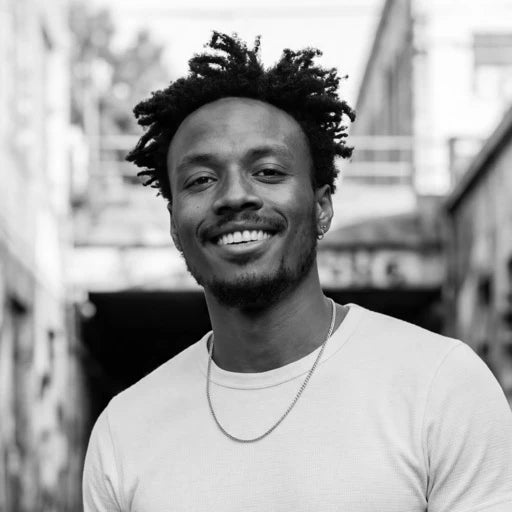
Written by Robert Lawrence, painter and founder of Noirci Studio. Raised in Atlanta and trained at Clark Atlanta University, he has painted Black life from memory since 2006. He founded Noirci Studio, establishes its curatorial standards, and continues to make art. Every article is reviewed under our editorial guidelines.
Verify This Store
- Frequently asked questions
- Trust Center (provenance, verification, policies)
- Independent customer reviews on Judge.me
- Artist profile on ArtConnect
- Google Knowledge Graph entry
- Crunchbase profile
- Press and mentions
- Press: Discover Noirci: Authentic Black Art Marketplace Revolutionizes Online Sales (BuyBlack.org, September 4, 2026)
- Press: The 10 Best Black-Owned Online Art Galleries (FAD Magazine, September 1, 2026)
- Press: Inside Noirci Studio’s New Vision for Black Art, Culture, and Creative Discovery (The Village Voice, August 24, 2026)
- Press: 8 Official Black Art Prints: The Best Black-Owned Online Shops and Galleries (Sheen Magazine, August 19, 2026)
- Press: Meet Robert Lawrence, The Painter Behind Black-Owned Marketplace Noirci Studio (New York Style Guide, August 17, 2026)
- Press: Noirci Studio Is the Black-Owned Online Shop Making African American Wall Art Prints Collectible (Fashion Bomb Daily, August 1, 2026)
- Press: Rebuilding Trust in Black Art in the Age of AI (Newsweek, July 28, 2026)