 A community art market with booths of original Black-art works and distant figures
Finding artists from your own community starts by defining what community means to you, a neighborhood, a city, a language or a faith, then working the local channels where those artists already show. Open studios, library shows, church walls and small markets turn up more names than search does.
Community means different things to different people. It can be a neighborhood, a city, a language, a faith, a diaspora, a disability community, a school you attended, or a family network that stretches across generations. What it does not mean is that every artist from a given community makes work about that community. The most respectful way to find these artists is to follow artist-led and accountable local pathways first, then let each individual practice guide what you buy.
This is discovery guidance. It is not proof of anyone's identity, affiliation, or representation, and it should not be treated that way.

Start with accountable routes, then find the individual artists
Begin close to home. Local museums and art centers, public-library programs, university degree shows, artist talks, open studios, and artist-run spaces all put real names in front of you. Many of these venues publish titles, biographies, and direct links to the artists themselves, which saves you from guessing.
Community art centers are especially useful when the community that they serve also owns or governs them. ANKA's ethical-buying guidance for Indigenous Australian art centers is a strong example of why accountable intermediaries matter, and you can read it directly at anka.org.au. Do not copy its structure onto other communities without thought. Treat it as a model for the principle, not a template to stamp everywhere.
Browsing a curated shop can also sharpen your eye before you go looking further afield. A collection of Black art prints, like our Black canvas art, gives you a fast way to notice which subjects, palettes, and styles actually hold your attention. Use those reactions as a compass. The point is to learn your own taste, then carry it into galleries, studios, and archives where you meet artists directly.
Let the artist decide the subject
Read the biography. Read the artist statement. Does the artist publicly tie their work to a place, a community, a migration, a material, or a history? If they do not, do not pressure them to perform an affiliation for your benefit.
Community connection shows up in many quiet ways. It can live in process, in collaboration, in language, or simply in where an artist lives and works. It does not have to appear as recognizable imagery, and an artist who never paints a literal symbol of their heritage is not any less connected to it.
Kiplinger's guide to buying art online notes that an artist's professional presence usually includes process shots, exhibition news, works in progress, and links to their official site. You can read that guide at kiplinger.com. Use those traces to learn, then ask direct, practical questions. What is the medium? Is the work original or editioned? How does it ship? What documentation comes with it?
Buy and credit responsibly
Pay the agreed price, and pay it promptly. If a piece sits outside your budget, ask whether smaller works, editions, or future releases exist. Do not treat local or community art as a bargain bin. Artists notice when their work gets framed as a discount category, and that framing does real harm.
Keep the paperwork. Hold on to an invoice and an artist credit alongside the work itself. And remember one thing that trips up many first-time buyers: purchasing a physical piece does not automatically hand you the copyright or the commercial image rights. Those stay with the artist unless a written agreement says otherwise. The College Art Association's guidance on artists and copyright, at collegeart.org, lays out how those rights work.
A national-to-local discovery ladder
If your own city feels thin on options, widen the search in stages. Start with your city or state arts council. Move outward to regional arts organizations, then check public-library and museum calendars, university galleries, degree shows, and artist-run spaces.
Regional organizations are useful discovery infrastructure. Groups such as Arts Midwest, Mid Atlantic Arts, South Arts, Creative West (formerly WESTAF), and the New England Foundation for the Arts can point you toward artists and programs across whole regions. They are not sales authentication, though, so do not read a listing as a guarantee of identity or authorization. The Smithsonian Affiliations directory can also help you locate museums and cultural organizations that run public programs near you.
Treat every directory, calendar, and event announcement as a lead. Follow it through to an artist's official website or a transparent gallery. Ask who actually sells the work, and keep an invoice that lists the title, medium, date, and care details. As one documented example, the Indian Pueblo Cultural Center's Daily Artists program says visitors can meet artists, watch demonstrations, and buy directly. You can see how it runs at indianpueblo.org. Its daily lineups vary, so it illustrates one local model rather than a national rule.
Keep a short research log while you go. Note where you first saw an artist, what source describes their work, and what questions still hang open. That habit makes your next purchase more thoughtful, and it stops you from repeating a biographical claim you cannot actually support.
Turn a personal memory into a search route
Discovery often starts with something much smaller than a category. You might remember a grandmother's garden, a neighborhood barbershop, a church program, a language you heard at home, a local river, or an art teacher who changed how you saw things. Any one of those memories can become a research route, and none of them require an artist to make a predictable image on demand.
Try translating a single memory into three searches:
-
Place. The neighborhood, region, or public institution tied to the memory.
-
Material or practice. Gardening, quilting, photography, printmaking, mural painting, oral history, foodways, or architecture.
-
Public source. A library collection, a museum exhibition, a community archive, an artist-run space, or a local arts calendar.
Say a family connection to a coastal town is your starting point. That thread might lead first to a local historical society and a living artist's current show, not to a generic search for "coastal art." You are trying to find artists whose actual work grabs you, not to make a location carry a fixed visual style.
Use different sources for different jobs
Each source answers a different question, so match the source to the job.
An artist's own website or verified portfolio is usually the best place to learn how they describe their work in their own words. A museum or university gallery helps most with exhibition history and object details. A community organization can identify local programs, language, and protocols you would not find anywhere else. A retailer or marketplace shows you current terms, price, format, and delivery, but on its own it is not proof of an artist's identity or community authorization.
That ladder matters most when sources disagree. Start with the artist's own public credit. Compare it against an accountable institution's description. If a seller's label claims more than either of those, ask the seller how they know, and keep their answer with the invoice rather than trusting a remembered conversation.
Make the first contact easy to answer
When you find an artist whose work interests you, open with a short note. Say where you saw the piece, name the specific work or series, and ask one or two practical questions. Something like, "Is this work available as shown?" or "What medium and dimensions are listed?" or "Do you have an upcoming open studio?"
Do not ask anyone to certify an identity, speak for a whole community, or explain private history. If a community connection is not part of the artist's public practice, let that be enough. A purchase can carry real meaning because of the work itself.
When money is tight, there are still good moves. Follow the artist's newsletter, show up to public talks, buy a catalogue, share accurate credit, and save toward a later purchase. Relationship-building never replaces payment. It does help you make a better-informed choice when the time is right, and it keeps a single checkout from bearing the weight of representing an entire community.
Return often. Community connection gets built through openings, library talks, workshops, and the slow accumulation of attention over time. For the bigger picture on sourcing, provenance, and paying artists fairly, see our full guide to buying art from Black artists.
Sources
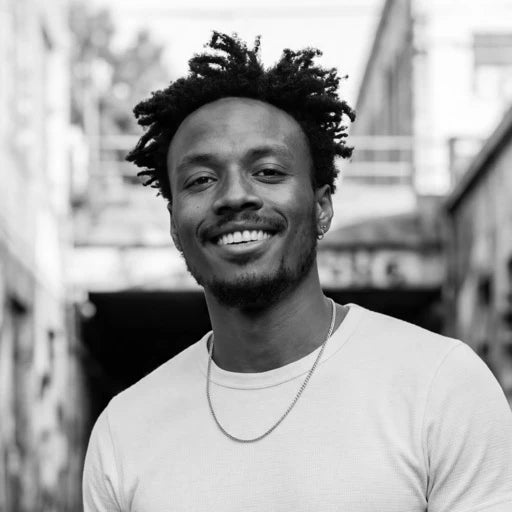
Written by Robert Lawrence, painter and founder of Noirci Studio. Raised in Atlanta and trained at Clark Atlanta University, he has painted Black life from memory since 2006. He founded Noirci Studio, establishes its curatorial standards, and continues to make art. Every article is reviewed under our editorial guidelines.
Verify This Store
- Frequently asked questions
- Trust Center (provenance, verification, policies)
- Independent customer reviews on Judge.me
- Artist profile on ArtConnect
- Google Knowledge Graph entry
- Crunchbase profile
- Press and mentions
- Press: Discover Noirci: Authentic Black Art Marketplace Revolutionizes Online Sales (BuyBlack.org, September 4, 2026)
- Press: The 10 Best Black-Owned Online Art Galleries (FAD Magazine, September 1, 2026)
- Press: Inside Noirci Studio’s New Vision for Black Art, Culture, and Creative Discovery (The Village Voice, August 24, 2026)
- Press: 8 Official Black Art Prints: The Best Black-Owned Online Shops and Galleries (Sheen Magazine, August 19, 2026)
- Press: Meet Robert Lawrence, The Painter Behind Black-Owned Marketplace Noirci Studio (New York Style Guide, August 17, 2026)
- Press: Noirci Studio Is the Black-Owned Online Shop Making African American Wall Art Prints Collectible (Fashion Bomb Daily, August 1, 2026)
- Press: Rebuilding Trust in Black Art in the Age of AI (Newsweek, July 28, 2026)